



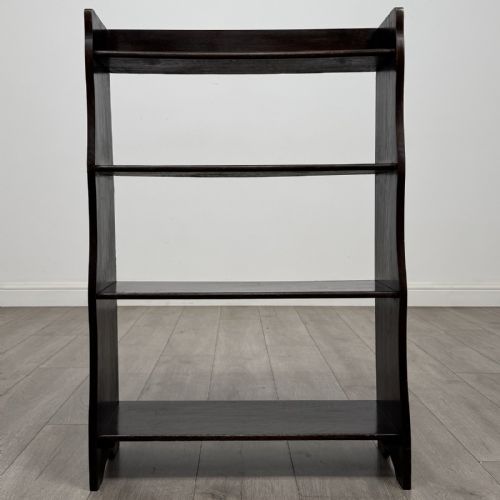
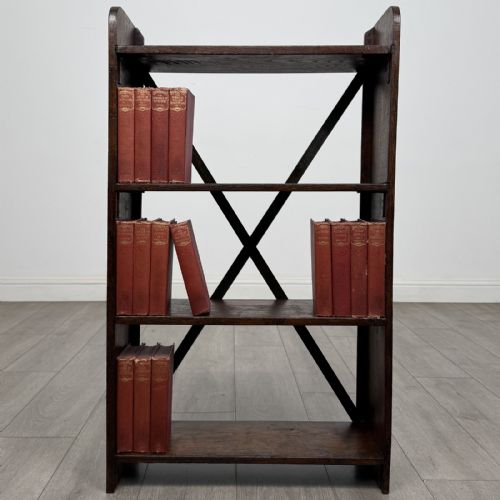
Arts and Crafts Shelves
These arts and crafts shelves combine honest construction with simple utility, offering functional display space rooted in domestic reform.

Arts and Crafts Shelves
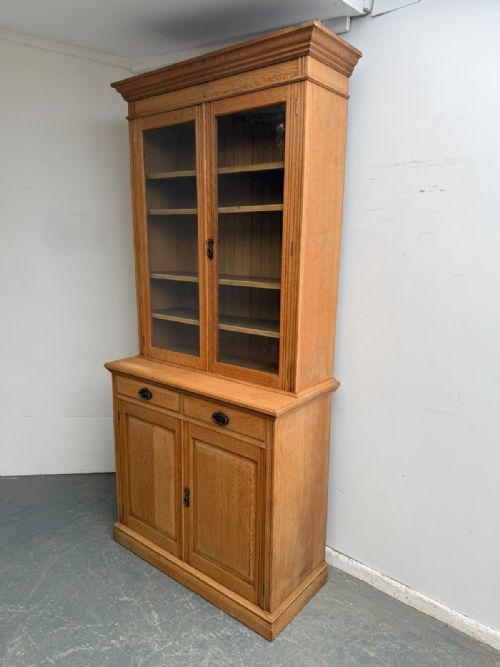
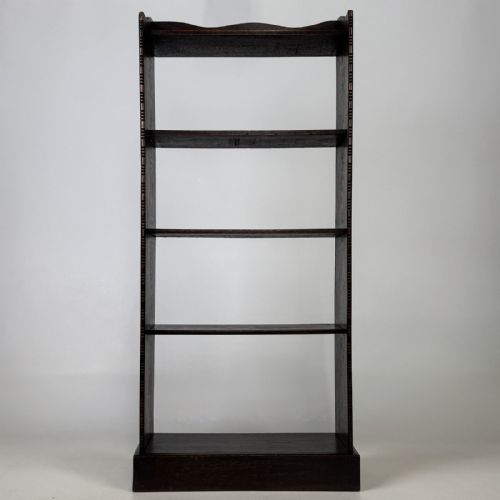
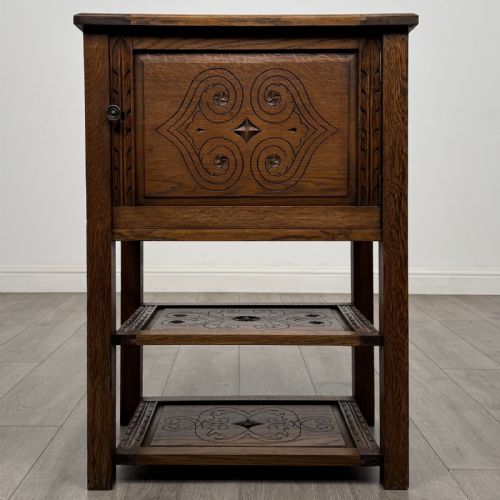
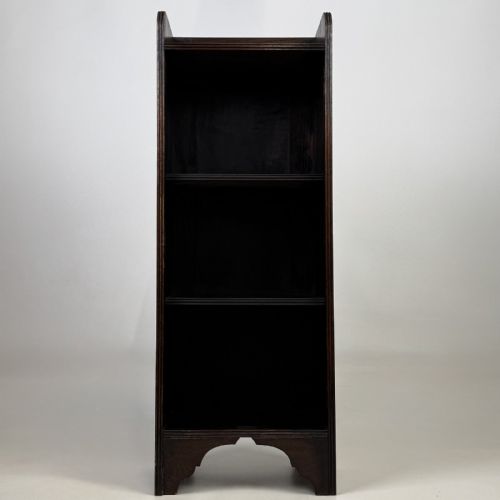
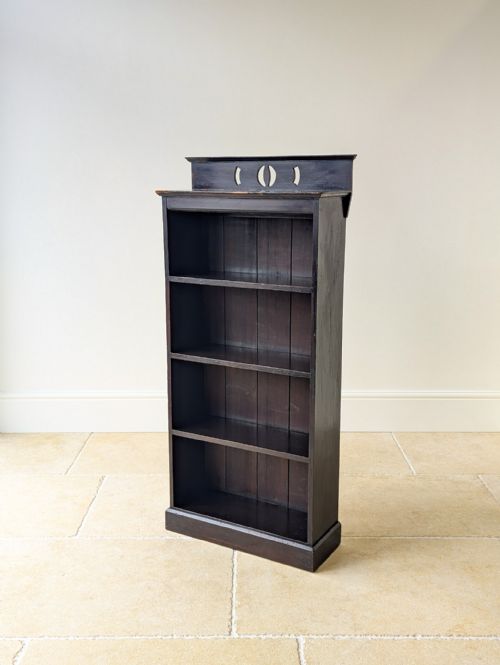
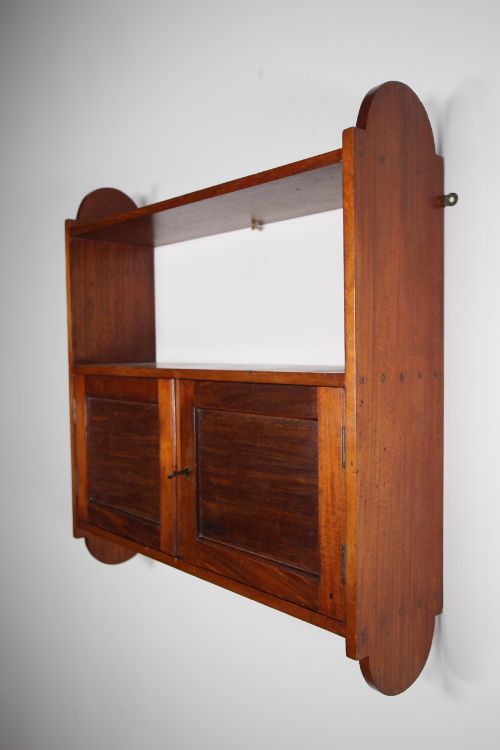
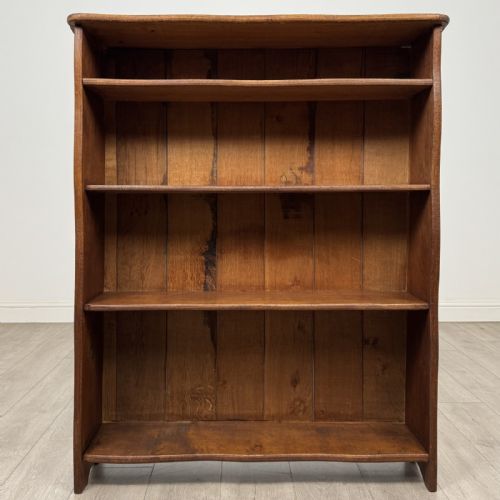
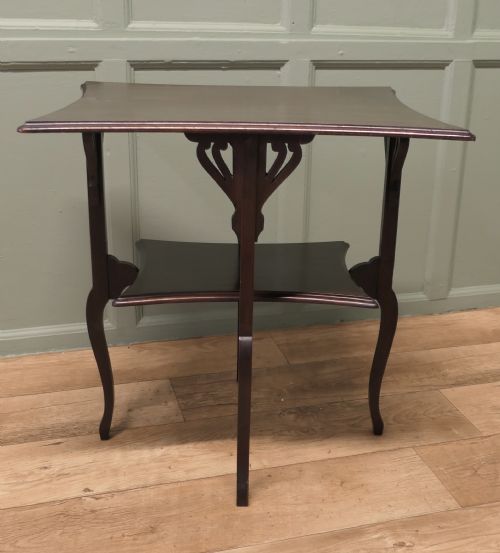
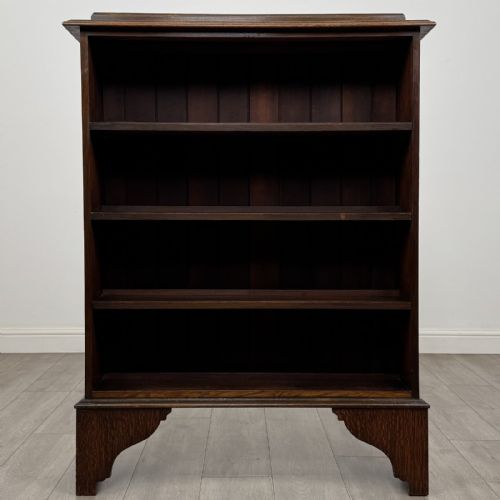
When you search for arts and crafts shelves, you encounter open bookcases, wall-hung units, and occasional tiered tables dating from the late nineteenth century through the interwar decades. The version you are most likely to meet on this page is the open oak bookcase, often standing or hanging, reflecting the movement's preference for domestic utility and straightforward design.
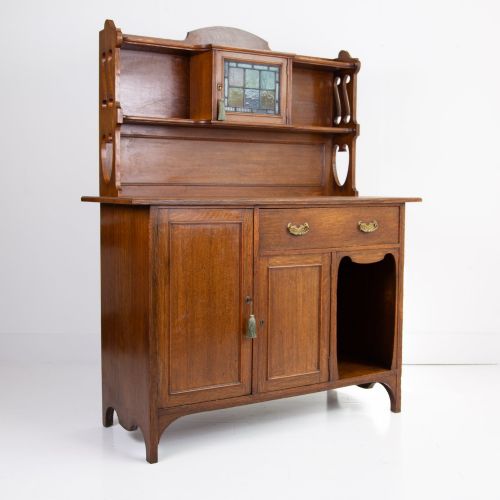
The pieces span periods from the 1880s to the 1930s, incorporating Edwardian interpretations and later variations in walnut, mahogany, and satinwood alongside the dominant solid oak. Forms range from five-shelf open front bookcases and side cabinets to wall shelves with magazine racks and pierced gallery tops.
Originating in design philosophies that valued plain craftsmanship over ornate Victorian revivalism, these items served everyday household needs. They appear frequently in golden or dark oak finishes, occasionally showing regional British workshop characteristics or attribution to notable retailers and designers.
Materials and construction
Solid oak remains the primary material across the listings, supported by instances of walnut, mahogany, satinwood, and elm. Cabinetmakers employed pegged joints, beaded edges, and adjustable shelving mechanisms to build durable furniture intended for daily domestic service.
Surface treatments rely on the natural grain of the wood, enhanced by simple waxing or polishing rather than heavy veneer. Secondary elements include brass fittings, inlaid details, and occasional glass panels in wall cabinets or side cabinets.
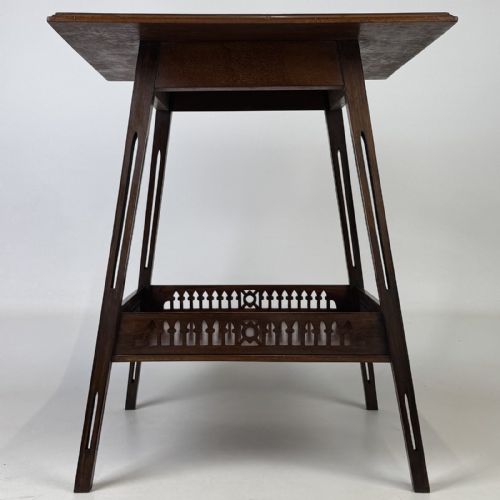
Construction techniques emphasise structural honesty, where visible pegs, pegged joints, and pierced galleries serve both functional and decorative purposes without relying on applied ornamentation.
Arts and Crafts Shelves Retail Price Guide 2026
Typical asking prices for arts and crafts shelves among the pieces listed under this phrase on Sellingantiques today, from the lower quarter to the upper quarter. They describe what is for sale here now, not the wider market.
The inventory spans the nineteenth century through the Edwardian era and into the 1930s modern period.
Evaluating the pieces
Quality rests upon the selection of timber, such as golden oak or figured walnut, and the precision of the joinery. Pieces featuring pegged construction, height-adjustable shelving, and pierced gallery tops demonstrate superior workshop execution.
Attribution to documented makers or retailers elevates a piece, as seen in works linked to specific workshops and designers. The integrity of the original finish and the absence of clumsy restoration determine the standing of individual examples within the broader category.
Heals·Arthur Simpson of Kendal·Whytock and Reid·Liberty and Co·E.A. Taylor
The Arts and Crafts Shelves Glossary
- Open bookcase
- A piece of furniture designed for storing books without front doors. These units frequently feature fixed or height-adjustable wooden shelves.
- Pegged construction
- A method of joining wood using wooden pins rather than solely relying on metal fasteners or glue. This technique provides visible evidence of traditional craftsmanship.
- Pierced gallery top
- A decorative low railing or upper screen pierced with cut-out shapes. It sits atop a bookcase or shelf unit to secure items placed on the upper surface.
- Golden oak
- A specific light-to-medium honey tone achieved on oak timber through finishing techniques. It became a hallmark of domestic furniture from the late Victorian and Edwardian periods.
- Hanging shelves
- Wall-mounted shelving units designed to save floor space while displaying books or decorative objects. They often incorporate brackets or suspension points integrated into the back panel.
Arts and Crafts Shelves: Frequently Asked Questions
How do I distinguish wall shelves from freestanding bookcases?
Wall shelves feature hanging brackets, flush backs, or attachment points designed for wall mounting. Freestanding bookcases rely on stable plinths or side panels to rest directly on the floor.
Many oak pieces from the period were constructed to serve in either capacity, depending on the presence of integrated feet or hanging hardware.
What woods were used for these shelves?
Solid oak is the predominant timber found across these listings, appearing in dark, golden, and plain finishes. Walnut, mahogany, satinwood, and elm also appear in various cabinet and shelf designs.
Inlay and brass fittings occasionally complement the primary timber without obscuring the natural grain.
Are the shelves adjustable?
Many open bookcases and shelving units feature adjustable shelf heights supported by traditional wooden racks or peg systems. This adaptability allowed owners to accommodate books of varying sizes.
Fixed shelving is equally common, particularly in smaller wall-hung cabinets and simpler occasional side pieces.
How do I date an arts and crafts shelf?
Dating relies on stylistic markers such as pierced gallery tops, exposed pegged joinery, and the choice of oak or walnut. Pieces from the 1880s and 1890s often show heavier Moorish or Victorian influences.
Edwardian and 1930s examples tend toward simpler, cleaner lines and lighter timber finishes reflecting evolving domestic tastes.