

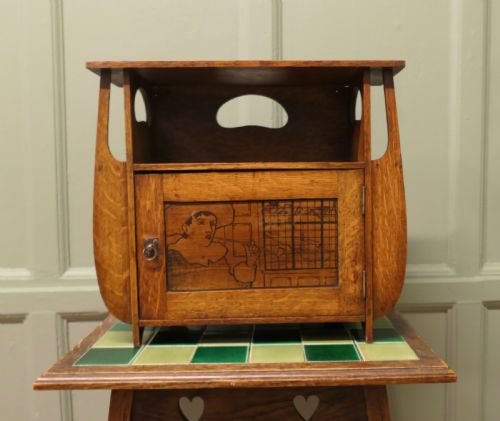
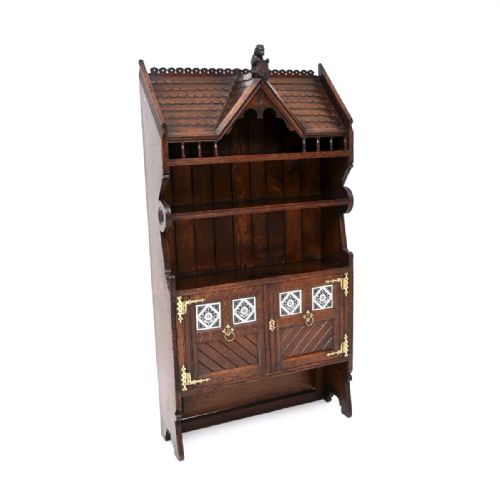


Carved Oak Wall Unit
These carved oak wall unit pieces solve storage problems with genuine historic character, bringing fitted timber utility directly to your walls.

Carved Oak Wall Unit
A carved oak wall unit brings traditional timber architecture onto domestic walls, offering display and storage without consuming floor space. When you search for a carved oak wall unit, you encounter formats spanning compact plate racks to substantial corner cupboards.
The selection on this page relies heavily on 18th Century and 19th Century examples alongside pieces from 1910. Styles range from Georgian Country and Victorian Gothic Revival to Arts and Crafts interpretations.
Corner cabinets and wall shelves dominate the current forms, alongside smaller hanging cupboards and occasional dressers. These items served functional storage roles in period interiors, utilising timber construction suited to daily domestic life.
How they were made
Construction relies primarily on solid oak, frequently paired with secondary timbers like beech or mahogany and fitted with brass or iron hardware. Glazed doors appear on cabinets, incorporating glass panels to protect contents while maintaining visibility.
Carpenters utilised traditional jointing methods suited to heavy timber, shaping surfaces with hand-carved detailing typical of Georgian, Victorian, and Arts and Crafts movements. Bleached oak variants also appear, showing deliberate surface alteration during their history.
Carved Oak Wall Unit Retail Price Guide 2026
Typical asking prices for carved oak wall unit among the pieces listed under this phrase on Sellingantiques today, from the lower quarter to the upper quarter. They describe what is for sale here now, not the wider market.
Materials recorded across the inventory include oak, bleached oak, brass, iron, glass, mahogany, and beech.
What varies in quality
Quality rests in the crispness of the carved ornamentation and the architectural proportion of the piece, particularly where cornices and panel doors meet. Finer examples display thoughtful integration of brass or iron hinges and locks that complement the substantial timber carcase.
The handling of the oak grain and the integrity of the original joints distinguish superior examples from simpler utilitarian boxes. Surviving surfaces that retain their historic patination without excessive modern intervention command greater appreciation.
The Carved Oak Wall Unit Glossary
- Corner cupboard
- A specialised cabinet built with an angled footprint to fit snugly into room corners. These maximise awkward spaces and frequently feature shaped shelving inside.
- Plate rack
- A wall-mounted fixture designed to hold dining plates upright on tiered wooden rails. They provide practical kitchen storage while displaying ceramic tableware.
- Arts and Crafts
- A design movement emphasising hand-craftsmanship, simple structural forms, and vernacular materials. Pieces from this tradition often feature unpretentious oak construction and subtle carved details.
- Victorian Gothic Revival
- A style drawing on medieval architectural motifs such as pointed arches, quatrefoils, and heavy carved mouldings. Cabinets and shelves in this manner project a dramatic ecclesiastical character.
- Bleached oak
- Oak timber treated with chemical agents to lighten its natural dark tone. This finish appears on specific period pieces to achieve a softer, more neutral coloration.
Carved Oak Wall Unit: Frequently Asked Questions
Where should I hang a wall cabinet?
These units require solid wall fixings due to the substantial weight of solid oak timber.
Position them at a comfortable height where doors or shelves remain easily accessible without obstructing room traffic.
How do I clean carved oak surfaces?
Dust the carved details regularly with a soft, dry brush to prevent dirt accumulation in the recesses.
Avoid harsh liquid cleaners and apply a traditional beeswax polish sparingly to maintain the timber finish.
Are corner cupboards difficult to install?
Installation demands precise alignment with adjacent walls to ensure the angled carcase sits flush and secure.
Check that internal shelves remain level before loading them with heavy ceramics or books.
How do I date a carved oak unit?
Examine the construction joints, hardware types, and overall stylistic motifs like Gothic revival arches or Georgian mouldings.
Tool marks and timber selection also offer clues regarding whether a piece originates from the eighteenth or nineteenth century.