



Victorian Carved Book Shelves
Victorian carved book shelves bring architectural presence and rich timber grain to domestic libraries, combining practical open storage with confident nineteenth-century ornamentation.

Victorian Carved Book Shelves
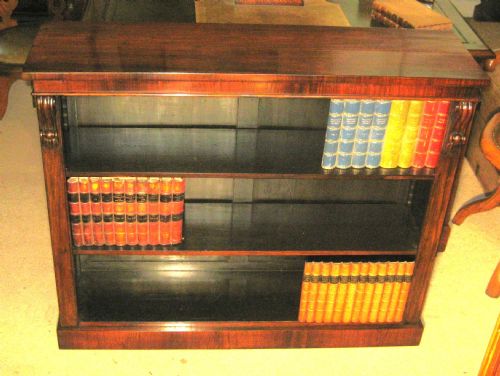
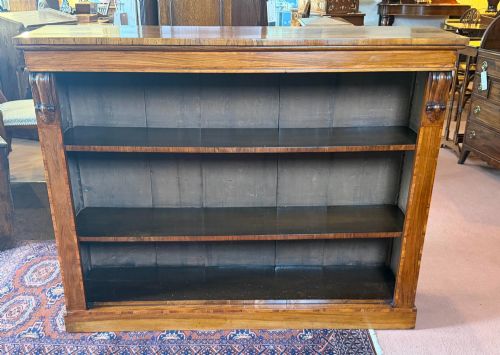
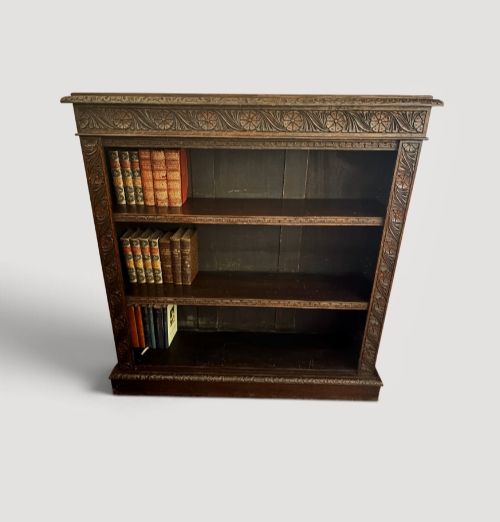
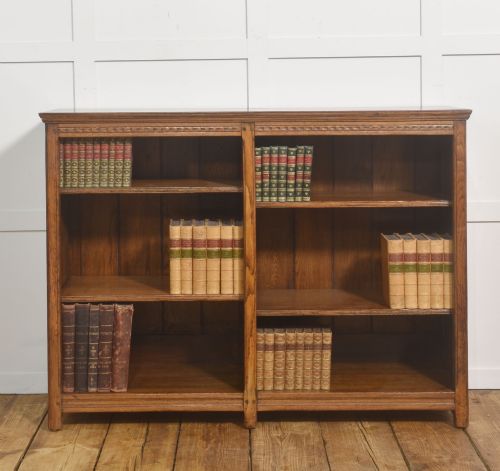
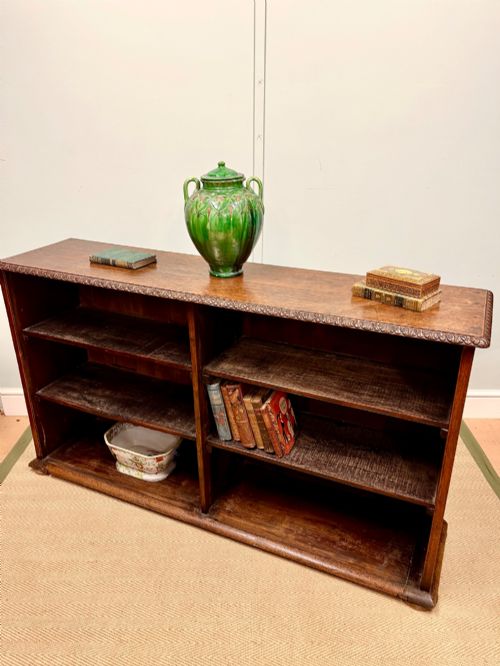
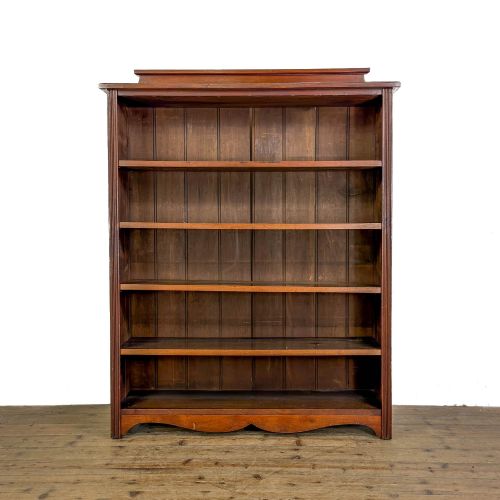
Victorian carved book shelves encompass open bookcases, wall-mounted display units, and tiered etageres designed to hold volumes while displaying ornamental woodwork. The pieces seen most frequently on this page are open oak and walnut bookcases dating from the mid-to-late nineteenth century.
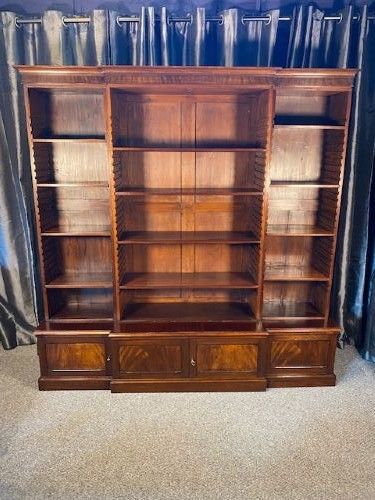
Makers of this period drew upon Gothic Revival, Jacobean Revival, and Arts and Crafts styles, producing forms that range from simple wall-hanging shelves to large breakfront library bookcases. Many examples feature adjustable shelves supported by timber ratchets or brass pins to accommodate varying book heights.
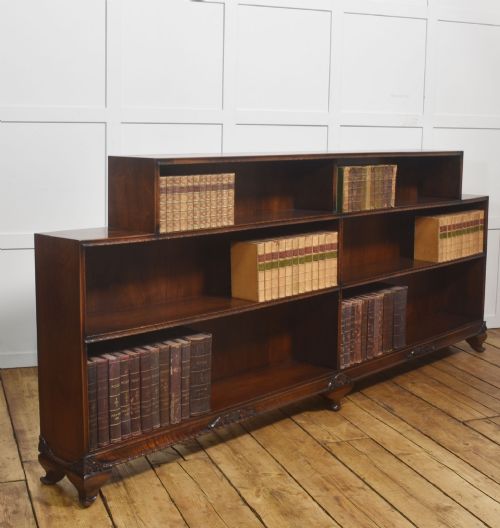
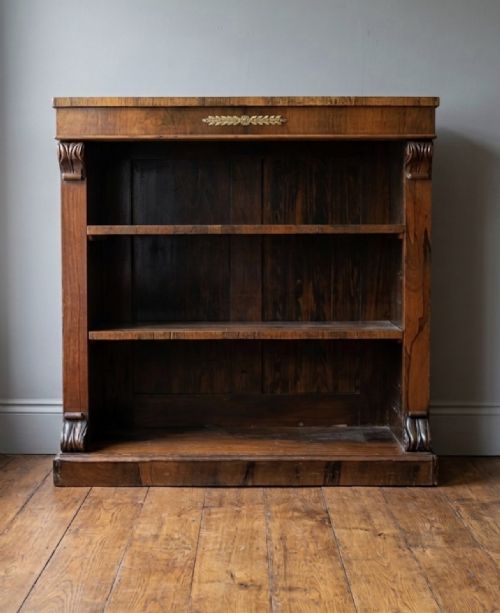
Alongside standard library bookcases, the category includes specialised forms such as stepped units, waterfall shelves, and occasional pieces incorporating carved corbels, floral columns, and Green Man motifs. These items served both domestic studies and grand Victorian libraries.
How they were made
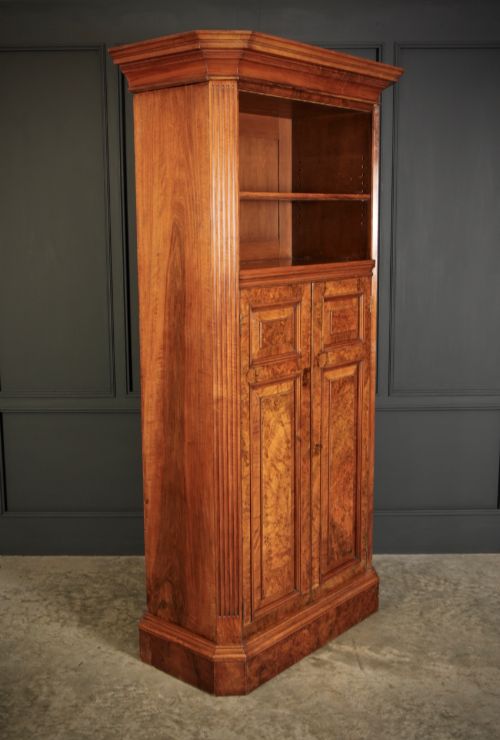
Cabinet makers built these pieces using solid hardwoods including oak, walnut, mahogany, and rosewood, often applying veneers of burr walnut or rosewood over secondary timbers. Carved elements such as leaf scrolls, lion heads, and figural reliefs were executed by hand directly into the solid timber.
Construction techniques relied on traditional mortise and tenon joinery for stability, while interior uprights utilised wooden toothed strips or brass tracks for movable shelving. Backboards typically consisted of vertically ploughed pine or deal panels secured with handmade iron or brass screws.
Listings feature oak, walnut, mahogany, rosewood, and elm timbers across nineteenth-century periods including Victorian, Gothic Revival, and Arts and Crafts styles.
What varies in quality
The distinction between standard utility shelving and finer library pieces rests upon the depth of relief in the carving and the selection of figured timber veneers. Crisp execution of architectural details, such as carved corbels and fret-cut gallery work, separates standard workshop production from master cabinet work.
Proportion and structural honesty dictate the success of the design, with superior pieces retaining original adjustable shelf mechanisms and uncompromised timber patination. The integration of specialised motifs, like Green Man masks or figural columns, elevates the piece from basic storage to bespoke furnishing.
Gillows
The Victorian Carved Book Shelves Glossary
- Adjustable shelves
- Shelves that can be moved to different heights using wooden ratchets, toothed strips, or metal pins. This system allows the interior space to be customized for volumes of various sizes.
- Breakfront
- A piece of furniture where the central section projects forward from the flanking sides. This architectural arrangement creates depth and shadow within large library bookcases.
- Corbel
- A projecting bracket of stone or timber supporting a weight above. In these bookcases, carved wooden corbels often support the upper cornice or decorative shelf overhangs.
- Étagère
- A piece of furniture consisting of open shelves for displaying small objects or books. These tiered units often incorporate delicate turned supports and fret-cut galleries.
- Green Man
- A sculptural motif consisting of a human face surrounded by or entwined from leaves, vines, or branches. It symbolizes rebirth and appears frequently in nineteenth-century Gothic Revival woodwork.
Victorian Carved Book Shelves: Frequently Asked Questions
What is the difference between an open bookcase and a cabinet?
Open bookcases feature unobstructed shelving without glass or wooden doors, designed for immediate access to frequently read volumes. They prioritize display and retrieval over the secure enclosure offered by traditional library cabinets.
Enclosed cabinets protect fragile bindings from dust and light exposure, whereas open versions integrate more lightly into living spaces and allow the timber backboards and bindings to become part of the room's decor.
How do I adjust the shelves?
Nineteenth-century bookcases generally use one of two methods for shelf movement. Wooden ratchets cut into the interior sides allow shelf supports to rest at notched intervals, while vertical brass strips accept small supporting pins.
Care must be taken when shifting older shelving to avoid splitting dry nineteenth-century timber runners. Lift the shelf entirely clear of its supports rather than sliding it horizontally.
How can I tell a Victorian piece from an Edwardian copy?
Victorian examples typically display heavier timber construction, deeper hand-carved ornamentation such as Gothic tracery or Green Man masks, and darker patination on oak and walnut. Tool marks on secondary timbers like pine backboards often show hand-planing.
Edwardian pieces tend toward lighter framing, such as rosewood waterfall structures or delicate fret-cut panels influenced by the Arts and Crafts movement. The carving on later pieces can appear shallower and more mechanically uniform.
How should I care for a carved wooden bookcase?
Maintain stable relative humidity in the room to prevent the solid hardwoods and veneers from splitting or warping. Keep the furniture away from direct heat sources and strong sunlight that can fade rosewood and walnut.
Dust regularly with a soft, dry cloth and occasionally apply a pure beeswax polish to nourish the antique grain. Avoid modern silicone sprays which can penetrate open grain and attract dust.