
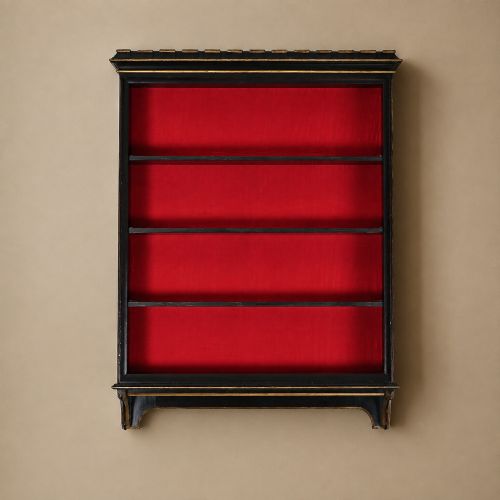
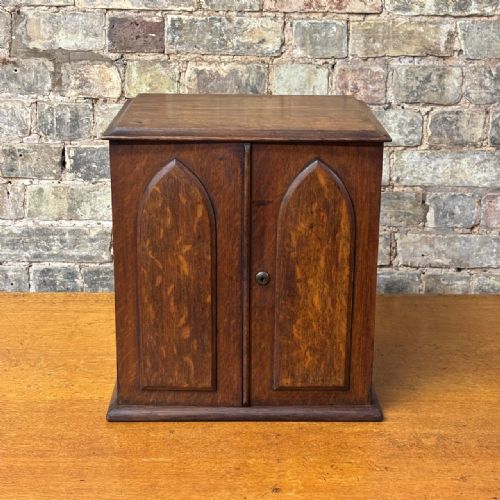


Victorian Gothic Wall Cabinet
These victorian gothic wall cabinet pieces combine architectural Revival detail with practical storage, offering a striking focal point for any room.

Victorian Gothic Wall Cabinet
A victorian gothic wall cabinet brings architectural character to small spaces, typically mounting directly to a wall to display books or curiosities. You will most frequently encounter walnut, oak, and ebonised wood versions bearing Revival design motifs.
The selection ranges from hanging corner cupboards and table cabinets to open wall shelves and breakfront bookcases. Many pieces date from the nineteenth century, reflecting the Victorian and Aesthetic Movement eras.
Makers and designers of the period drew heavily on medieval ecclesiastical forms, translating pointed arches and linenfold panels into domestic furniture. These wall-mounted pieces served practical storage functions in reception halls, kitchens, and studies.
How they were made
Cabinet makers utilised solid timbers such as oak, walnut, limewood, and beech, frequently employing ebonised wood for a dramatic dark finish. Construction often involved deep relief carving on panels to replicate medieval architectural details.
Brass hardware, including hinges and escutcheons, was standard for securing doors and mounting display cabinets. Glazed doors incorporated wooden framing to protect contents while maintaining visibility for display shelves.
Listings feature nineteenth century pieces predominantly in oak and walnut, alongside ebonised wood and limewood variants.
What varies in quality
The crispness of the carved wood panels separates standard joinery from superior work, particularly where linenfold motifs or tracery are concerned. Finer examples display meticulous attention to timber selection, especially in figured walnut and grained oak.
Hardware integrity and the clever integration of architectural elements such as pediments and brackets dictate the overall calibre of the piece. Attribution to known designers like George Edmund Street or John Moyr Smith elevates the standing of certain cabinets.
George Edmund Street·John Moyr Smith
The Victorian Gothic Wall Cabinet Glossary
- Gothic Revival
- An architectural and decorative style popular in the nineteenth century that mimics medieval forms. It incorporates pointed arches, tracery, and heavy carved panels into domestic furniture.
- Ebonised Wood
- Timber treated with a chemical stain or finish to imitate ebony. This dark surface was common in nineteenth-century cabinet making to create high-contrast decorative effects.
- Linenfold
- A style of relief carving used on wooden panels to resemble folded linen fabric. It appears frequently on cupboard doors and decorative panels of this period.
- Aesthetic Movement
- A late nineteenth-century design approach that emphasised visual beauty over narrative subject matter. Cabinets from this movement often feature refined woods and distinct brass hardware.
Victorian Gothic Wall Cabinet: Frequently Asked Questions
How do I hang a heavy oak wall cabinet?
These cabinets often require secure wall anchoring into masonry or timber studs due to the weight of solid oak and glass.
Professional installation using heavy-duty brackets ensures the piece remains safely supported on the wall.
Where were these cabinets placed in Victorian homes?
Victorian households utilised these hanging pieces in reception halls, kitchens, and studies for convenient storage.
Corner cupboards made efficient use of awkward spaces, while display shelves held books and decorative objects.
How do I distinguish Gothic Revival from Aesthetic Movement pieces?
Gothic Revival furniture leans heavily on medieval architectural motifs like pointed arches, heavy carvings, and linenfold panels. Aesthetic Movement pieces favour cleaner lines, artistic wood selection, and stylised brass fittings.
Both styles emerged during the nineteenth century but served different interior tastes.
Can walnut and ebonised cabinets be placed in direct sunlight?
Direct sunlight can fade walnut timber and dry out antique wood finishes over extended periods.
Positioning these cabinets away from bright windows helps preserve the original colour and condition of the wood.