


Hanging Display Case
A hanging display case fixes directly to the wall to keep small treasures visible and safe.
Hanging Display Case
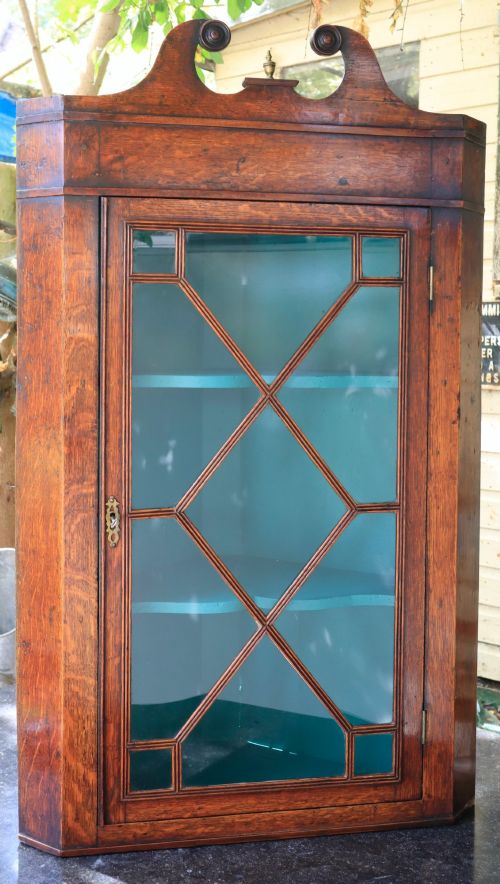
A hanging display case appears most frequently as a corner cabinet or wall-mounted cupboard designed to maximise vertical space in smaller rooms. These pieces emerge across the eighteenth, nineteenth, and early twentieth centuries in styles spanning Georgian proportion, Victorian Gothic Revival, and Edwardian restraint.
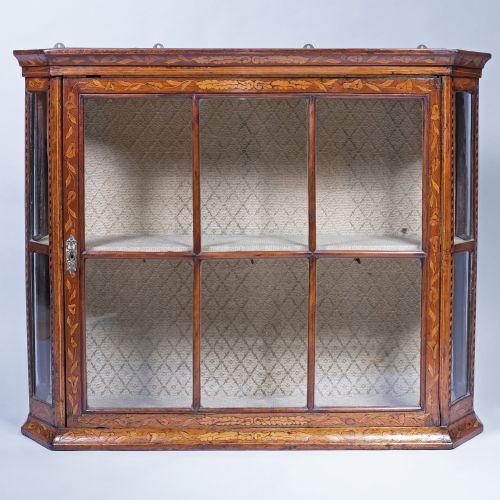
The buyer meets various formats on this page, from single-door glazed wall cabinets to bow-fronted corner cupboards and open display shelves. Many examples incorporate glass panels or mirrors to reflect light around the interior, while others take specific forms such as diorama cases or miniature vitrines.
Origins stretch from English workshops to Scottish and Welsh makers, alongside occasional continental examples like French Chateau pieces or eighteenth-century Italian walnut shelves. The selection balances domestic storage furniture with specialist wall-mounted vitrines and maritime folk art.
Materials and cabinetmaking techniques
Makers utilised dense hardwoods such as mahogany, oak, walnut, and yew, often selecting timber with pronounced grain patterns for corner cupboards and wall cabinets. Beech and satinwood appear as secondary woods or decorative stringing, while pine serves in functional or regional pieces.
Glass panels are held within glazing bars to form single or multi-aspect fronts, allowing clear visibility into the shelved interior. Brass hinges, locks with keys, and occasionally fabric-lined interiors complete the construction of these wall-mounted pieces.
Distinctions in construction and finish
Quality rests in the precision of the cabinetmaking, seen in tight corner joints, well-fitted glazed doors, and intact original brass hardware rather than later replacements. The choice of timber also dictates standard, with finely figured mahogany or quarter-sawn oak marking out the superior examples.
Proportion and decorative restraint separate standard utility cupboards from finer architectural pieces that incorporate moulded cornices, satinwood inlay, or bow fronts. The integrity of the glass and the smoothness of any locking mechanism further distinguish better preserved items.
W.F. Homer London·Town and Emanuel·Aitchison for Zambrene
The Hanging Display Case Glossary
- Vitrine
- A glass-fronted cabinet designed for displaying fine objects or curiosities. The term often describes more decorative wall-hanging display cases.
- Bow front
- A convex curved cabinet front popular during the Georgian and Edwardian periods. This shape softens the corners of a room when applied to a corner cabinet.
- Glazing bar
- A narrow wooden or metal strip that holds panes of glass within a sash or door. Finer bars indicate higher quality cabinet work.
- Corner cupboard
- A triangular cabinet built to fit directly into the corner of a room. Many examples are designed for wall hanging to save floor space.
- Diorama
- A three-dimensional scene enclosed within a glass-fronted case, often depicting maritime subjects such as sailing vessels racing at sea.
Hanging Display Case: Frequently Asked Questions
How do I hang a heavy antique cabinet safely?
Wall-mounted cabinets require secure fixings into solid masonry or direct attachment to wall studs using appropriate brackets. Due to the weight of dense timbers like mahogany and oak, professional installation ensures the piece remains stable.
Older cabinets often feature original brass fixing loops or plates on the backboards. These should be inspected carefully and supplemented with modern load-bearing hardware if the original fixings show wear.
How do I date an antique hanging display case?
Dating relies on observing construction methods, timber choices, and stylistic markers such as Georgian glazing bars or Edwardian satinwood inlay. The method of joint cutting and the type of fixings used inside the cabinet also provide clues to the era of manufacture.
Reference points include period characteristics like nineteenth-century Gothic Revival motifs or eighteenth-century proportions. Comparing the piece against documented examples from the same decade narrows the window further.
Can these cabinets support heavy items?
Most hanging display cases are built for lighter decorative objects, porcelain, or books rather than heavy collections. The internal shelves usually rest on fixed supports or simple wooden glides suited to moderate loads.
Overloading the shelves can strain the historical joints where the cabinet meets the wall or warp the internal wooden structure. Distributing weight evenly preserves the integrity of the antique timbers.