


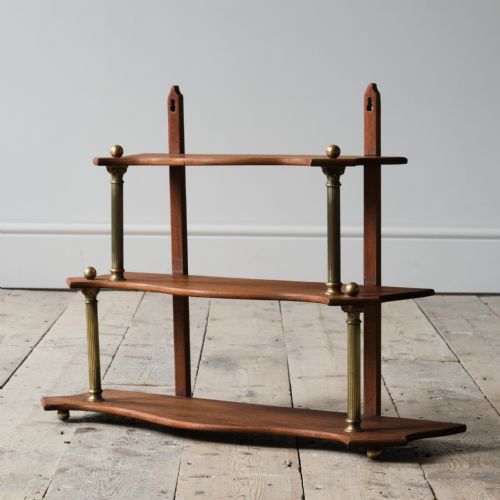
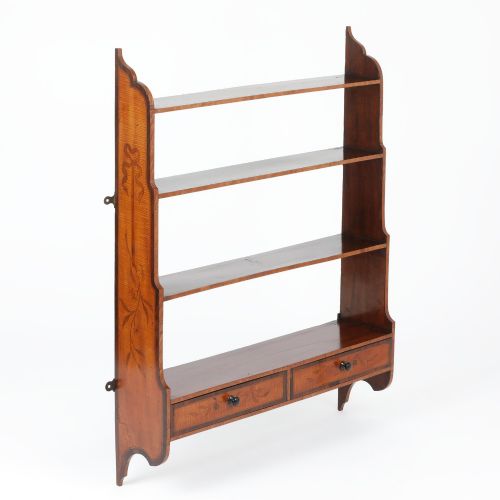


Small Hanging Bookcase
A small hanging bookcase clears floor space while keeping volumes at hand, offering polished timber and neat joinery.
Small Hanging Bookcase
A small hanging bookcase provides compact storage that fastens directly to a wall, keeping volumes within easy reach. The listings show forms ranging from open wall shelves to glazed display cabinets and portable bookshelves.
Most examples found here date across the eighteenth, nineteenth, and early twentieth centuries, spanning periods such as Victorian, Edwardian, and Regency. Timber choices lean towards mahogany and oak, often paired with glass or brass.
Buyers will encounter various stylistic influences across the selection, including Sheraton, Arts and Crafts, and Gothic revivals. These units function equally well for displaying cherished editions or holding everyday reference books.
How they were made
Cabinetmakers constructed these pieces primarily from solid hardwoods such as mahogany and oak, frequently selecting satinwood for contrasting grain patterns. Marquetry and wood inlay appear across multiple periods to decorate the surface timbers.
Joinery methods varied according to the era, connecting uprights and horizontal shelves to bear the weight of books safely. Cabinetmakers also incorporated fabric linings inside select display compartments.
Small Hanging Bookcase Retail Price Guide 2026
Typical asking prices for small hanging bookcase among the pieces listed under this phrase on Sellingantiques today, from the lower quarter to the upper quarter. They describe what is for sale here now, not the wider market.
Some miniature display cabinets were originally built to house tiny porcelain collections rather than books.
What varies in quality
The sophistication of timber selection and inlay work separates standard utility pieces from finer examples. Cabinetmakers who utilised figured mahogany or intricate satinwood banding produced visually striking results.
Structural integrity depends upon the tightness of the joints and the condition of the hanging fixings. Pieces retaining original glass panels and matching brass hardware demonstrate greater authenticity.
The Small Hanging Bookcase Glossary
- Marquetry Inlay
- Decorative wood veneers fitted into a contrasting background timber to form geometric or pictorial patterns. This technique demands precise cutting by hand.
- Waterfall Bookhelves
- Shelving units where each tier steps back progressively from bottom to top, following a descending profile. This form appeared in satinwood and mahogany formats.
- Glazing
- The fitting of glass panes into door frames or cabinet fronts. It allows contents to remain visible whilst protected from dust.
- Wall Cabinet
- An enclosed storage unit designed to be mounted above floor level, often featuring panelled or glazed doors. These provide secure storage for smaller collections.
Small Hanging Bookcase: Frequently Asked Questions
How do I hang a heavy timber bookcase safely?
Wall-mounted bookcases require secure fixings into solid masonry or direct wall studs to support the weight of timber and books. Using appropriate brackets or internal hanging plates prevents structural strain.
Ensuring the fixings match the wall type protects both the plaster and the antique frame over years of use.
Were these bookcases made for bedrooms or parlours?
Compact bookcases suited various rooms throughout the house, from studies to bedrooms and sitting rooms, where floor space was at a premium. Open shelves kept active reading material accessible.
Enclosed glazed cabinets served to protect delicate bindings or display small collectables away from household dust.
How can I tell a Victorian piece from an Edwardian one?
Victorian pieces often employ dense mahogany with heavier proportions and occasionally Gothic revival detailing. Edwardian examples tend to display lighter framing and refined satinwood accents.
Comparing the timber selection and decorative motifs helps clarify the likely manufacturing period.
Do portable bookshelves attach to walls?
Portable bookshelves are designed to sit upon tabletops or desks rather than hang from structural wall fixings. They offer flexibility for moving collections between rooms.
Checking the base and back panels reveals whether a piece was built for resting on flat surfaces or hanging.