



Arts and Crafts Carver
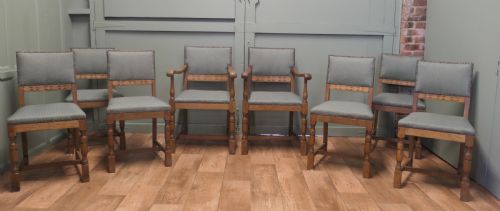
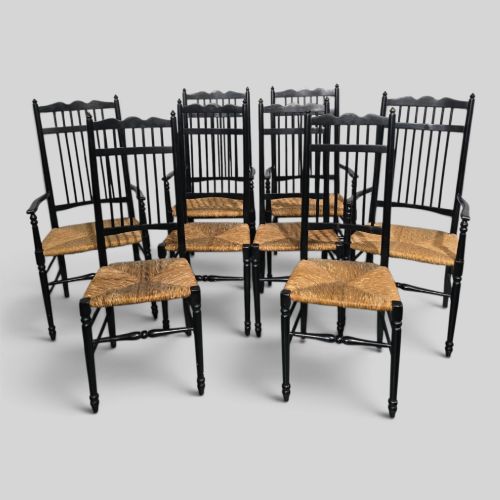
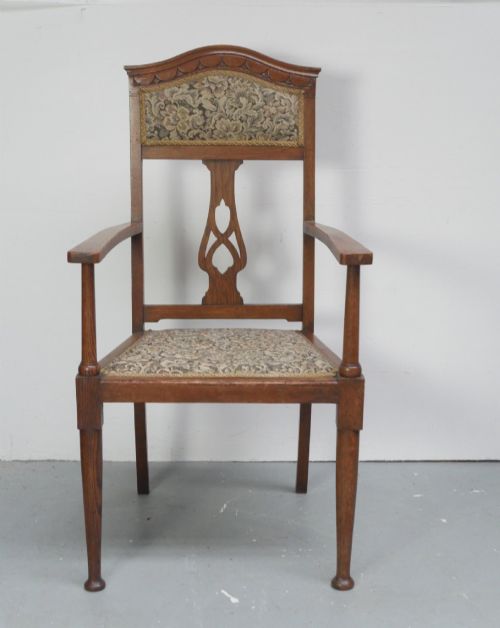
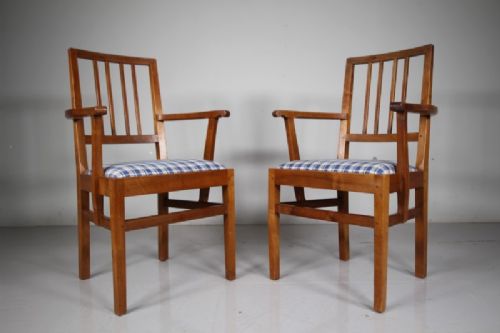
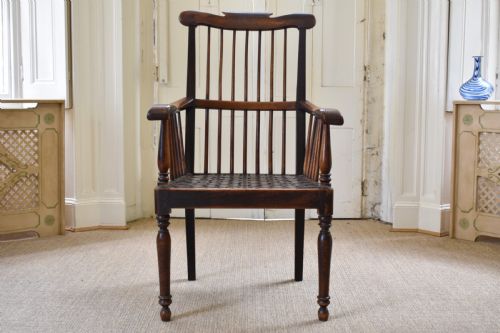
These arts and crafts carver chairs offer sturdy timber construction and honest joinery, designed to bring both utility and handcrafted character to a room.
Arts and Crafts Carver
An arts and crafts carver is a substantial seating form designed with armrests, appearing primarily as an armchair, elbow chair, or dining chair. These pieces serve as functional seating while displaying the characteristic construction methods of their movement.
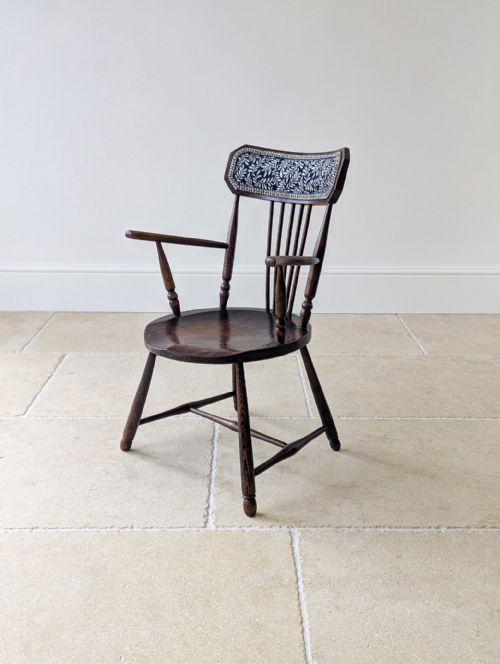
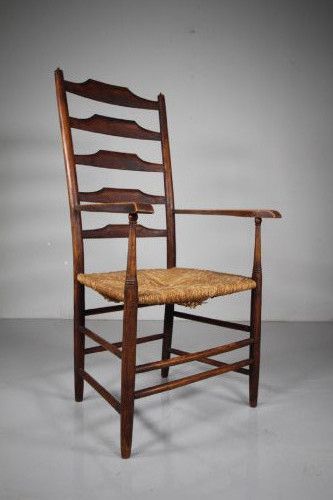
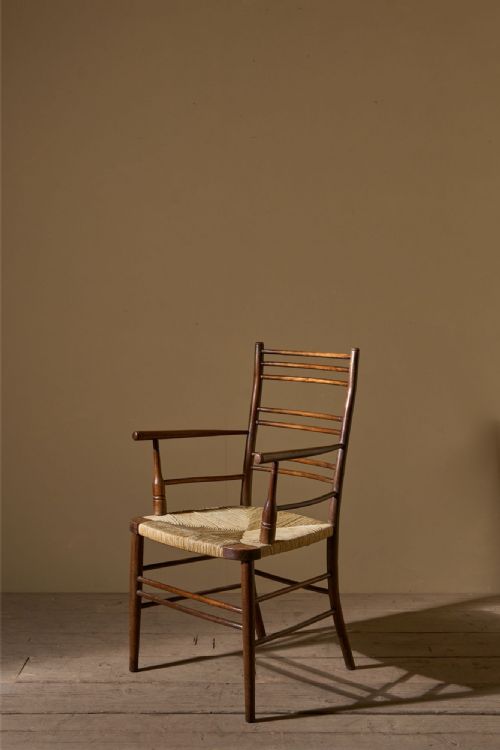
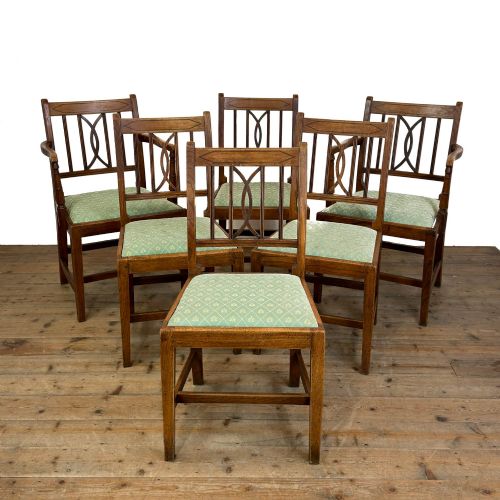
The evidence shows these chairs span the Victorian, Edwardian, and nineteen hundred periods, produced in forms that range from simple dining carvers to high back Windsor variants and open armchairs. Oak, elm, and beech form the primary timber framework, often accompanied by rush, fabric, or upholstered drop in seats.
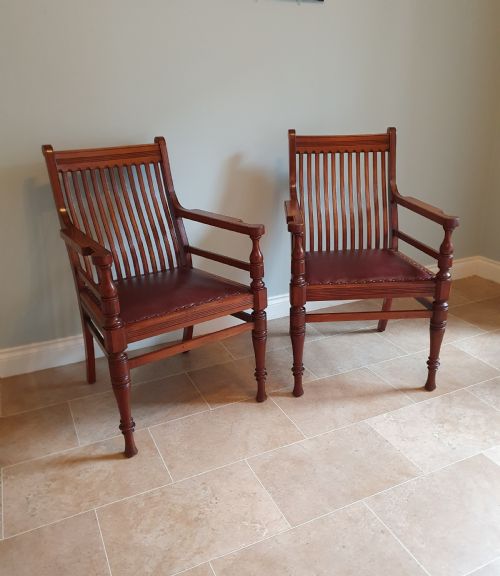
Buyers frequently encounter oak examples featuring slotted backs, carved splats, and stretcher supports, alongside elm and beech Windsor styles. These forms reflect both domestic dining use and occasional seating roles within period interiors.
Materials and Construction
Makers utilised solid native timbers, predominantly oak, elm, and beech, selecting woods for their grain and structural durability. Joinery methods relied on visible pegs, mortise and tenon joints, and turned supports rather than concealed metal fasteners.
Surface decoration integrated functional elements such as metal studs, pewter inlay, and painted wood finishes. Upholstery materials included textile, fabric, and rush seating inserted into drop in frames or secured with decorative studwork.
Retail Price Guide 2026
Typical UK retail prices for arts and crafts carver, calculated from the Sellingantiques database of over a million retail prices indexed since 2003. This retail price guide relies exclusively on Sellingantiques data; no external sources or auction records are used, so the figures do not describe the wider market.
Some chairs conceal pewter inlay within their timber frames, offering a subtle gleam to anyone sitting down for dinner.
Evaluating the Pieces
Distinction across the range lies in the selection of timber and the ambition of the carved or inlaid detail. Pieces incorporating marquetry decoration, spear shaped splats, or pewter inlay demonstrate greater craftsmanship than plain structural frames.
Proportion and integrity of the original materials determine the standing of each piece. Retaining original rush seating, uncompromised timber patination, and robust stretcher systems elevates an example above altered or heavily restored counterparts.
The Arts and Crafts Carver Glossary
- Carver
- An armchair, typically designed to sit at the head of a dining table or to match a set of single chairs. These chairs feature integral armrests to accommodate the user.
- Windsor
- A chair constructed with a solid wooden seat into which the legs and back spindles are separately inserted. This method creates a sturdy, practical form.
- Stretcher
- A horizontal wooden rod connecting the legs of a chair to provide structural rigidity. Box stretchers link all four legs near the base.
- Splat
- A vertical strip of wood forming the centre of a chair back. Arts and crafts examples often feature shaped or slotted variations.
- Drop in seat
- A removable frame upholstered in fabric or leather that drops into a rebate within the chair seat rail. This construction allows for straightforward reupholstery.
Frequently Asked Questions
What is an arts and crafts carver?
An arts and crafts carver is an armchair designed with supportive armrests, originating from the late Victorian, Edwardian, and nineteen hundred periods. These chairs emphasise visible construction and solid timber work.
They function as individual armchairs or as the armrest variants within a larger set of dining chairs.
Which woods were used for these chairs?
Makers constructed these chairs primarily using solid oak, elm, and beech. Oak appears most frequently in standard and high back forms, while elm and beech frequently support Windsor variations.
These timbers provided the necessary strength for daily use while accepting various finishes and decorative inlays.
How do I identify the period?
Dating relies on stylistic markers recorded in the evidence, such as tapering and fluted supports, spear shaped splats, and marquetry decoration. Victorian examples often blend vernacular traditions with early movement ideas.
Edwardian and nineteen hundred pieces frequently display cleaner structural lines, geometric slot backs, and integrated metal or leather detailing.
How were the seats finished?
Seating surfaces varied according to the specific chair design and regional tradition. Common finishes include woven rush, upholstered drop in pads, and studded leather.
Materials like fabric, textile, and metal studs were utilised to complement the exposed timber framework.