
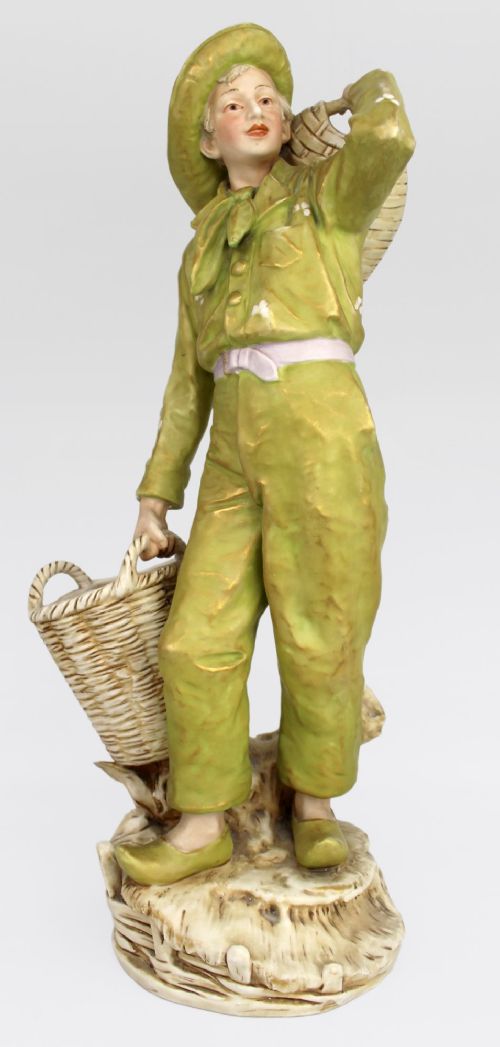


Art Nouveau Porcelain Statue
An art nouveau porcelain statue brings fluid lines and natural grace to a room, capturing the distinct aesthetic of turn-of-the-century design.
Art Nouveau Porcelain Statue
An art nouveau porcelain statue captures the flowing organic forms and naturalistic subjects characteristic of the movement, spanning figures, maidens, water nymphs, and animals. You will frequently encounter substantial figures and pairs produced during the late nineteenth and early twentieth centuries, including Edwardian examples.
The objects take diverse sculptural shapes, ranging from tall individual maidens and bather centrepieces to figural groups carrying puppies, kittens, or wicker baskets. Many pieces reflect European manufacturing centres, notably Bohemian and French workshops active around nineteen-ten.
Makers focused heavily on human subjects, particularly graceful women with flowing drapery, alongside domestic animals and sporting dogs like setters. These sculptures often double as functional ornaments or decorative centrepieces for display on tabletops and mantels.
How they were made
Potters shaped these figures using porcelain, ceramic, and biscuit porcelain, employing intricate moulding techniques to capture delicate drapery and facial expressions. The unglazed matte surface of biscuit porcelain provided a distinct texture prized for classical and naturalistic subjects.
Artisans applied coloured glazes, enamel, and hand-painted details to accentuate the sculptural contours of each piece. Gilt highlights and selective gilding were often added to emphasise borders, hair ornaments, and garments in the distinctive organic style.
Among the maidens and nymphs, resilient puppies and kittens frequently find themselves carried in baskets by Victorian and Edwardian youngsters.
What varies in quality
The distinction between standard output and superior quality rests in the crispness of the modelling and the sensitivity of the hand-painted details. Finer pieces display sharper relief in the flowing hair and fabric folds, alongside carefully controlled enamel work that enhances the naturalism of the subject.
Scale and ambition also define the hierarchy, as monumental figures and complex multi-figure groups require greater technical mastery in firing and glazing without distortion. The presence of early model numbers and artist signatures indicates superior workshop production.
Royal Dux Bohemia·Ernst Wahliss·Luca Madrassi·Alois Hampel·H Schubert
The Art Nouveau Porcelain Statue Glossary
- Biscuit Porcelain
- Unfired or single-fired unglazed porcelain that has a matte, porous texture resembling marble. It allows fine sculptural details to remain crisp.
- Glaze
- A glassy coating fused to ceramic surfaces through firing, providing colour, sheen, and impermeability. Enamel and paint are often applied over or under this layer.
- Centrepiece
- A large decorative ornament designed to sit in the middle of a table or sideboard. These often feature figural groups or elaborate maiden motifs.
- Biscuit
- The initial state of porcelain after it has undergone its first firing but before glazing. Pieces left in this state are valued for their tactile, stone-like appearance.
Art Nouveau Porcelain Statue: Frequently Asked Questions
How do I date an art nouveau porcelain statue?
Dating relies on identifying workshop stamps, impressed model numbers, and stylistic markers typical of the turn of the twentieth century. Many pieces bear specific factory marks associated with Bohemian and French production periods.
Examining the application of glaze and the specific characteristics of the biscuit porcelain also helps narrow down the decade of manufacture between eighteen-nineties and nineteen-twenties.
What subjects are most common?
Human figures dominate the production, particularly graceful maidens, water nymphs, bathers, and pastoral figures such as shepherds and shepherdesses. Natural motifs extend to animals, including setters, dogs, and children with pets.
These subjects reflect the broader cultural interest in organic forms, mythology, and idyllic rural life during the Edwardian era.
Where should I display these statues?
These sculptures suit prominent display areas such as mantels, large sideboards, and dedicated collector cabinets where their height and form can be appreciated. Centrepieces work best on open tables where they are visible from multiple angles.
Ensure the placement protects delicate extremities, applied floral elements, and painted surfaces from accidental knocks.
What is the difference between porcelain and ceramic figures?
Porcelain is a finer, denser ceramic material fired at higher temperatures until it becomes vitrified and slightly translucent. Standard ceramic figures are often heavier and more porous beneath the glaze.
Biscuit porcelain specifically lacks the glossy outer glaze, offering a tactile, matte finish favoured for detailed figurative work.