
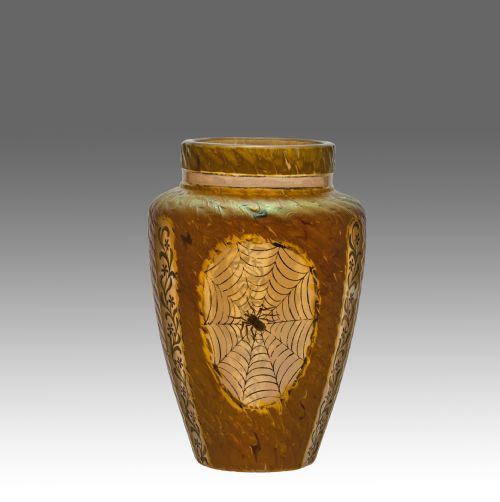


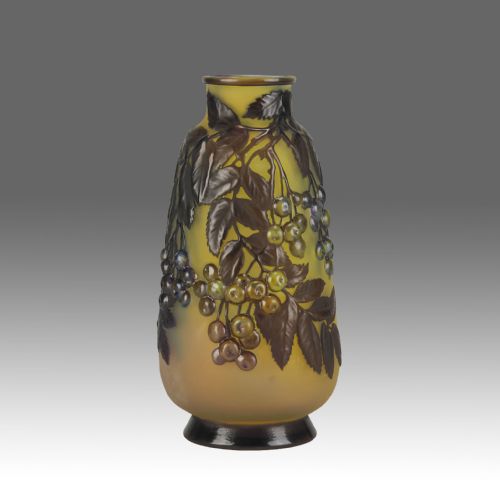


Art Nouveau Glassware
Art nouveau glassware captures the fluid, organic lines and brilliant iridescence that defined turn-of-the-century design.
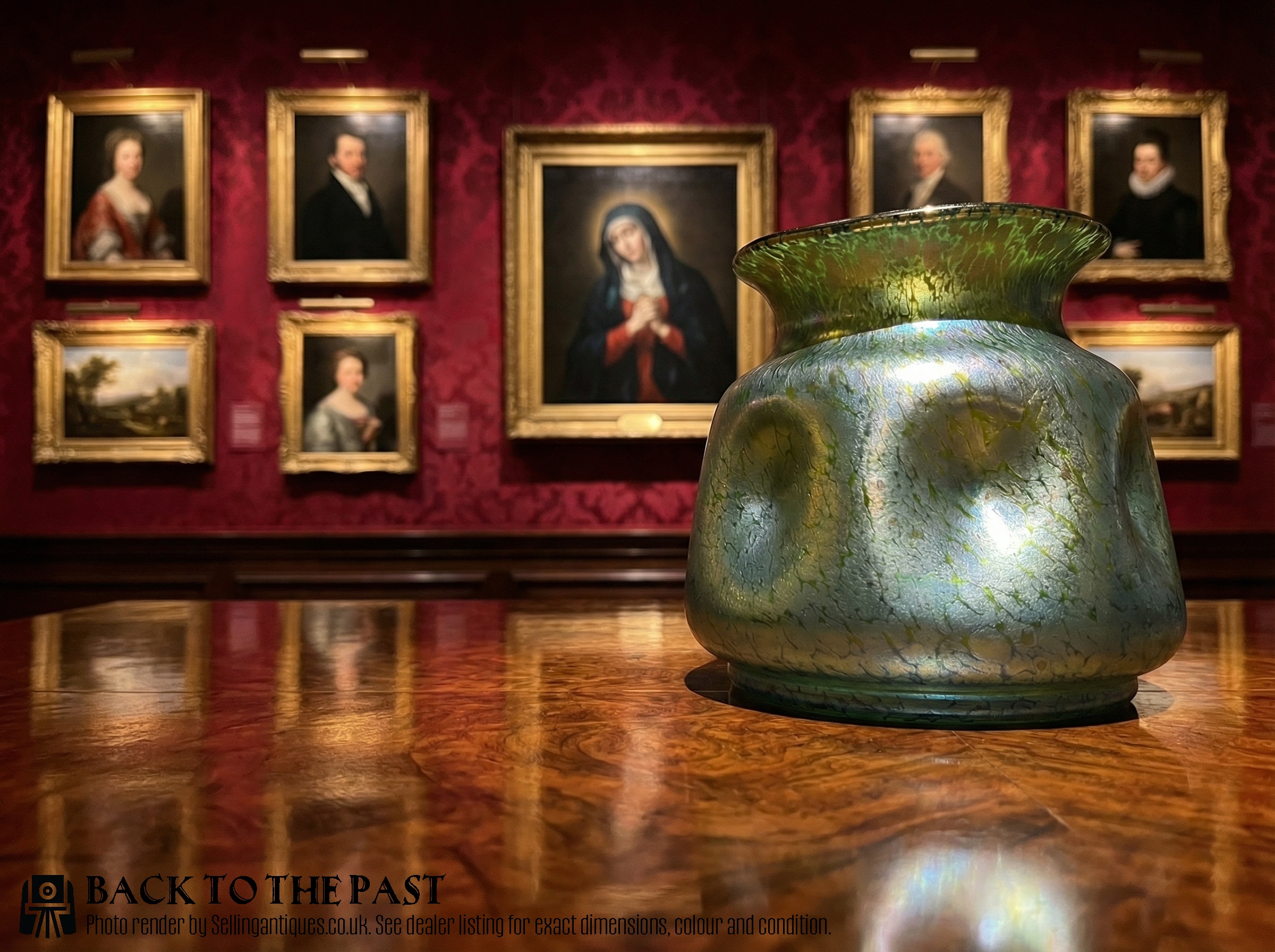
Art Nouveau Glassware
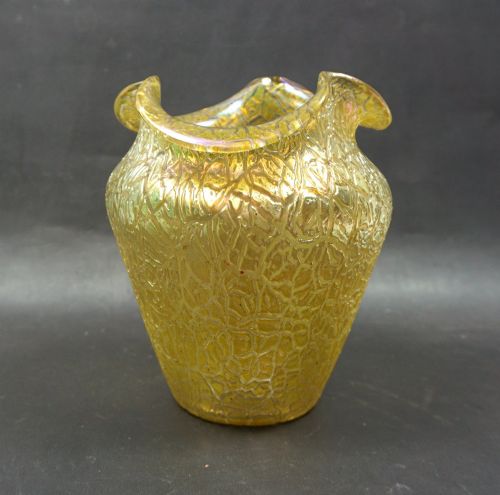
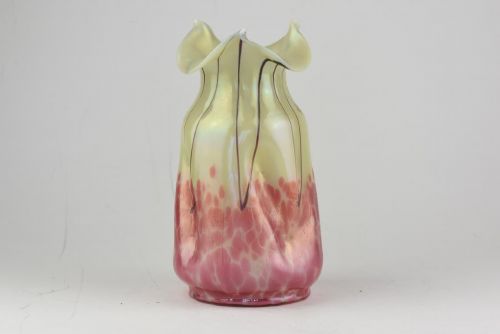
Art nouveau glassware encompasses vases, drinking vessels, and decorative plates created primarily around the turn of the twentieth century. These pieces reflect broader international movements such as Jugendstil and Vienna Secession, drawing heavily on natural forms.
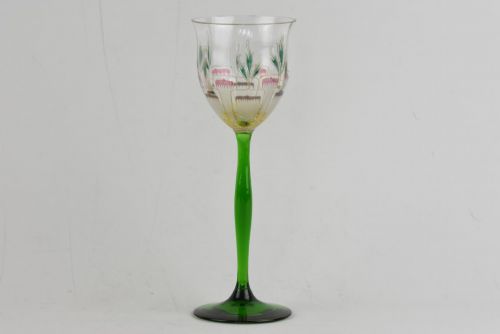
The objects on this page range from blown glass vases with organic silhouettes to crystal hock glasses and cordial sets. Vases and decorative glassware dominate the selection, often produced by prominent European glasshouses.
Originating largely from France, Bohemia, and Germany, these items span periods from the late nineteenth century through the early decades of the twentieth. Collectors encounter everything from iridescent surface finishes to layered cameo glass.
How they were made
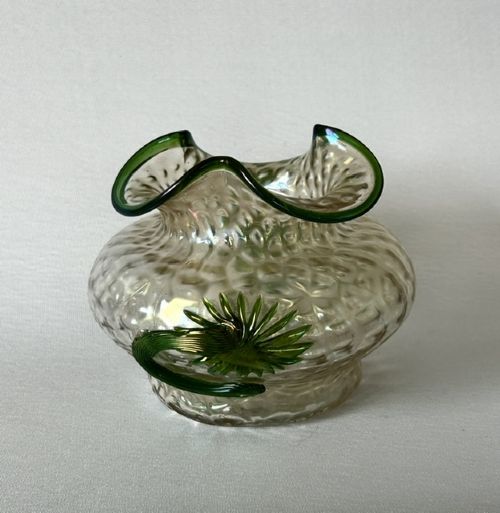
Makers utilised hand-blown techniques to achieve fluid, organic shapes that mimic plants, flowers, and natural phenomena. Molten glass was manipulated while hot, sometimes incorporating applied elements like snakes or handles.
Surface decoration frequently involved intricate enamel work, gold leaf application, and metal overlays. Cameo glass was created by acid-etching or carving through multiple fused layers of coloured glass to reveal contrasting designs.
Iridescent effects were achieved by treating hot glass with metallic vapours or oxides, producing a shimmering, peacock-feather sheen. Other pieces relied on frosted glass, sepia staining, or opaline grounds to catch the light.
Art Nouveau Glassware Retail Price Guide 2026
Typical asking prices for art nouveau glassware among the pieces listed under this phrase on Sellingantiques today, from the lower quarter to the upper quarter. They describe what is for sale here now, not the wider market.
Some pieces feature creeping pewter snakes and tadpoles frozen forever in molten glass, proving nature's weirdest creatures inspired turn-of-the-century drinkers.
What varies in quality
Quality in these glass pieces rests upon the sophistication of the design and the technical mastery required to execute it. Pieces attributed to major artists or specific glassworks often display superior control over chemical reactions in iridescence and depth in cameo carving.
The execution of surface details, such as hand-enamelled floral motifs or precision silver overlays, dictates the distinction between standard production items and exceptional works. Heavier crystal bodies and balanced proportions separate superior drinking sets from simpler vessels.
Loetz·Pallme Konig·Theresienthal·Kralik Glass·Legras·Gallé·Rene Lalique·Frits Hechert·Moser·Otto Prutscher·LC Tiffany·Daum·Paul Nicholas·D'Argental·Meyr Neffe·Adelbert Niemeyer
The Art Nouveau Glassware Glossary
- Cameo glass
- Glass formed with multiple layers of different colours, then carved or acid-etched to create a raised design. This technique requires immense precision to expose the background without damaging the motif.
- Iridescent glass
- Glass treated with metallic salts while hot to produce a rainbow-like sheen on the surface. Loetz and Tiffany popularised this shimmering effect to mimic natural opals and beetle wings.
- Jugendstil
- The German and Austrian manifestation of the international art nouveau movement. It emphasises youthful, modern design principles rooted in botanical and linear motifs.
- Enamel
- Opaque or translucent glass paste applied to the surface of a vessel and fired to fuse permanently. It allows for rich polychrome floral and landscape decorations.
- Roemer
- A traditional Germanic large drinking glass, typically featuring a ribbed stem and a wide bowl. They frequently appear in pale green glass with detailed enamel work.
- Secessionist
- Pertaining to the Vienna Secession, a movement of artists who broke away from traditional academic art. Their glass designs favour geometric restraint alongside organic curves.
Art Nouveau Glassware: Frequently Asked Questions
How do I identify art nouveau glassware?
Look for organic motifs like flowers, vines, and insects combined with flowing, asymmetrical lines. The presence of iridescent finishes or cameo layers often points directly to this era.
Examine the base for signatures, etched marks, or paper labels from period makers. Stylistic traits like Jugendstil or Vienna Secession aesthetics also help confirm the period.
How were cameo glass vases made?
Cameo glass vases were produced by fusing two or more layers of contrasting coloured glass together. Artists then carved away the outer layer by hand or used acid-etching.
This painstaking process revealed the background colour, leaving the design in sharp relief. The depth of the layers determined the complexity of the final scene.
Can I use antique hock glasses?
Antique crystal hock and cordial glasses are generally intended for display or careful, occasional use. Hand-enamelled details and delicate stems require gentle handling and hand washing.
Treating these vessels with care preserves the historic enamel and gold leaf decorations. Avoid placing them in modern dishwashers.