
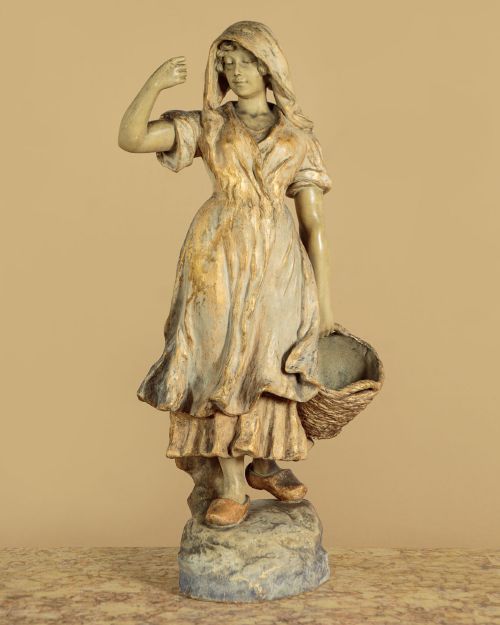
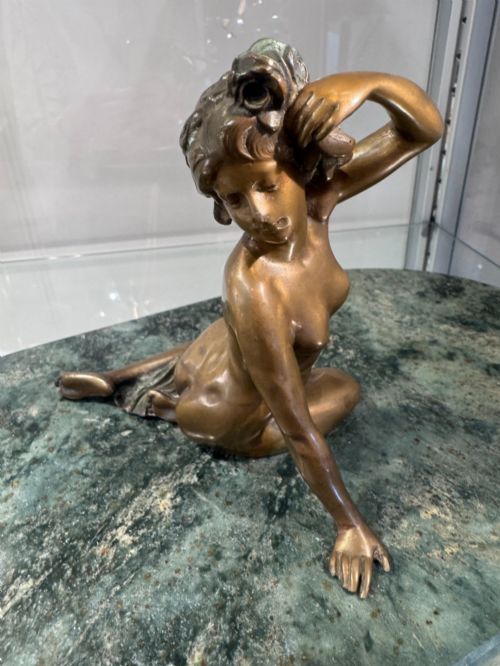
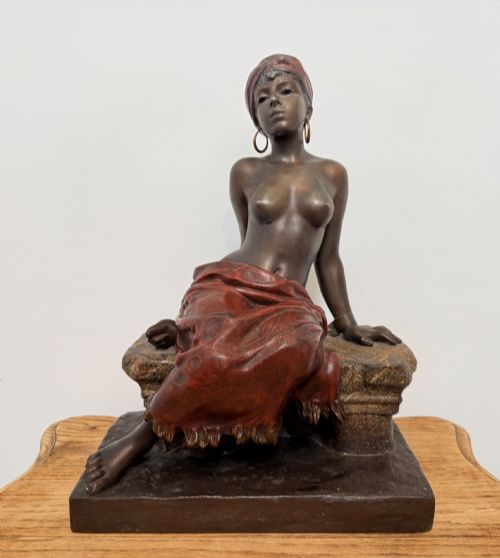
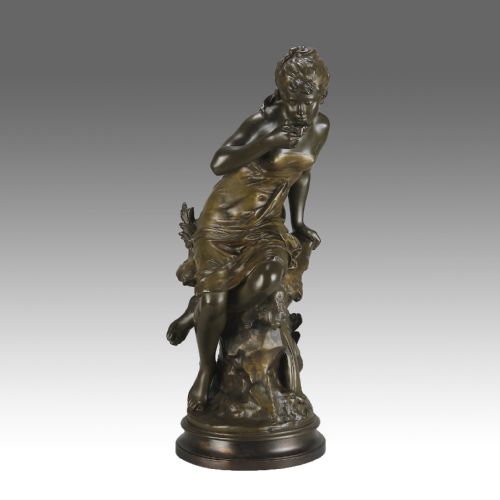




Art Nouveau Female Figurine
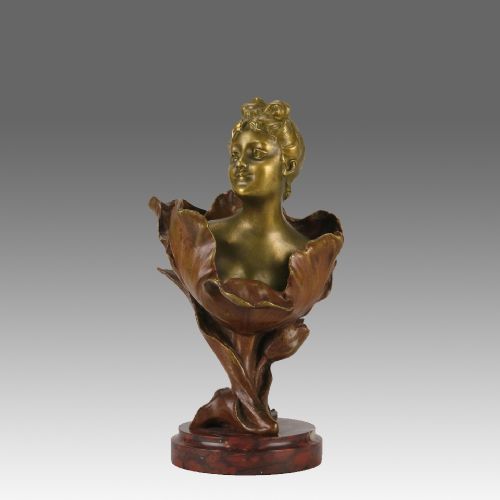
An art nouveau female figurine captures the sinuous grace and natural motifs defining turn-of-the-century design through expressive bronze, marble, and ceramic forms.
Art Nouveau Female Figurine
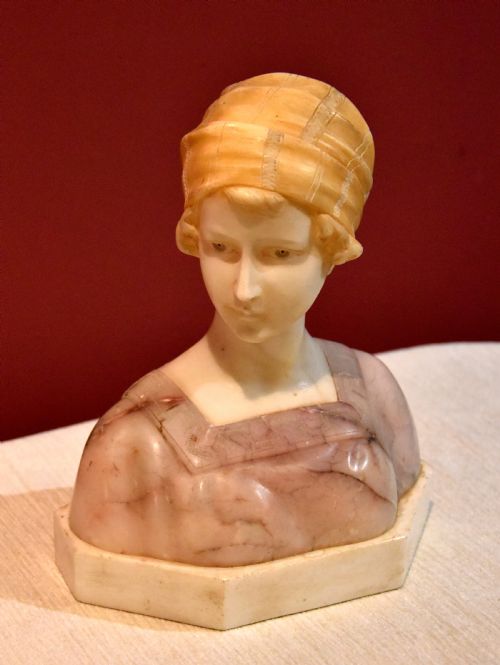
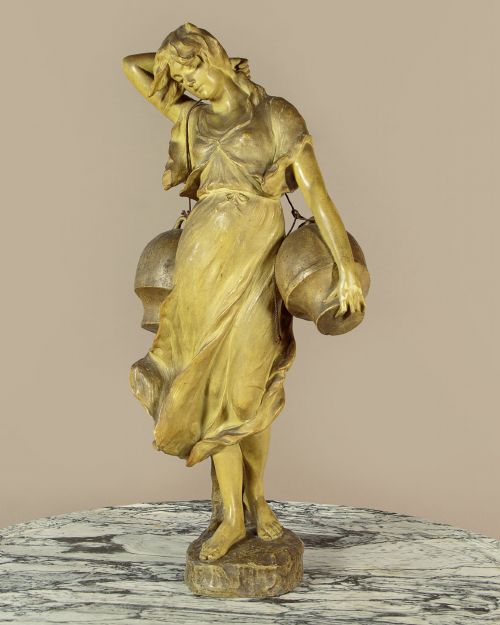
Buyers seeking an art nouveau female figurine encounter sculptural depictions of women deeply influenced by the late nineteenth and early twentieth century aesthetic movements. These pieces range from allegorical figures and water carriers to dancers and busts produced across Europe.
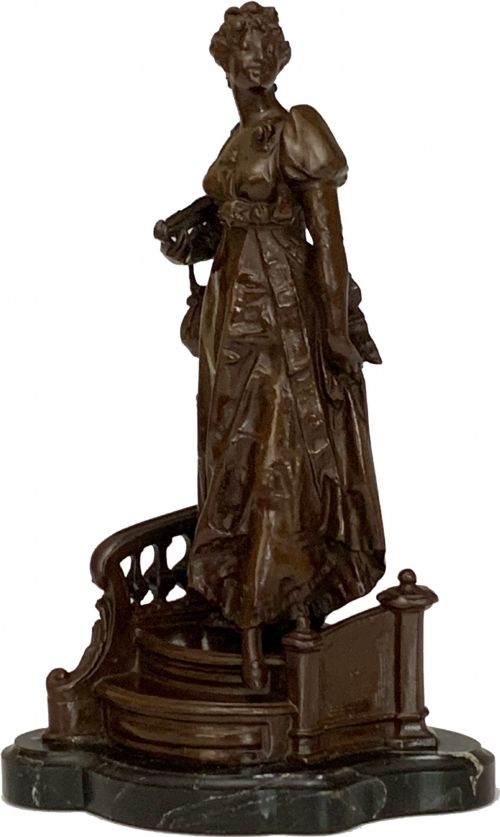
The most common examples on this page are French and continental bronzes, alongside glazed porcelain figures from manufactories like Royal Dux and earthenware pieces by Goldscheider. Creators utilised these mediums to embody the flowing hair, drapery, and organic curves characteristic of the period.
Works appear in various scales, from small cabinet busts to monumental standing maidens and figural centrepieces. They reflect diverse stylistic threads including Belle Epoque elegance and neoclassical revival motifs.
Materials and methods
Foundry cast bronze frequently incorporates patinated or gilt surfaces, sometimes mounted upon marble or alabaster plinths to provide stability and visual contrast. These metal sculptures rely on skilled chasing and patination to achieve subtle tonal variations.
Ceramic and porcelain works utilise detailed moulding and hand-painting, often combining soft pastel glazes with gilded highlights on earthenware and soft-paste bodies. Carved pieces display meticulous hand-working in alabaster, marble, and limewood to render delicate folds of fabric and hair.
Listings feature works spanning the late nineteenth century through the nineteen-twenties, incorporating diverse materials from bronze and marble to porcelain and spelter.
Markers of distinction
Quality rests primarily on the crispness of the casting or the finesse of the carving, where sharper details in facial expressions and drapery distinguish superior execution. Softer definition often indicates secondary castings or mass production from worn moulds.
The integration of materials also dictates standing, such as the harmonious pairing of patinated bronze with veined marble bases rather than plain substitutes. Original patination and well-preserved polychrome or gilt ceramic finishes elevate the visual integrity of a piece.
Goldscheider·E Villanis·Mathurin Moreau·Henri Godet·Georges Van Der Straeten·Royal Dux Bohemia·Fritz Kochendorfer·Hector Lemaire·Sylvain Kinsburger·Hans Müller·Ernst Barrias·Ernst Wahliss·Eugène Désiré Piron·Maurice Bouval
The Art Nouveau Female Figurine Glossary
- Spelter
- A zinc alloy frequently utilised as a cost-effective alternative to bronze in decorative European sculpture. It takes patination well to simulate heavier metals.
- Patination
- The chemical or natural surface treatment applied to bronze and other metals to create colour depth and protect the underlying material. It develops distinct tones over decades of exposure.
- Terracotta
- Fired clay moulded into sculptural forms, often finished with slips or paints. It allowed makers to achieve warm, matte textures on figurative works.
- Allegory
- The representation of abstract ideas, such as seasons or natural elements, through human form. Artists of this era frequently personified concepts like summer or the spring.
- Polychrome
- The practice of decorating sculptural surfaces in multiple colours. This technique appears widely on glazed ceramic and porcelain figures from the period.
Art Nouveau Female Figurine: Frequently Asked Questions
How were these figures originally displayed?
These sculptures typically served as mantel ornaments, table centrepieces, or focal points on pedestals within turn-of-the-century domestic interiors. They were meant to be viewed closely within well-lit drawing rooms alongside complementary decorative arts.
Larger monumental works often stood in hallways or antechambers, while smaller busts and cabinet bronzes occupied desks and side tables. Their placement emphasised the refined aesthetic tastes of the household.
How do I care for bronze and marble figures?
Maintenance requires gentle dusting with a soft, dry cloth to prevent the accumulation of grit within recessed details. Avoid liquid cleaners or abrasive cloths that might strip patination from metals or stain porous stone.
Marble and alabaster benefit from occasional wiping with a barely damp cloth followed by immediate drying. Keeping pieces away from direct sunlight and excessive humidity preserves both the stone and the underlying mounts.
What defines the art nouveau style in sculpture?
The style draws inspiration from natural organic forms, featuring whipping lines, stylised floral motifs, and flowing human hair. Sculptors abandoned rigid academic symmetry in favour of dynamic, asymmetric movement that echoed growing stems and rippling water.
Depictions of women frequently merge with plant life or natural elements like water and flowers. This integration of human anatomy with botanical curves remains the hallmark of the movement.
How can I distinguish ceramic figures from metal ones?
Ceramic and porcelain pieces exhibit glazed or painted surfaces with smooth, vitrified finishes, whereas metal sculptures reveal cold-to-the-touch metallic density and patinated skin. Tapping the material gently usually produces a dull thud for clay and a resonant ring for bronze or spelter.
Weight offers another clear indicator, as hollow ceramics feel lighter than solid bronze casts or marble-mounted metal compositions. Examining the underside often exposes raw biscuit porcelain or threaded mounting bolts specific to metalwork.