
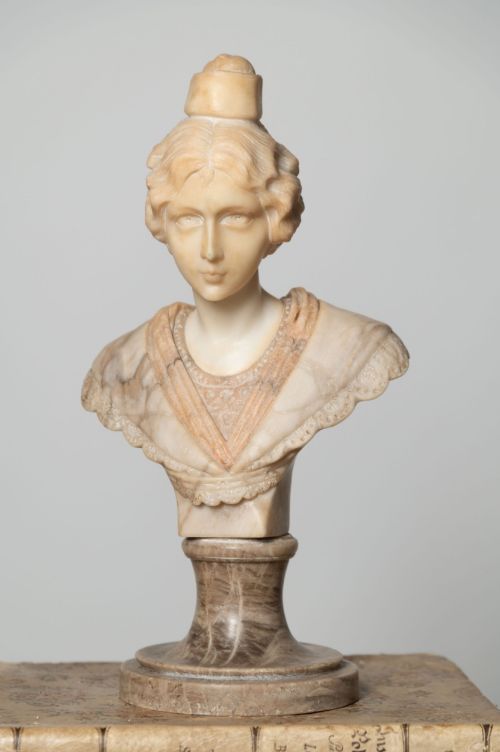
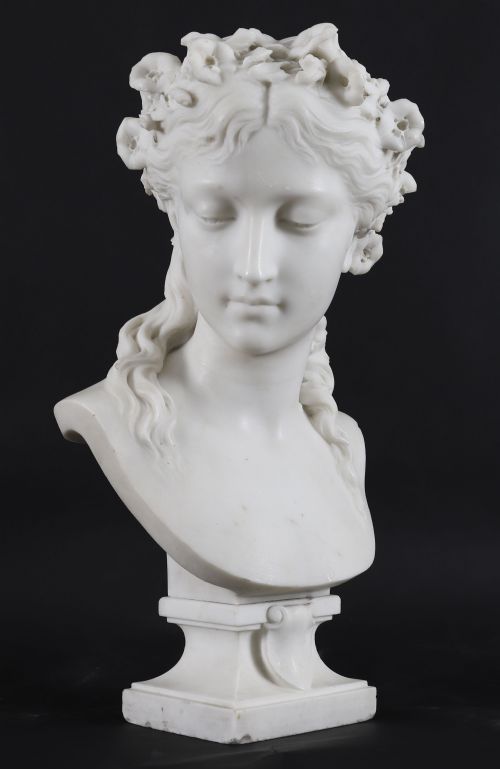

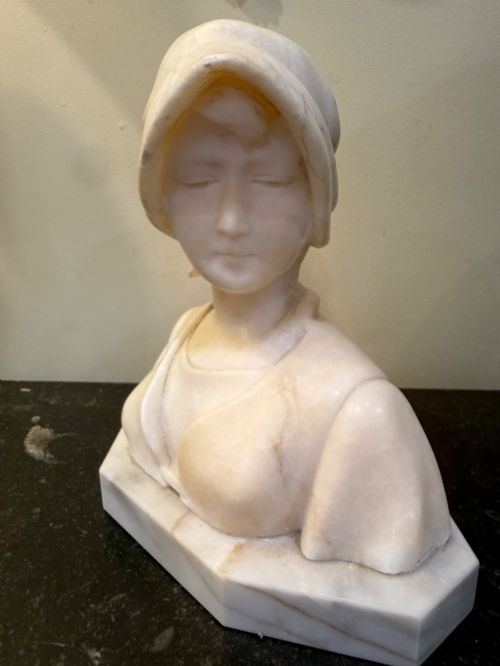


Antique Lady Bust
An antique lady bust brings the quiet dignity of classical sculpture and portraiture into a room, rendered in carved marble, warm bronze or painted canvas.
Antique Lady Bust
When you search for an antique lady bust, you encounter a diverse gathering of portrait sculptures, painted panels and miniature silhouettes spanning several centuries. The selection ranges from monumental carved marble and cast bronze figures down to delicate ceramic pin cushion dolls and plaster studies.
Nineteenth-century French and English works form the backbone of what you meet here, often channeling neoclassical ideals or Art Nouveau fluidity. Alongside three-dimensional sculptures, the phrase embraces oil paintings, pastels and silhouettes that capture the female form from the shoulders up.
The materials shift considerably across the inventory, moving from heavy Carrara marble and alabaster to spelter, terracotta, wood and canvas. These pieces served diverse decorative roles in period interiors, functioning as mantel ornaments, library sculptures and wall-hung portraits.
How they were made
Sculptural works rely on manual reduction or casting techniques, employing materials such as Carrara marble, alabaster and carved wood for direct subtraction, or bronze and spelter for foundry casting. Marble carvers worked stone with chisels and rasps to achieve translucency in drapery and softness in flesh, while metalworkers utilised lost-wax or sand-casting methods before applying patinas.
Flat portraiture utilises oil, pastel or watercolour wash on canvas and paper substrates, capturing tonal gradation through layered brushwork and pigment application. Silhouette pieces involve meticulous paper cutting and ink or watercolour detailing, often mounted behind glass to preserve the delicate monochrome edges.
Listings feature periods spanning from the 17th century through the Edwardian era and 1930s, utilising marble, bronze, wood, alabaster, canvas and plaster.
What varies in quality
The standard of carving or casting defines the upper tier of sculptural pieces, separating fluid anatomical realism and crisp detail from routine commercial production. Superior marbles and bronzes display sensitive handling of hair, fabric folds and facial expression, whereas lesser items rely on heavy factory finishing and blunt contours.
Provenance and artistic attribution elevate specific works, particularly those signed by recognised modellers or executed within established European schools. Painted portraits and silhouettes similarly depend upon the surety of the draughtsmanship and the psychological depth captured by the hand of the artist.
Eugene Aizelin·Georges Morin·Emmanuel Villanis·J C De Blezer·Fasold & Stuach
The Antique Lady Bust Glossary
- Carrara marble
- A type of white or blue-grey marble from the city of Carrara in Tuscany, prized by sculptors for its fine grain and uniform consistency. It was widely utilised in nineteenth-century neoclassical portraiture.
- Spelter
- An alloy of zinc and copper used as a less expensive substitute for bronze, frequently given a bronze-like metallic patina. It appears commonly in decorative Art Nouveau figures.
- Alabaster
- A fine-grained, translucent stone that is softer than marble, making it suitable for delicate interior carvings. Sculptors valued its ability to diffuse light in lamp bases and small busts.
- Pin cushion doll
- A half-figure ceramic or porcelain bust attached to a fabric cushion base, popular during the early twentieth century. They combined utility with decorative miniature portraiture on dressing tables.
- Patina
- The surface sheen or coloration developed through age, handling or chemical treatment on metals, wood and marble. It serves as an indicator of original finish and natural ageing.
Antique Lady Bust: Frequently Asked Questions
What materials were used for an antique lady bust?
Sculptural examples utilise materials such as Carrara marble, alabaster, bronze, spelter, terracotta, wood and plaster. Flat representations employ oil on canvas, pastel on paper and watercolour washes.
Makers selected these mediums according to the prevailing taste of the period, ranging from neoclassical stone to twentieth-century ceramics.
How do I date an antique lady bust?
Dating relies on stylistic markers such as neoclassical drapery, Art Nouveau hair styling or Art Deco geometric bases, alongside material composition. Signatures, foundry marks and documented artist active dates provide further chronological anchors.
Clothing styles, bonnet designs and framing techniques also help narrow down the specific decade of creation.
Where were these busts displayed in period homes?
Large marble and bronze sculptures stood on mantelpieces, pedestals, library tables and sideboards in formal rooms. Smaller plaster models and pin cushion dolls occupied dressing tables and boudoirs.
Flat oil portraits and silhouette miniatures were hung on drawing-room walls or kept in private chambers.
Are painted portraits considered part of this category?
The grouping includes oil paintings, pastels and silhouette portraits alongside three-dimensional sculptures. These flat formats share the same focus on capturing a female subject from the bust up.
Such works provide a parallel visual record of portraiture spanning the seventeenth through the twentieth centuries.