



Beige Ceramic Figure
A beige ceramic figure captures the sculptural ambition of the nineteenth and twentieth centuries in muted, earthy tones.
Beige Ceramic Figure
When you search for a beige ceramic figure, you are looking at moulded and hand-modelled sculptural works rendered in terracotta, earthenware, porcelain, and biscuit porcelain. These pieces span the nineteenth century into the mid-twentieth century, encompassing decorative figurines, portrait busts, animalier sculptures, and pin cushion dolls. The examples gathered here reflect diverse aesthetic movements, from classical revival and Victorian orientalism to Art Nouveau and Art Deco.
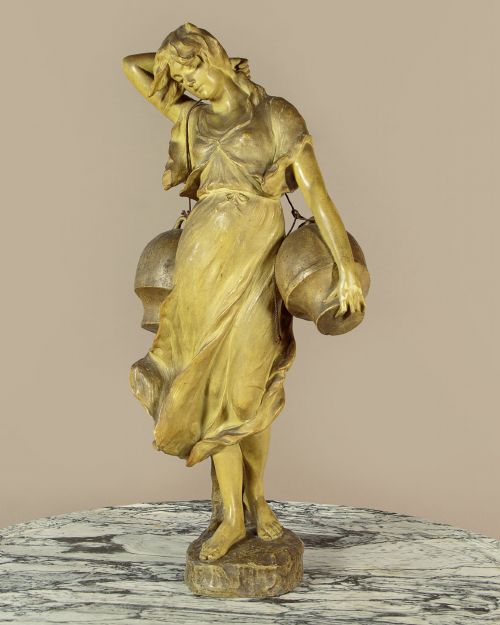
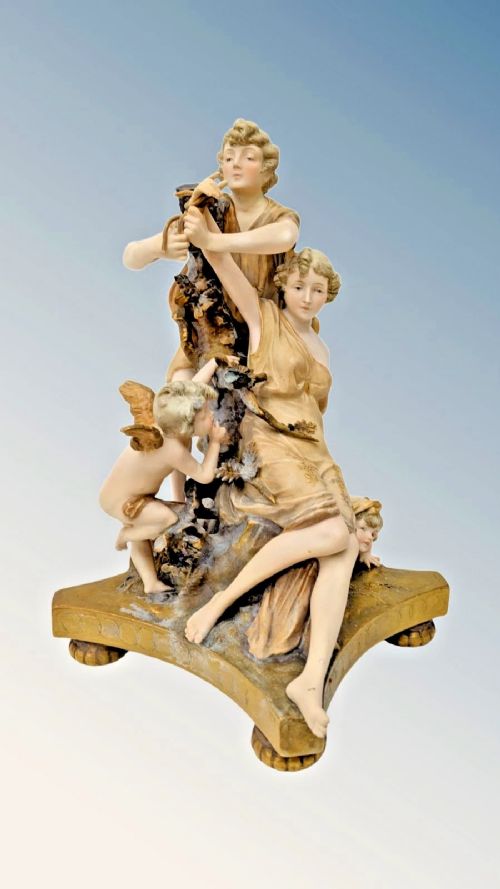
The most common interpretations you will encounter on this page are nineteenth-century classical figures, water carriers, and allegorical subjects from major European manufactories. Makers such as Goldscheider and Royal Dux dominate the landscape with large-scale terracotta and porcelain figures finished in naturalistic neutral palettes. Alongside these grand works appear smaller pin cushion dolls and modernist statuettes representing the later evolution of the form.
How they were made
Surface decoration ranges from unglazed biscuit porcelain with a chalky matte appearance to carefully applied paint and low-fired glazes. Figures produced by factories like Royal Dux and Turn often combined tinted bisque with subtle polychrome or metallic highlights to accentuate the contours of drapery and muscle. Plaster also appears as a foundational or structural medium in specific sculptural contexts.
The listings span the nineteenth century through the 1940s, uniting terracotta, porcelain, and earthenware across Art Nouveau, Art Deco, and classical revival styles.
What varies in quality
Quality in these sculptural pieces rests upon the crispness of the modelling and the sensitivity of the finishing work executed by the studio. Superior examples display sharply defined facial expressions, deeply undercut drapery, and meticulous hand-tooling that survives the firing process without distortion. Inferior pieces often suffer from soft, muddy mould transfer where fine details are lost in production.
The distinction between standard commercial output and exceptional studio or prototype work lies in the artistic ambition of the design and the purity of the ceramic medium. Pieces carrying documented attribution to master modellers or renowned firms demonstrate superior kiln control and sophisticated surface patination. The weight, balance, and compositional rhythm of the sculpture ultimately determine its standing within the range.
Goldscheider·Ernst Wallace·P. Ipsens Enke·Joseph Constant·Royal Dux·B. Rezl·Fasold & Stuach
The Beige Ceramic Figure Glossary
- Biscuit porcelain
- Unglazed porcelain fired once to a hard, porous state that yields a matte, marble-like surface finish. This material is particularly favoured for neo-classical figures and portrait busts.
- Terracotta
- Fired clay ranging in colour from pale buff to deep reddish-brown, widely utilised for large-scale nineteenth-century figures. It offers a warm, matte texture suitable for expressive modelling.
- Animalier
- A nineteenth-century artistic movement dedicated to the realistic portrayal of animals. Sculptors in this tradition focused on capturing the anatomy and movement of beasts.
- Bisque
- Another term for unglazed ceramic ware, synonymous with biscuit porcelain when applied to fine porcelain bodies. It absorbs pigments differently than glazed surfaces.
- Pin cushion doll
- A small half-figure popular in the early twentieth century, designed to mount onto sewing cushions. These porcelain busts frequently depict fashionable women or figures from popular culture.
Beige Ceramic Figure: Frequently Asked Questions
What is a beige ceramic figure?
A beige ceramic figure is a sculptural object created from clay, terracotta, or porcelain, finished in neutral, earthy tones. These works range from classical Roman subjects and allegorical groups to Art Deco statuettes and animalier sculptures.
Produced across the nineteenth and twentieth centuries by European potteries and independent artists, they serve primarily as decorative indoor ornaments.
How do I date a ceramic figure?
Dating relies on stylistic markers, such as the flowing organic lines of Art Nouveau or the geometric abstraction of Art Deco. Factory marks, impressed numbers, and artist signatures stamped into the base provide concrete temporal anchors.
Comparing the manufacturing medium, such as nineteenth-century terracotta versus mid-century earthenware, further clarifies the period of origin.
Where were these figures made?
The pieces gathered here originate predominantly from European workshops and factories operating in Austria, Bohemia, Denmark, France, and Germany. Major ceramic centres produced both mass-market decorative items and high-end exhibition pieces.
Individual sculptors working within these regions often signed their clay or porcelain models before industrial replication.
How should I display them?
Display these sculptures on stable, level surfaces away from high-traffic areas where they might be accidentally knocked. Because many are composed of porous terracotta or delicate bisque porcelain, keep them out of direct sunlight and damp environments.
Dust them gently with a soft, dry brush rather than liquid cleaners to preserve their matte finishes.
What is biscuit porcelain?
Biscuit porcelain is ceramic ware that has been fired without a surface glaze, resulting in a matte texture resembling white or tinted marble. It was widely adopted in the nineteenth century for figures requiring subtle anatomical detail.
Because the surface is porous, it requires careful handling to prevent staining from oils or dirt.