

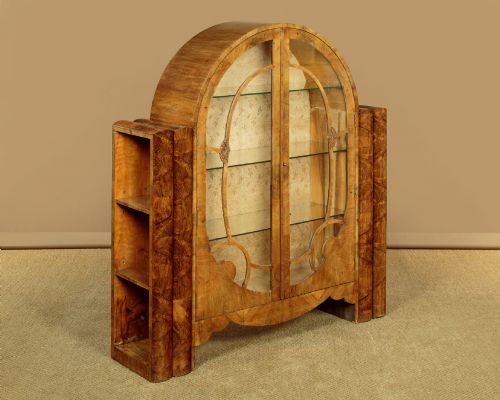


Art Deco Walnut Vitrine
An art deco walnut vitrine brings geometric grace and rich timber grain to a room, framing cherished objects behind glazed doors.
Art Deco Walnut Vitrine
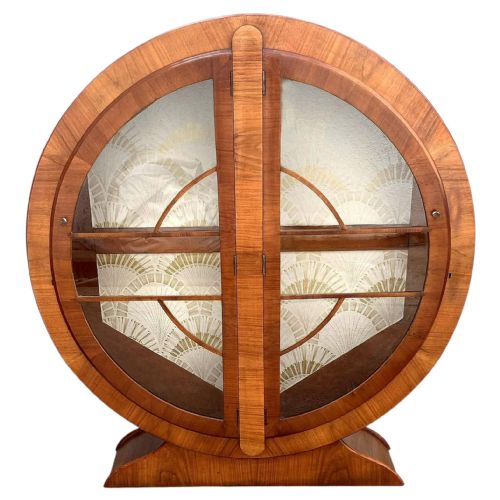
An art deco walnut vitrine is a specialised display cabinet designed to exhibit porcelain, silver and small curiosities. These pieces belong predominantly to the nineteen-thirties, with occasional examples originating from the Edwardian era.
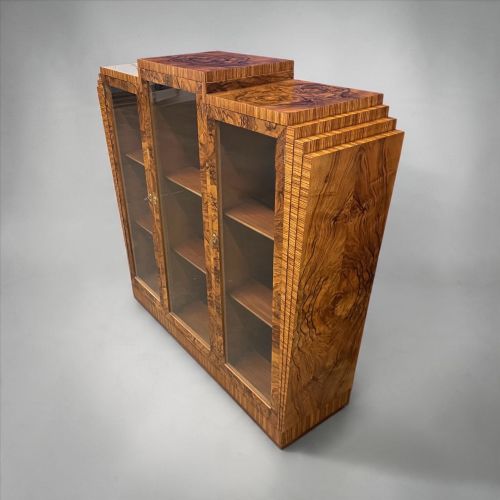
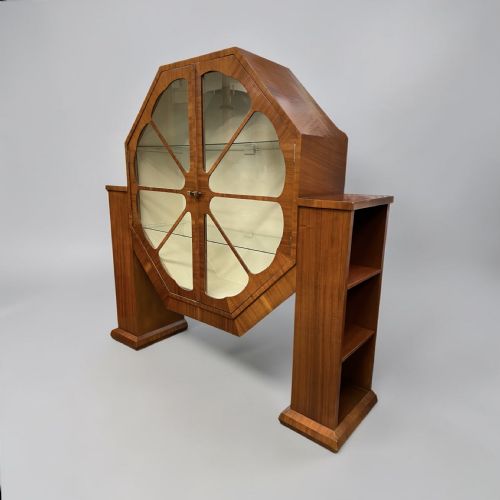
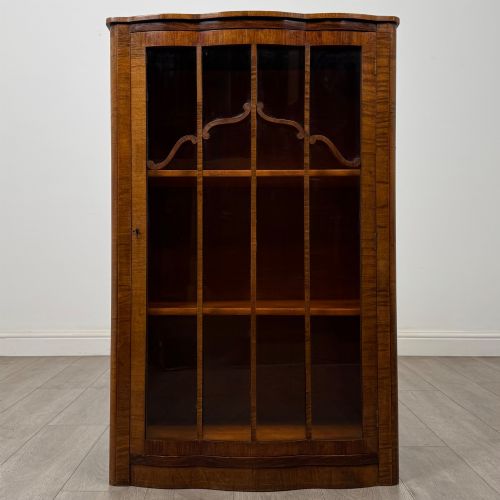
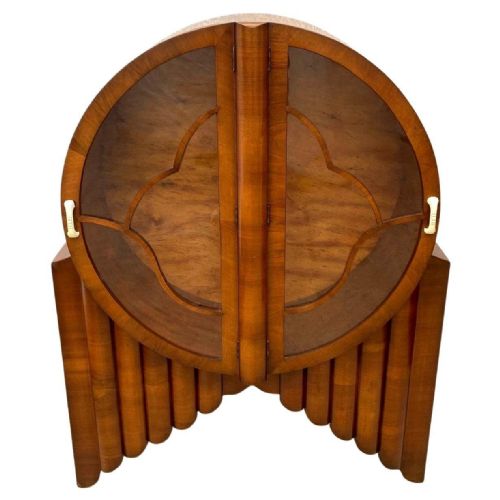
The most common forms on this page include circular, oval, hexagonal and octagonal display cabinets, alongside upright glazed cases and corner units. English and continental workshops produced these cabinets in varying geometries, ranging from standard rectangular cases to rocket and clove shapes.
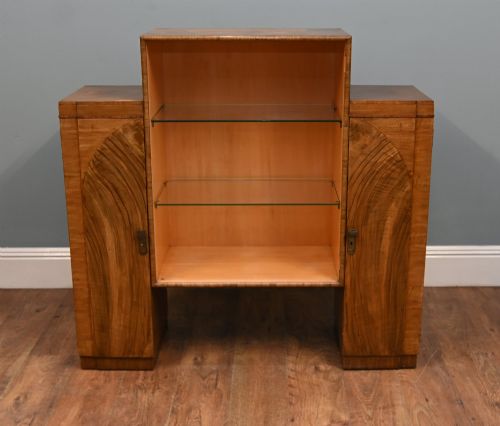
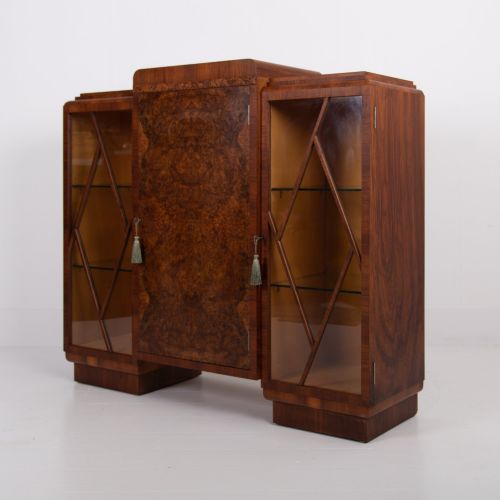
Makers integrated display functions with substantial storage, combining glass panels with wooden lower cupboards or open shelving. This search phrase encompasses specialised vitrines, larger bookcase combinations and sideboards fitted with glazed compartments.
How they were made
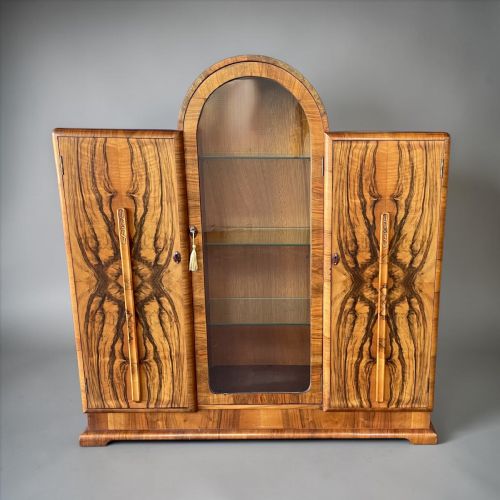
Cabinet makers utilised solid walnut and burr walnut veneer over supportive timber carcases to achieve striking decorative grain patterns. Contrasting timbers such as sycamore and maple frequently appear alongside the primary walnut surfaces.
Glazing techniques involved leaded glass segments, curved glass panels and flat panes secured within timber doors. Brass hardware and fittings completed the construction, anchoring the heavy glass and wooden doors.
Art Deco Walnut Vitrine Retail Price Guide 2026
Typical asking prices for art deco walnut vitrine among the pieces listed under this phrase on Sellingantiques today, from the lower quarter to the upper quarter. They describe what is for sale here now, not the wider market.
Listings feature nineteen-thirties pieces alongside Edwardian examples, utilising walnut, burr walnut veneer, sycamore, brass, glass and lead.
What varies in quality
The selection and book-matching of burr walnut veneer dictate the visual impact of the cabinet surface. Finer pieces demonstrate careful grain continuation across curved doors and complex geometric profiles such as octagonal or circular carcases.
Construction complexity separates standard upright display cabinets from specialised forms like rocket, clove and cathedral vitrines. The presence of curved glass panes, intricate leaded glazing and secondary contrasting timbers like sycamore distinguishes the top of the range.
Rurka·Maurice Adams·Epstein
The Art Deco Walnut Vitrine Glossary
- Vitrine
- A glass-fronted display cabinet used for exhibiting fine objects and porcelain. These pieces prioritize visibility through extensive use of glazing.
- Burr walnut
- Timber taken from a walnut tree outgrowth, producing intricate, swirling grain patterns highly prized for veneer work. This material forms the decorative surface on premier cabinet designs.
- Leaded glass
- Glass panes joined together by narrow strips of lead, forming geometric or decorative patterns within the cabinet door. This technique frequently defines nineteenth-century and twentieth-century display pieces.
- Sycamore
- A pale hardwood utilised by cabinet makers for interior linings and contrasting details against dark walnut veneers. It provides a bright visual counterpoint inside the glazed compartments.
- Book-matching
- A veneer technique where adjacent slices of timber are mirrored to create symmetrical patterns across cabinet doors. This method highlights the natural figuring of walnut.
Art Deco Walnut Vitrine: Frequently Asked Questions
How do I place an art deco walnut vitrine in a room?
Position your vitrine away from direct sunlight to protect the walnut veneer and interior contents from fading. Corner cabinets and circular models suit smaller spaces, while larger sideboards and bookcase combinations anchor bigger walls.
Keep surrounding furniture uncluttered to allow the geometric lines and figured wood grain of the cabinet to stand out. Adequate interior or ambient room lighting enhances the glass panels and displayed objects.
How are different periods identified?
Nineteen-thirties pieces display characteristic art deco geometry, featuring curved glass, waterfall edges and distinct shapes like octagons and ovals. Edwardian examples tend to exhibit more traditional structural lines while employing walnut timber.
Construction methods, hardware styles and veneer choices help differentiate the periods. The presence of specialised forms such as rocket or clove cabinets points firmly to the interwar modernist era.
What items were stored in these cabinets?
Owners historically used these vitrines to display fine porcelain, silver services, glassware and delicate ornaments. The glazed doors protected valuable collections from dust while keeping them visible to guests in reception rooms.
Lower wooden cupboards on larger cabinets provided additional enclosed storage for household items not on display. This dual function made them central pieces of furniture in twentieth-century dining and living spaces.