


Art Deco Veneer Table
An art deco veneer table brings striking geometric grain and period elegance to a room, offering both functional surface space and distinct twentieth-century character.
Art Deco Veneer Table
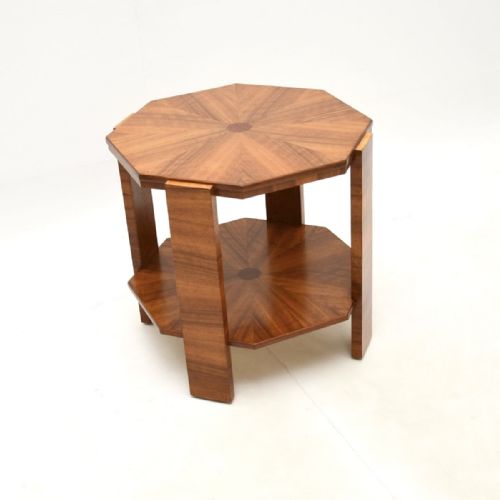
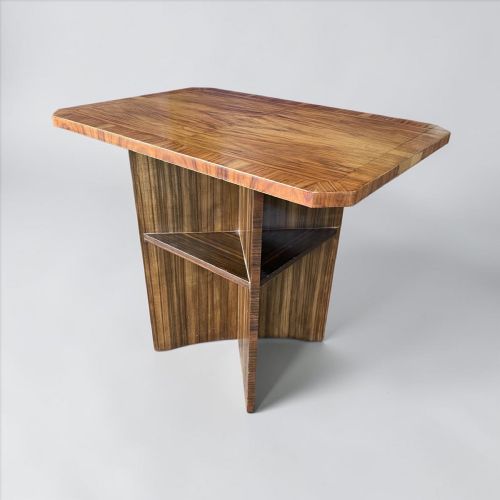
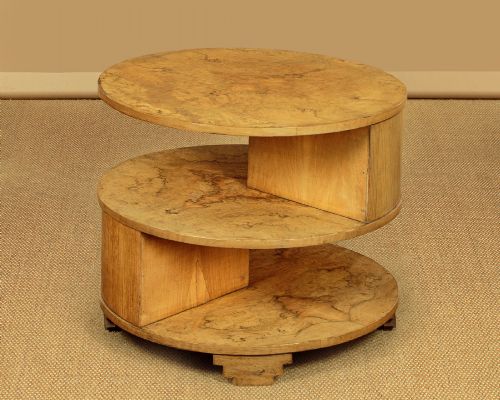
An art deco veneer table is a domestic surface piece defined by its geometric styling, smooth polished finishes, and decorative wood layers applied to a core structure. When exploring this selection, buyers encounter various forms designed for daily utility and interior display.
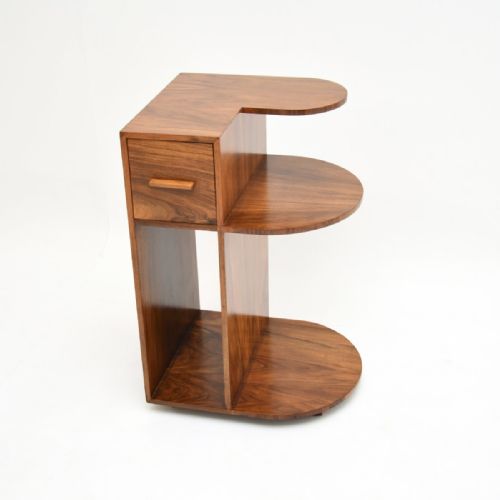
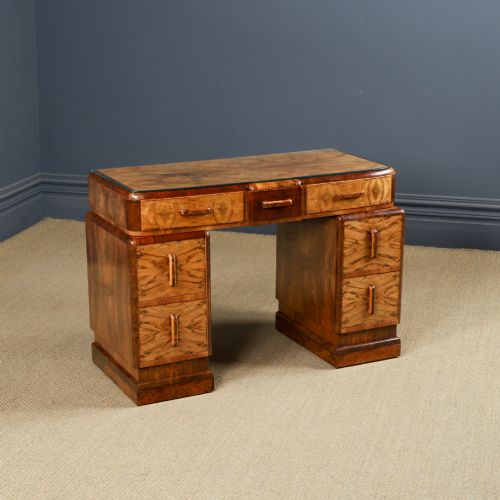
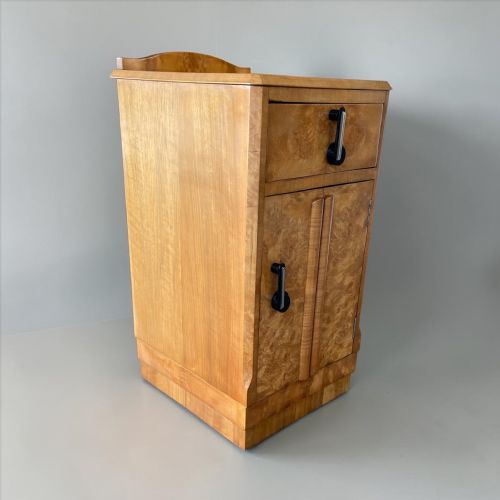
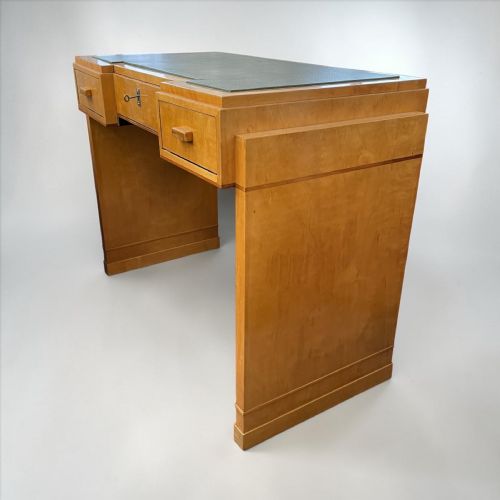
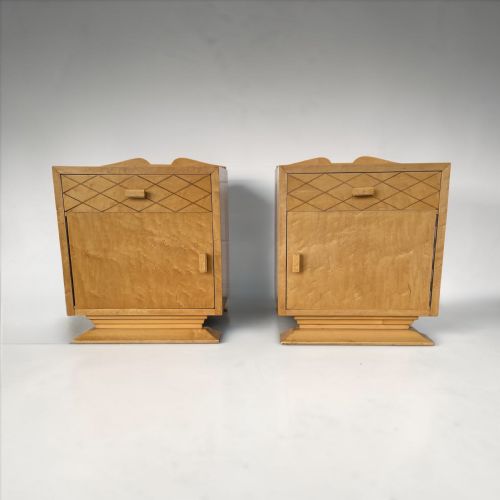
The most common formats appearing in these listings are coffee tables, side tables, and bedside tables dating predominantly from the nineteen-thirties. Pieces span from compact occasional tables to substantial dining tables and office desks.
Origins include English workshops as well as Scandinavian iterations showcasing regional tastes in woods and inlay work. The overarching aesthetic relies on clean architectural lines paired with the natural patterns found in decorative timber slices.
How these tables were constructed
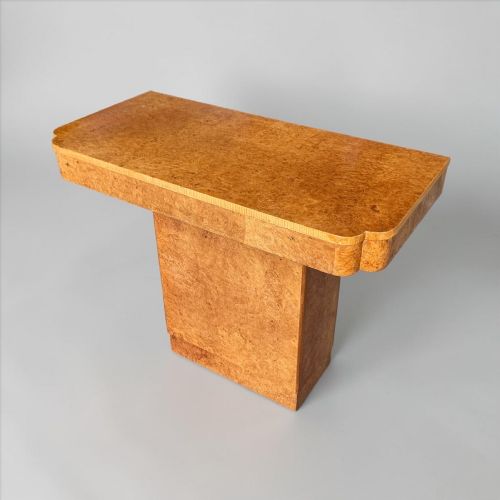
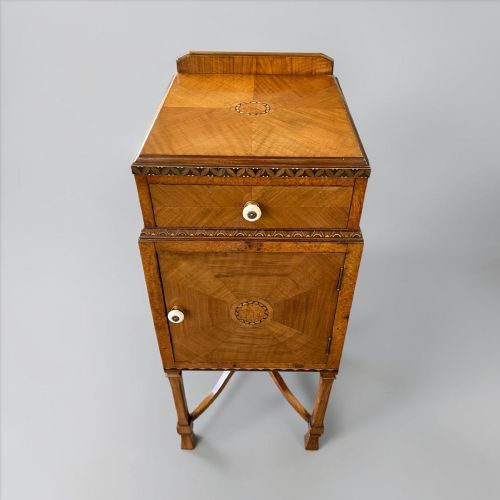
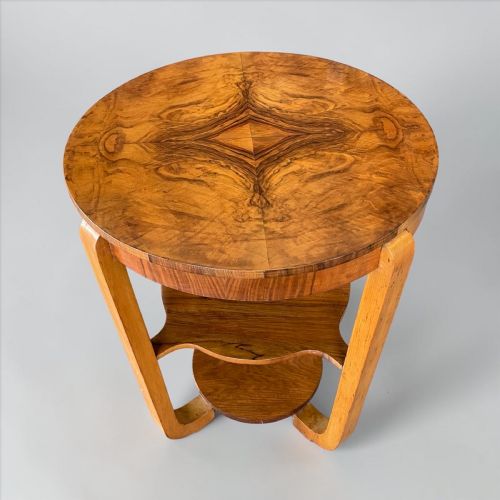
Makers constructed these tables by laying thin slices of decorative timber over sturdier secondary woods, allowing them to display dramatic natural grain patterns across flat surfaces. Walnut, burr walnut, birch, maple, and satinwood provide the primary visual textures seen in the veneer layers.
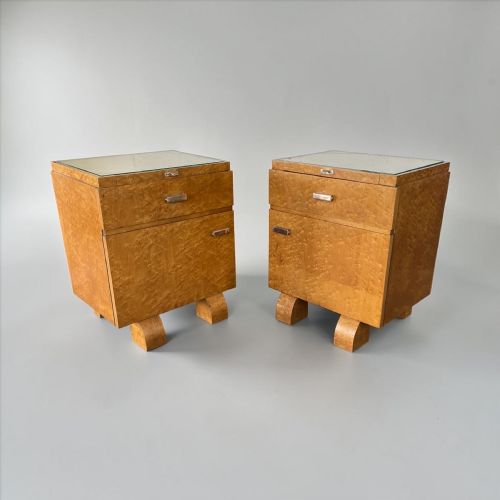
Craftsmen frequently combined these figured woods with contrasting materials such as glass tops, chrome, brass, and dark metal accents. This combination of warm timber tones and cold metallic or glass elements defines the physical construction of the period.
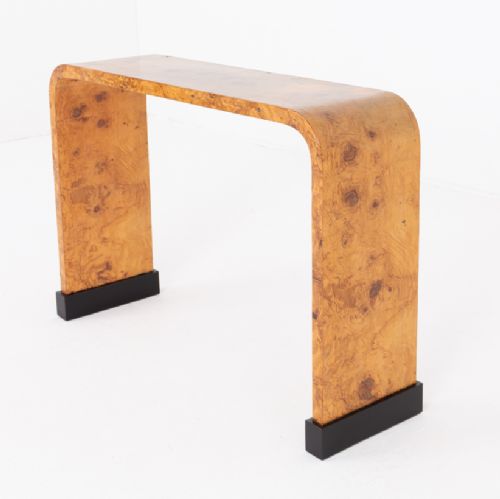
Listings feature walnut, maple, birch, and satinwood veneers across coffee, side, and dining tables.
What separates different examples
Quality in these pieces rests heavily on the choice and matching of the timber slices used for the surface patterns. Superior examples display symmetrical grain layouts, such as book-matched burr walnut, which require high skill in cutting and application.
Construction integrity and the integration of secondary materials like glass or metal mounts also dictate the standing of a piece. Finer items maintain tight joinery and preserve the original polish without obscuring the natural character of the underlying wood.
Maurice Adams·Heal·Bowman Brothers·Hille·James Philips and Sons
The Art Deco Veneer Table Glossary
- Veneer
- A thin layer of figured wood applied to a base structure for decorative effect. This technique allowed makers to utilise expensive or highly patterned timber efficiently.
- Burr walnut
- A growth deformity in walnut trees that produces dense, swirling grain patterns. It remains highly prized for tabletops and cabinet fronts.
- Book-matching
- A method of arranging two adjacent veneer slices so that they mirror each other. This creates symmetrical patterns across the centre of a table.
- Occasional table
- A small, versatile table intended for light, intermittent use in living spaces. These pieces often serve as coffee or lamp tables.
- Skyscraper style
- An architectural influence in art deco design featuring stepped forms and vertical emphasis. It reflects the modern building designs of the period.
Art Deco Veneer Table: Frequently Asked Questions
What woods were used on art deco veneer tables?
Makers utilised a variety of decorative timbers, most notably walnut, burr walnut, satinwood, birch, and maple. These woods were chosen for their distinct grain patterns.
Secondary woods formed the sturdy internal frames beneath the decorative outer layers.
How do I care for a veneered surface?
Keep the wood away from direct sunlight and excessive heat sources to prevent the thin timber layers from drying out or lifting. Use dry cloths for dusting rather than harsh chemical polishes.
Applying occasional wax preserves the finish and protects the historic polish from moisture damage.
Are these tables suitable for daily use?
Most pieces were built for practical domestic environments, functioning as dining surfaces, desks, or bedside stands. Using coasters and protective mats prevents heat rings and scratches on the polished wood.
With sensible handling, these vintage surfaces withstand normal everyday activities quite well.
What is the difference between occasional and coffee tables?
Occasional tables generally stand taller and serve multiple small-scale functions around a room, such as holding lamps or decorative objects. Coffee tables are lower, designed specifically to sit centrally in front of seating.
Both types utilise decorative veneers to catch the eye.