



Geometric Pedestal Table
A geometric pedestal table brings structural form and patterned timber into a room, offering a sturdy central column that anchors various occasional and side table designs.
Geometric Pedestal Table
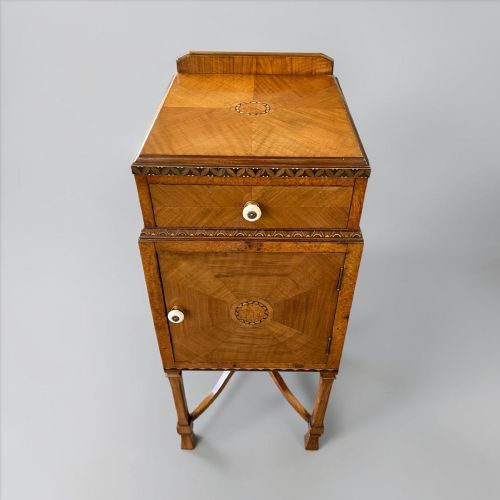
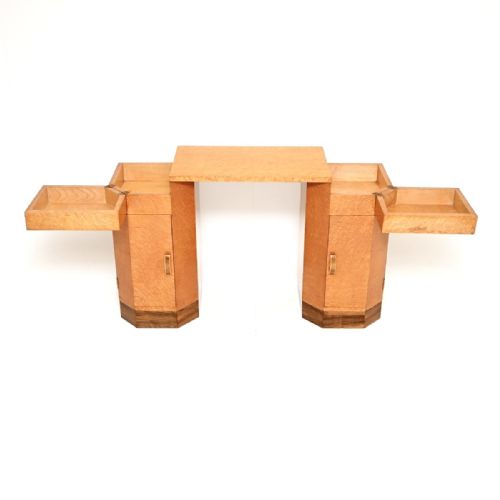
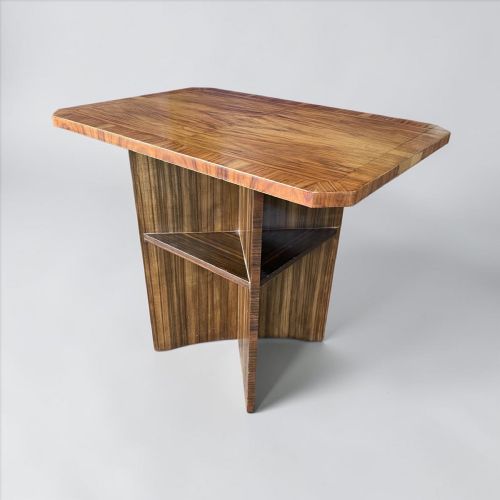
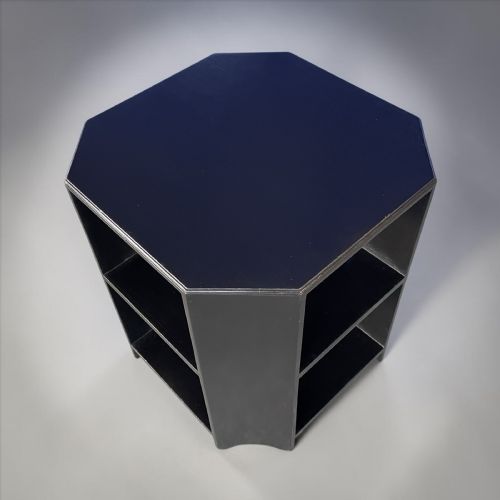
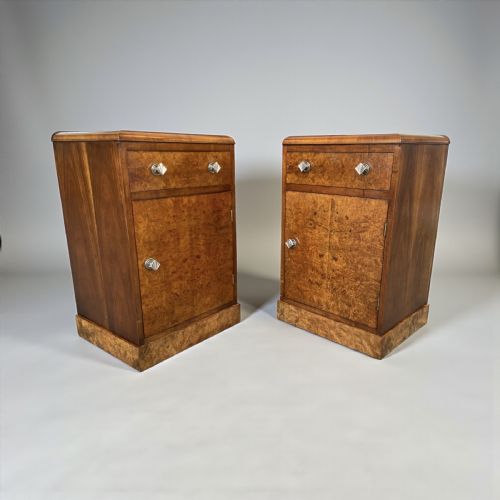
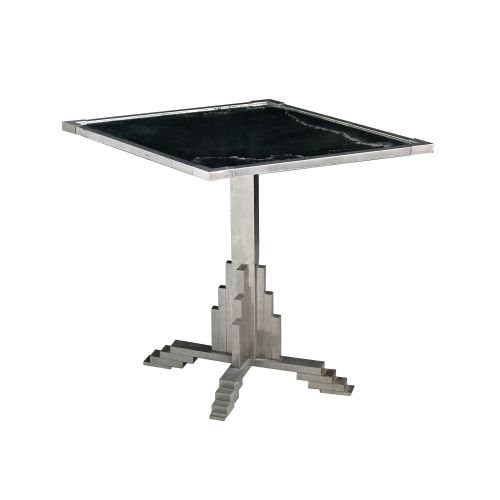
A geometric pedestal table takes many forms across the inventory, appearing most frequently as occasional tables, side tables, and bedside tables supported by a single central column or tripod base. These pieces span periods from the Regency and Victorian eras through to Art Deco designs of the 1920s and 1930s.
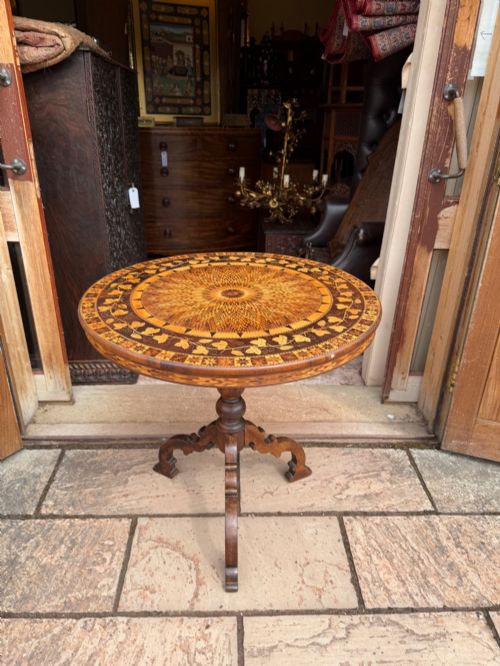
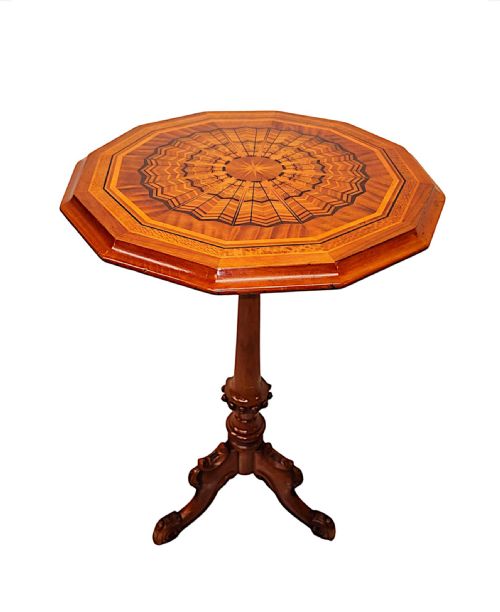
Buyers will encounter round, octagonal, and rectangular formats alongside distinct parquetry and specimen wood tops. The selection ranges from 19th-century Italian Sorrento and English walnut examples to streamlined American and French Art Deco forms.
Origin and period dictate the character of each piece, linking the heavy turned columns of the 19th century with the cleaner, geometric planes favoured by 1930s cabinet makers.
Materials and construction
Wood selection defines the construction, with walnut, mahogany, oak, and satinwood providing the primary structural and surface timbers. Cabinet makers utilised veneers and complex parquetry to create intricate geometric patterns across circular and octagonal tabletops.
Inlaid stone, marble, and brass appear frequently alongside specialist woodwork, particularly in Italian Sorrento work and Grand Tour specimen tables. Tripod bases and central columns utilise traditional joinery and turning techniques to support heavier stone or inlaid wooden tops.
Some Victorian tables spent decades holding afternoon tea before retiring to display heavy table lamps.
Assessing quality
Quality rests in the precision of the parquetry and the crispness of the inlaid geometric motifs across the tabletop. Superior pieces display seamless matching of wood grain and tight joints where the pedestal meets the base and top.
Materials elevate certain examples, such as the use of scarce specimen woods, mirror glass, or genuine marble inserts set within solid mahogany or walnut frames. The weight and stability of the central pedestal further distinguish standard production from finer workshop output.
Gillows·Étienne Kohlmann
The Geometric Pedestal Table Glossary
- Parquetry
- Geometric mosaic woodwork formed by small pieces of timber fitted together to create a decorative surface pattern on tabletops.
- Specimen wood
- Furniture surfaces constructed from numerous distinct, often exotic timber species chosen for their contrasting colours and grain patterns.
- Pedestal table
- A table supported by a single central pillar or column rather than conventional corner legs.
- Sorrento ware
- Intricate inlaid woodwork originating from southern Italy, notable for geometric and pictorial designs utilising various coloured woods.
Geometric Pedestal Table: Frequently Asked Questions
How do I style a geometric pedestal table?
These tables function well as bedside surfaces, lamp tables, or central display pieces in a reception room. Their compact footprints allow them to sit easily beside seating without crowding the floor.
Let the patterned top remain visible by keeping surface objects minimal, perhaps placing only a single lamp or small decorative item upon the wood or marble.
What periods do these tables represent?
The selection covers 19th-century Victorian and Regency pieces alongside early 20th-century Arts and Crafts and Art Deco examples from the 1920s and 1930s.
Earlier items tend to feature ornate turned pedestals and heavy timber construction, while 1930s versions lean towards streamlined geometric shapes and contrasting veneers.
Are these tables sturdy enough for daily use?
Pedestal tables rely on a balanced central column and stable tripod or plinth base to support everyday items. Solid wood and quality joinery ensure they handle daily placement of lamps and books reliably.
Care should be taken with antique veneer and inlaid stone tops, using coasters to protect historic polished finishes from moisture.
What is parquetry?
Parquetry is a geometric form of woodworking where small wooden tiles are arranged in repeating patterns across a surface. It differs from marquetry by focusing on geometric shapes rather than pictorial scenes.
Master craftsmen used contrasting timbers like walnut, oak, and satinwood to build these durable, patterned tabletops.