
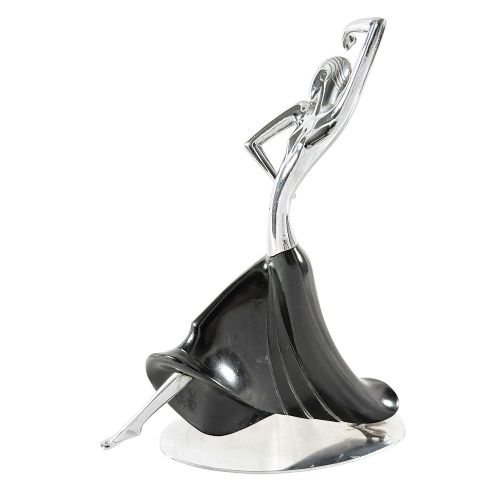


Art Deco Table Statue
An art deco table statue brings kinetic energy and stylised elegance to a room, capturing the spirit of the interwar years.
Art Deco Table Statue
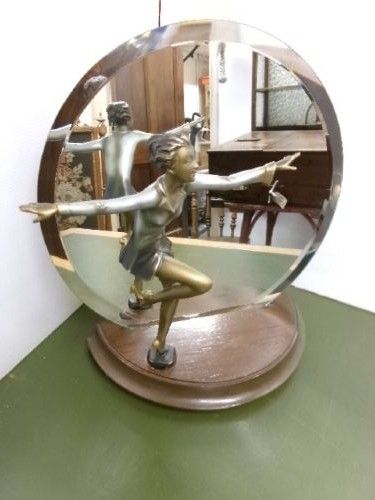
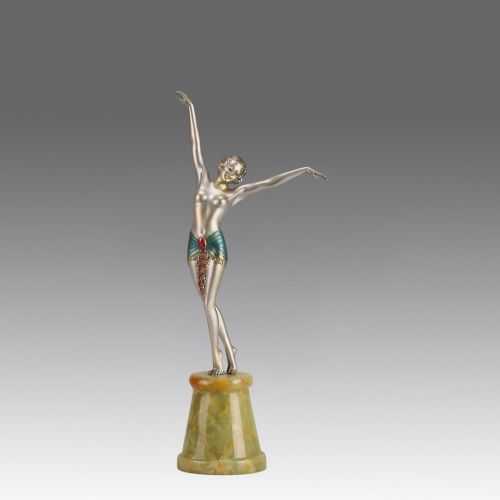
An art deco table statue encompasses sculptural works designed for domestic display on surfaces, spanning the 1910s to the 1930s. These pieces frequently depict female dancers, athletes, animals, and mythological figures captured in dynamic poses.
The most common examples on this page are metal figures mounted on heavy stone plinths, alongside functional items such as table lamps and lighters incorporating figural elements. Originating primarily from France, Austria, and Italy, the designs reflect the modernist geometry and theatricality of the period.
Materials and construction methods
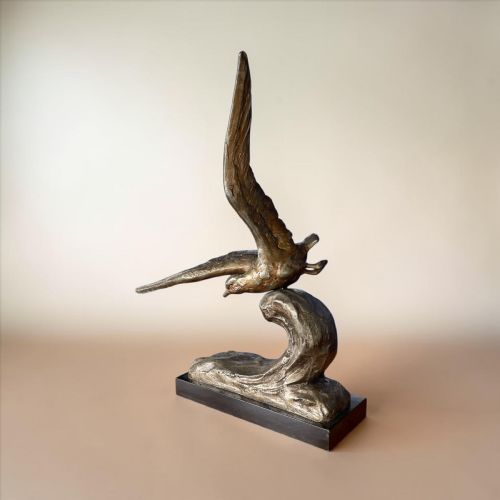
Foundry work relied on casting metals such as bronze, brass, and more affordable spelter, often finished with cold-painted details, patination, silver plating, or gilding. Many figures were paired directly with carved bases of marble, onyx, or alabaster to provide stability and visual contrast.
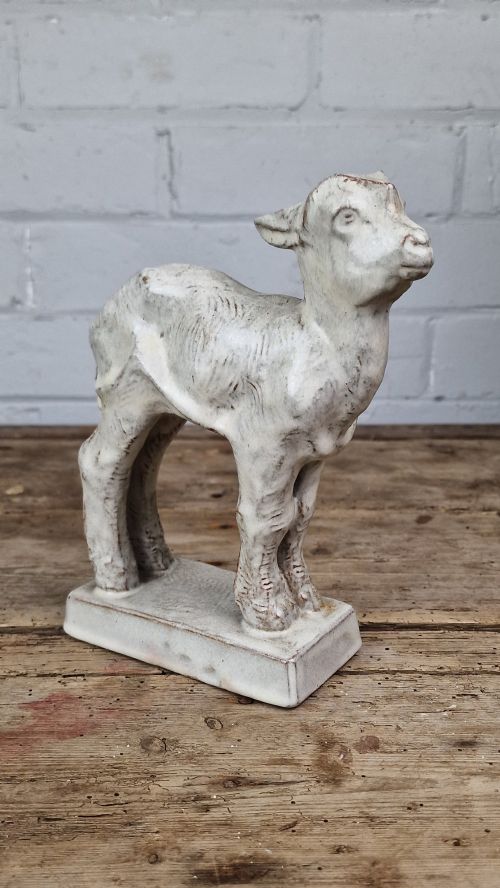
Model makers also utilised ceramics, terracotta, porcelain, carved wood, and glass, shaping organic subjects into clean, stylised contours. Metal components frequently combined chrome plating and painted surfaces to achieve the high-contrast finish characteristic of the style.
An assortment of dancers, albatrosses, ibexes, frogs, and accordion-playing pierrots populate these tables.
Factors determining quality
The degree of crispness in the casting and hand-finishing separates high-grade pieces from mass-market output, particularly in the rendering of facial expressions, drapery, and anatomical detail. Superior bronzes display meticulous cold-painting and fine chiselling that remain distinct even under close inspection.
The choice of mounting material also indicates quality, with dense veined marble or alabaster bases offering greater permanence than composite alternatives. Signed works and specific foundry marks demonstrate the creator's intent and elevate the piece beyond anonymous commercial production.
Josef Lorenzl·Guido Cacciapuoti·Bruno Zach·Demetre Chiparus·Geo Maxim·Paul Joris·P.Sega
The Art Deco Table Statue Glossary
- Spelter
- A zinc alloy commonly utilised as a less expensive alternative to bronze for figural casts during the period. It often receives a bronze-coloured or painted finish to mimic heavier metals.
- Cold-painted
- A technique where paint is applied to metal after casting without the use of high-temperature firing. This finish is susceptible to flaking if handled improperly.
- Patination
- The natural or chemical alteration of a metal surface over time, resulting in a distinct coloration. Dealers often preserve this layer as evidence of age.
- Onyx
- A banded variety of chalcedony frequently shaped into smooth, polished bases for metal figures. Its translucent layers provide a decorative contrast to dark patinated metal.
- Alabaster
- A soft, fine-grained stone used for sculptural bases and carved figures. It transmits light gently, giving carved elements a luminous quality.
Art Deco Table Statue: Frequently Asked Questions
What is an art deco table statue?
An art deco table statue is a compact sculptural piece designed for interior display, featuring the characteristic streamlined forms and geometric styling of the early twentieth century. These figures celebrate movement, modernity, and decorative flair through depictions of dancers, animals, and symbolic characters.
Most examples stand upon integrated bases of marble, onyx, or alabaster, serving as focal points on sideboards, desks, and mantelpieces. They range from solid cast bronzes to lighter spelter and ceramic models.
Where were these statues made?
The majority of these statues originated in European workshops and foundries, with France and Austria acting as the primary centres of production. Major artists and studios produced designs in Paris and Vienna, supplying international markets with fashionable ornaments.
Other notable pieces emerged from Italian and English potteries and foundries, reflecting a widespread enthusiasm for modernist design across the continent during the interwar decades.
How should I clean my statue?
Dust the surface gently with a soft, dry microfibre brush to prevent particulate buildup without disturbing the original finish. Avoid using water, household detergents, or abrasive polishes, particularly on cold-painted metal or porous stone bases.
Painted and plated surfaces require extreme care to avoid stripping the delicate colouring applied by the maker. Natural wax may be used sparingly on unpainted bronze by experienced handlers.