

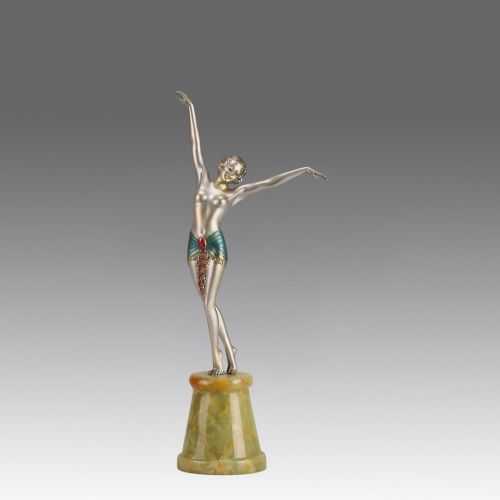
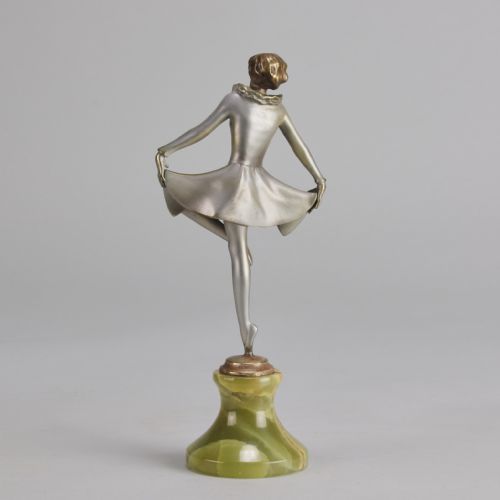


Bronze Dancer on Onyx
A bronze dancer on onyx captures the energetic spirit of the Art Deco era through dynamic poses mounted upon polished stone plinths.
Bronze Dancer on Onyx
A bronze dancer on onyx combines figurative metal sculpture with natural mineral bases, taking the form of female dancers, ballerinas, and performers. These sculptures belong firmly to the Art Deco movement of the early twentieth century, originating from the 1920s and 1930s.
The figures frequently depict specific named works such as Trouser Girl, Egyptian Dancer, and Phoebe, alongside general studies of female nudes and musicians. Buyers regularly encounter pieces cast in bronze, silvered bronze, gilt bronze, or spelter, often paired with cold-painted details or ivory elements in chryselephantine compositions.
While many examples are standard sculptural statuettes, some functional pieces appear, including figural table lighters and light bases. The primary form on this page remains the decorative figurine, reflecting the stylistic concerns of interwar European studios and founders.
Materials and casting methods
Foundries utilised traditional metal casting techniques to create these figures, working with bronze, silvered bronze, gilt bronze, and spelter. Spelter served as a more accessible alternative metal for certain interwar figures.
Makers applied surface treatments such as cold-painting and enamel to add colour and detail to clothing and hair. Sculptures were then mounted onto solid bases of onyx or marble, anchoring the dynamic forms.
Several dancing ladies hold items or strike theatrical poses with names like Trouser Girl, Curtsy, and The Juggler.
Assessing craftsmanship
Quality separates foundational metal casting from refined sculptural finishing, particularly in the crispness of the figure's drapery, hands, and facial expressions. Superior pieces display meticulous cold-painting and rich patination that retain their vibrancy over time.
The choice and preparation of the mounting stone also dictate standard, where finely polished onyx or marble complements the metalwork rather than appearing plain or poorly fitted to the sculpture.
Josef Lorenzl·Paul Philippe·Pierre Le Faguays·Demetre Chiparus·Claire Colinet·Ignacio Gallo
The Bronze Dancer on Onyx Glossary
- Art Deco
- The dominant design style of the 1920s and 1930s characterised by sleek lines, stylised geometries, and dynamic movement. This aesthetic defines the overwhelming majority of figures on the market.
- Cold-painted bronze
- A method where paint is applied to a cold bronze object rather than fired in a kiln. This technique allowed makers to achieve colourful clothing and realistic skin tones on dancers.
- Chryselephantine
- A term describing statues made from a combination of bronze and ivory. Several notable dancer sculptures incorporate carved ivory for the face and hands alongside metal garments.
- Spelter
- A zinc alloy frequently utilised as a cost-effective substitute for bronze during the period. Spelter figures often receive cold-painted or patinated finishes to mimic heavier metals.
- Onyx
- A banded variety of chalcedony used extensively as a weighty base for interwar sculptures. It provides a contrasting natural pattern beneath metal figures.
Bronze Dancer on Onyx: Frequently Asked Questions
What materials are these figures made from?
These sculptures are cast in bronze, silvered bronze, gilt bronze, or spelter, and occasionally incorporate ivory in chryselephantine designs.
The metal figures are finished with cold-painting or enamel and mounted onto heavy onyx or marble bases.
Which period do these sculptures come from?
The pieces originate from the early twentieth century, specifically spanning the 1920s and 1930s.
This timeframe aligns directly with the height of the Art Deco movement in Europe.
Are all these pieces purely decorative?
Most items function as standalone sculptures, figurines, or statuettes designed for visual display.
However, occasional functional variants exist, including table lighters and integrated lamp bases.
How do bronze and spelter figures differ?
Bronze is a durable copper alloy that takes fine detail and patination exceptionally well. Spelter is a softer zinc-based alternative that was often used to produce more accessible figures.