

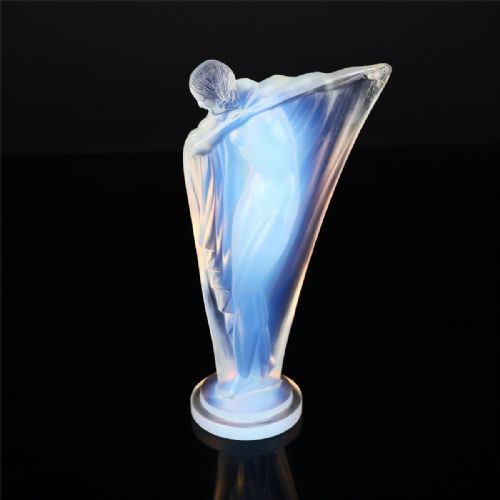


Art Deco Glass Figure
An art deco glass figure brings the confident lines and sculptural energy of the interwar period straight into a room.
Art Deco Glass Figure
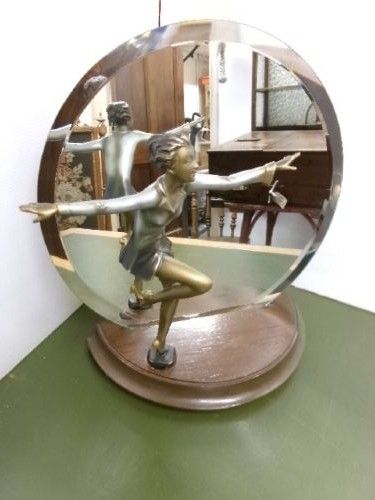
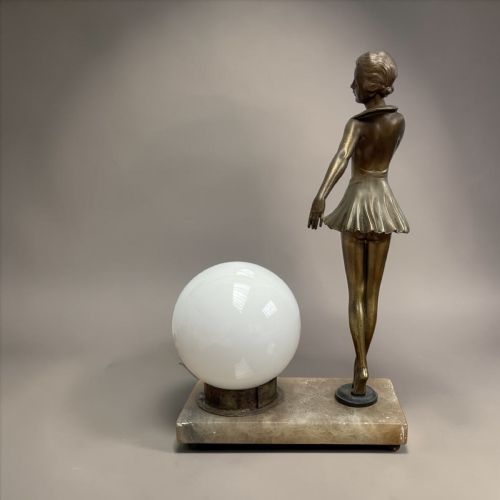
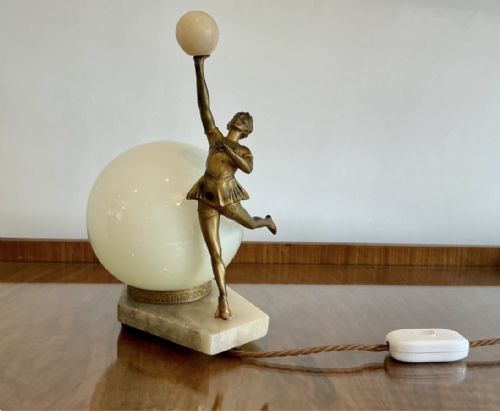
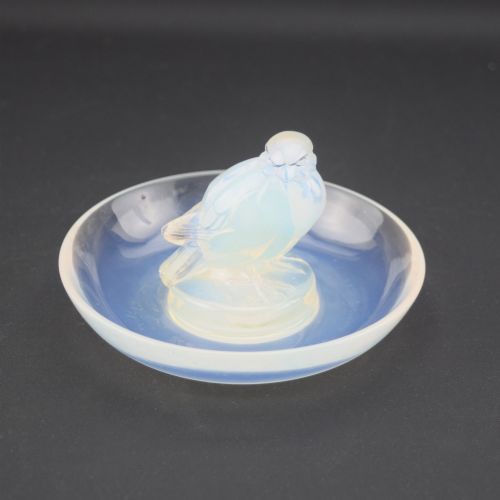
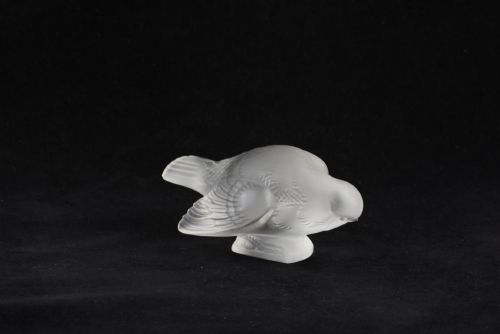
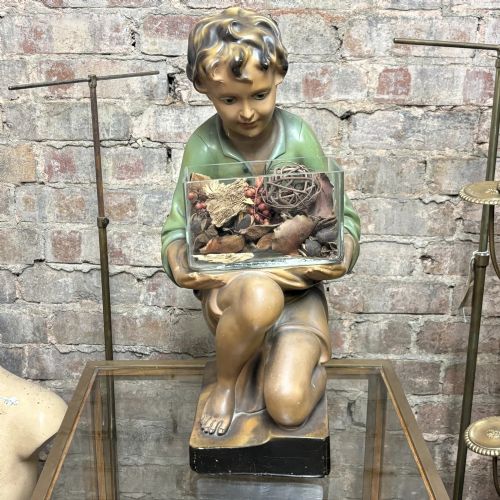
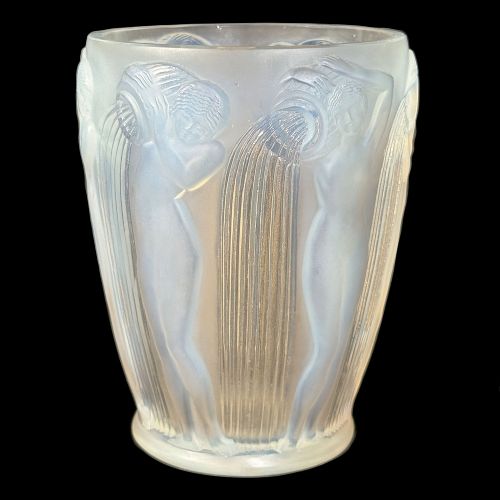
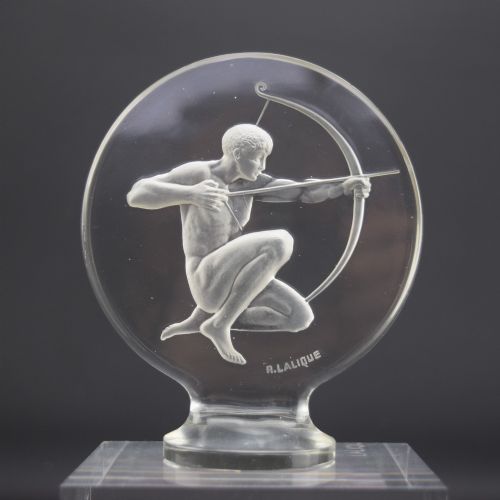
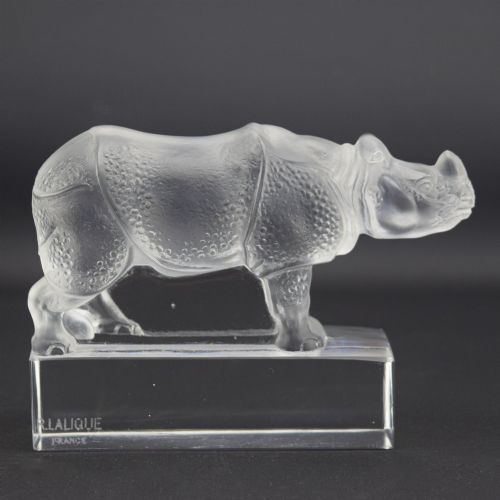
An art deco glass figure captures the stylised human and animal forms typical of the interwar period, emerging most frequently as table lamps, paperweights, and sculptural centrepieces. The examples gathered here span the 1920s, 1930s, and 1940s, often combining moulded glass with structural mounts of marble, walnut, brass, or chrome. Buyers meet figures of dancing ladies, nude athletes, and animals rendered with distinct French or English stylistic influences.
Many of these pieces double as functional objects, appearing as illuminated lamps where the glass figure forms the stem or shade, or serving smaller roles as ashtrays and desk paperweights. The presence of French neoclassical undertones alongside stark geometric art deco design defines the visual range on display. Figures such as birds, cats, and human statuettes demonstrate how makers integrated sculptural form with everyday household items.
Materials and construction
The construction relies heavily on moulded glass, frequently treated to achieve a frosted or opalescent finish that catches and diffuses light. Artisans paired these translucent glass bodies with substantial bases and fittings made from marble, walnut, brass, chrome, or spelter to provide stability and structural contrast.
Complex pieces required precision moulding techniques, sometimes incorporating blue staining or detailed surface texturing directly into the glass. Metal components like brass and chrome were cast or turned to support the glass figures, particularly in lamp configurations where electrical fittings had to integrate seamlessly with the sculpture.
Cats, elephants, and rhinos share shelf space with human dancers, proving that interwar sculptors took animal portraiture just as seriously as the human form.
Distinguishing quality across pieces
The secondary materials dictate the overall solidity and finish of the piece. Heavy, well-veined marble bases and finely cast brass or chrome mounts elevate the execution, distinguishing workshop output designed with artistic intent from standard commercial production.
Rene Lalique·Karl Ens·Anton Buschelberger·Marius Ernest Sabino·Lucille Sevin
The Art Deco Glass Figure Glossary
- Opalescent glass
- Glass containing ingredients that cause it to milky-blue or milky-white scatter light, creating a characteristic inner glow when illuminated.
- Frosted glass
- Glass rendered translucent through acid-etching or sandblasting to diffuse light softly across the surface of a figure.
- Spelter
- A zinc alloy commonly utilised as a less costly alternative to bronze for casting figures and lamp mounts during the period.
- Caryatid
- A sculpted female figure serving as an architectural support element or structural pillar within a decorative object.
Art Deco Glass Figure: Frequently Asked Questions
How do I light an art deco glass figure lamp safely?
Most vintage lamps require rewiring to meet current electrical standards by a qualified professional.
Ensure the bulb wattage matches the heat tolerance of the specific glass shade or figure to prevent thermal cracking.
What is the difference between opalescent and frosted glass?
Opalescent glass contains chemical agents that create a milky appearance with shifting blue or amber tones in transmitted light.
Frosted glass achieves a uniform matte texture solely through mechanical or chemical surface abrasion.
Can these figures be displayed in direct sunlight?
Displaying opalescent or stained glass out of harsh direct sunlight preserves the subtle colour nuances and surface treatments.
Intense light exposure over long periods can degrade certain surface finishes and cause fading in tinted elements.
How should I clean an antique glass figure?
Use a soft, dry microfibre cloth to remove dust from delicate frosted or textured surfaces without applying abrasive pressure.
Avoid harsh chemical cleaners that can damage vintage patinas on accompanying metal or wooden bases.