



Art Deco Glass Box
An art deco glass box brings geometric clarity and functional elegance to a dressing table, combining glass and precious metal.
Art Deco Glass Box
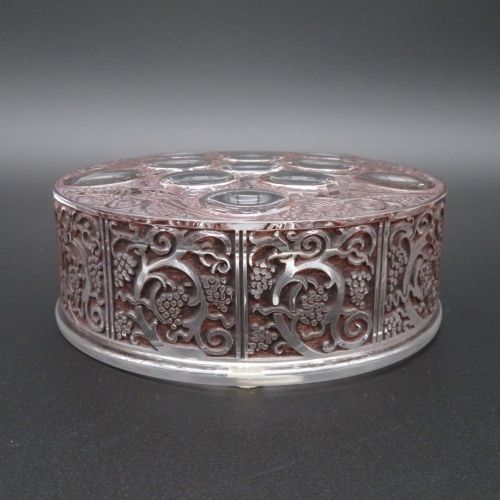
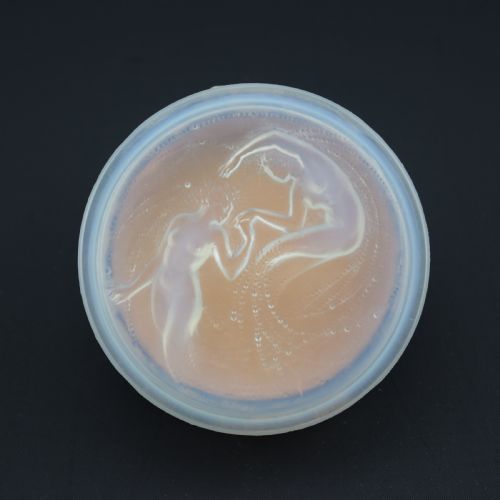
An art deco glass box is primarily encountered as a dressing table accessory, vanity jar, or powder box designed during the 1920s and 1930s. These pieces serve to hold cosmetics, trinkets, or cigarettes while displaying the characteristic clean lines of the period.
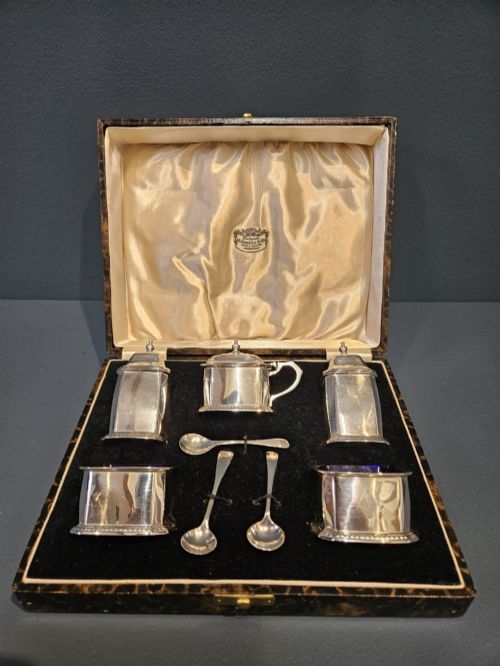
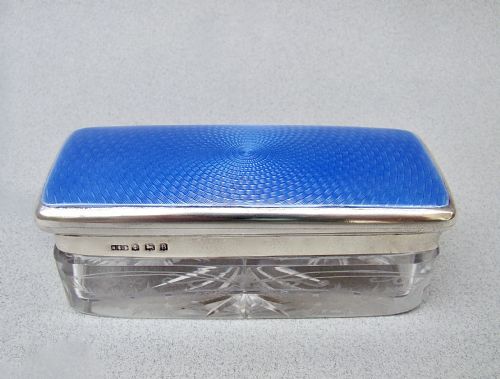
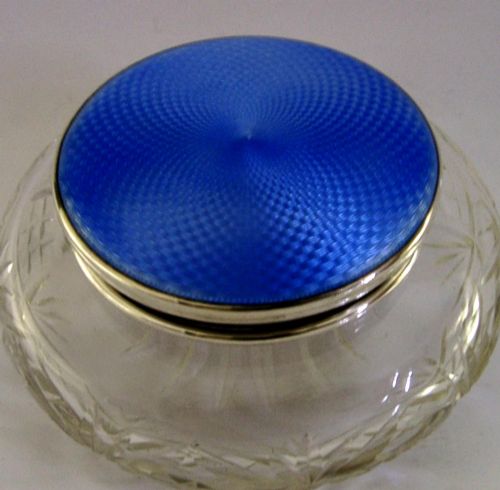
The form frequently combines a moulded or cut glass body with a fitted lid made of sterling silver, often accented with coloured enamel or tortoiseshell. Buyers will also find larger biscuit boxes and stamp boxes utilising similar glass and metal construction.
Originating largely from British, French, and Bohemian workshops, these vessels reflect the transition from Edwardian ornamentation toward the streamlined modernism of the twentieth century.
How they were made
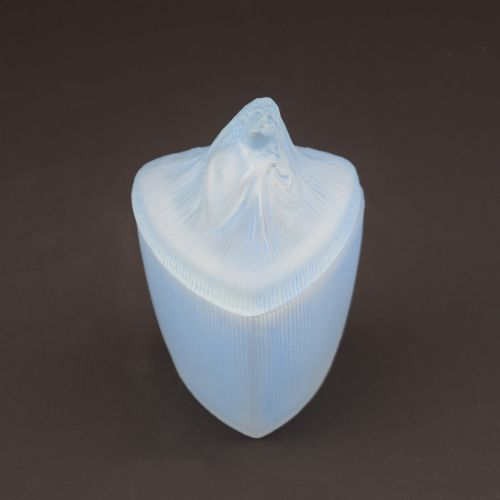
Makers shaped the heavy glass bodies through pressing, cutting, or moulding, often employing frosted finishes or rich colours like blue, green, and malachite to catch the light. Etched and faceted details added tactile depth to the transparent surfaces.
Lids and mounts relied heavily on sterling silver or silver plate, frequently paired with translucent guilloche enamel in pink, white, blue, or purple. Silversmiths stamped these metal components with assay office marks denoting cities such as Birmingham and London, along with specific production years.
Object forms range widely from tiny pill pots and stamp boxes to large biscuit barrels and illuminated wall decorations.
What varies in quality
Quality rests in the weight and clarity of the glass, where heavier crystal and deeply etched motifs distinguish finer pieces from simpler moulded wares. Crispness in the geometric patterns indicates superior manufacturing standards.
The refinement of the metalwork and enamel dictates the upper tier of these objects. Intricate engine-turned guilloche engraving beneath unbroken enamel and heavy gauge sterling silver mounts separate standard utility pieces from exceptional studio output.
Rene Lalique·Heinrich Hoffman·Karl Palda·Henry Clifford Davis·Goldsmith and Silversmiths Co·Sowerby
The Art Deco Glass Box Glossary
- Guilloche enamel
- A decorative technique involving precise engine-turned metal patterns overlaid with translucent coloured enamel. This method creates a shimmering, wave-like texture beneath the glass-like surface.
- Vanity jar
- A small lidded container intended for dressing table powders, creams, or hairpins. These usually feature a heavy glass base paired with a hallmarked silver lid.
- Malachite glass
- Pressed glass designed to imitate the banded green mineral malachite, popular in Central European production during the interwar period. The technique relies on dark green oxides mixed into the molten batch.
- Sterling silver
- An alloy consisting of ninety-two point five percent silver by mass, standard for British mounts and lids. Assay marks on these parts reveal the maker, town, and year of testing.
- Cut glass
- Glassware decorated by grinding and polishing facets into the surface using rotating wheels. This process enhances the refractive brilliance of the vessel.
Art Deco Glass Box: Frequently Asked Questions
What were art deco glass boxes used for?
These vessels were manufactured primarily for dressing tables to hold loose powder, face creams, hairpins, and small trinkets. Larger versions served as cigarette boxes, stamp dispensers, or biscuit barrels in reception rooms.
Their dual function as practical storage and decorative objects made them staples of middle and upper-class interiors during the interwar decades.
How do I date a silver and glass box?
Dating relies heavily on the hallmarks stamped into the sterling silver mounts on the lids or collars. British pieces feature assay office symbols, date letters, and maker marks that pinpoint the exact year of manufacture.
Stylistic cues such as stepped geometric motifs, specific enamel colours, and moulded signatures on the glass body also help narrow down the production decade.
How should I clean my glass box?
Maintenance requires gentle handling, particularly around silver mounts and delicate guilloche enamel surfaces. Warm soapy water and a soft cloth suffice for the glass components, avoiding harsh abrasives that scratch the material.
Silver polish must be kept away from enamel work and vintage fabric linings to prevent staining or permanent chemical damage.