




Art Deco Gents Watch
When you search for an art deco gents watch, you enter an era of geometric dials, tonneau cases and mechanical precision made to sit neatly upon the wrist.
Art Deco Gents Watch
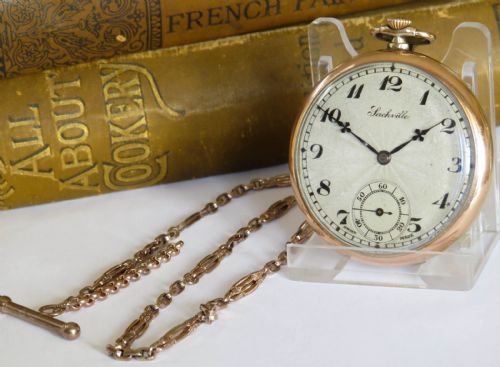
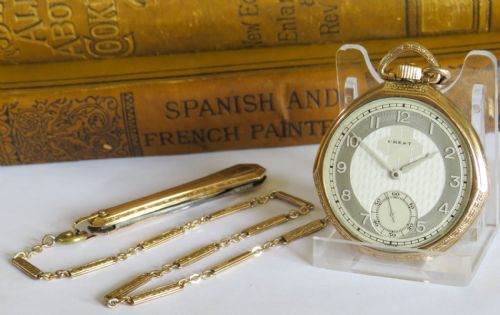
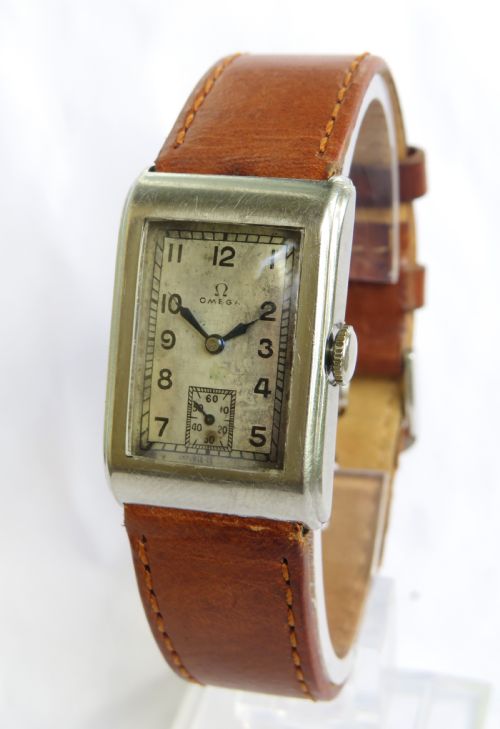
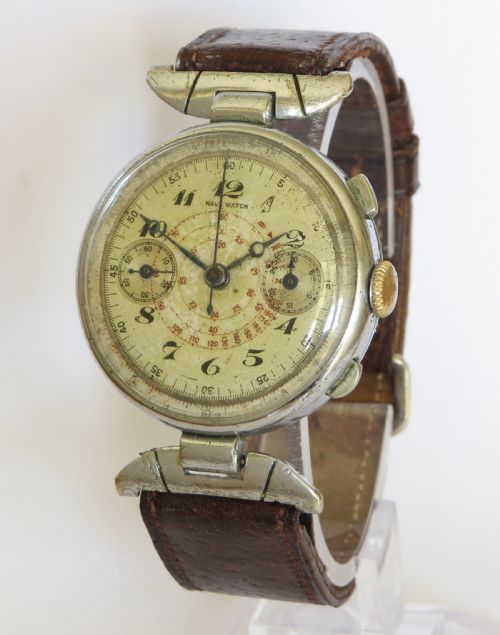
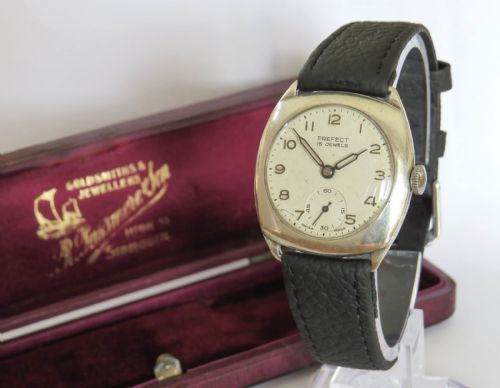
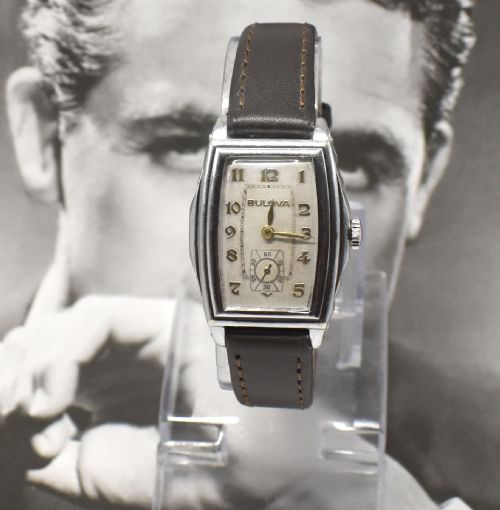
An art deco gents watch represents a definitive shift away from pocket timepieces towards wrist-worn instruments, appearing predominantly across the 1930s and 1940s. These pieces span standard manual-wind wristwatches, tank cases, chronographs and square dial formats designed with the distinct geometric aesthetic of the period.
The objects derive from Swiss, French, German, and American makers, utilising metals ranging from chrome and stainless steel to rolled gold plate and solid gold cases. Most surviving examples found here retain mechanical movements, often paired with leather straps and glass crystals.
How they were made
Cases were constructed from base metals like chrome and stainless steel, or finished in gold filled, rolled gold plate, and solid gold variants including rose and white gold. These housings framed specialised dials featuring square, curved, or rectangular geometry.
Internal mechanics relied on manual-wind movements, frequently housing Swiss jewel components produced by specialised watchmakers. Crystal covers protected the face while leather bands secured the piece to the wrist.
Art Deco Gents Watch Retail Price Guide 2026
Typical asking prices for art deco gents watch among the pieces listed under this phrase on Sellingantiques today, from the lower quarter to the upper quarter. They describe what is for sale here now, not the wider market.
Several watches survived decades tucked away as old stock, emerging completely unworn with their factory crispness entirely intact.
What varies in quality
Quality differences stem from the casing materials and the sophistication of the internal movement, moving from standard chrome-plated base metals up to solid gold housings containing high-jewel count mechanisms. The presence of specialised complications such as chronograph functions also separates standard models from advanced pieces.
The condition of the dial and the preservation of original case geometry dictate the standing of an individual watch. Pieces retaining crisp case edges and untarnished dials sit distinctly above heavily polished or degraded examples.
Tavannes Crest·Omega·Hahn Landeron·Meyer And Studeli·Zenith·Aster·Larex·Bulova·Elgin·Activ·Judex·Longines·Hamilton·Bifora·Bernex·Gruen
The Art Deco Gents Watch Glossary
- Gold Filled
- A thick layer of gold mechanically bonded to a base metal core. This provides the appearance and durability of solid gold without the total weight.
- Manual-Wound
- A mechanical movement requiring daily hand rotation of the crown to tension the mainspring. These watches operate without batteries.
- Tonneau
- A watch case shape resembling a barrel with convex sides. This curved form became popular during the interwar period to fit the contour of the wrist.
- Chronograph
- A watch equipped with a stopwatch function alongside standard timekeeping. These models feature additional pushers on the case exterior.
- Curvex
- A curved wristwatch design featuring a movement shaped to match the arc of the wrist. This allows a larger mechanism to sit flat against the arm.
Art Deco Gents Watch: Frequently Asked Questions
How do I wind a manual watch?
Rotate the crown clockwise between your thumb and forefinger until you feel gentle resistance. Stop immediately to avoid damaging the internal mainspring.
Perform this action at roughly the same time each day to maintain consistent tension and accurate timekeeping.
Are these watches waterproof?
Vintage timepieces lack modern rubber gaskets and waterproof sealing technology. Moisture easily penetrates through the crown and crystal joints.
Keep these items entirely away from water, rain, and hand washing to protect the delicate internal movement and dial.
What is a tank watch?
A rectangular wristwatch design featuring vertical side bars that extend to form the strap lugs. The geometric silhouette echoes military combat vehicles viewed from above.
This form factor defined much of the elegant styling seen across the nineteen thirties.
How often need they be serviced?
Mechanical movements require periodic cleaning and lubrication of their internal gears and jewels to prevent friction wear. Watchmakers typically recommend attention every few years.
Regular maintenance ensures the vintage oils do not congeal and halt the delicate ticking mechanisms.