




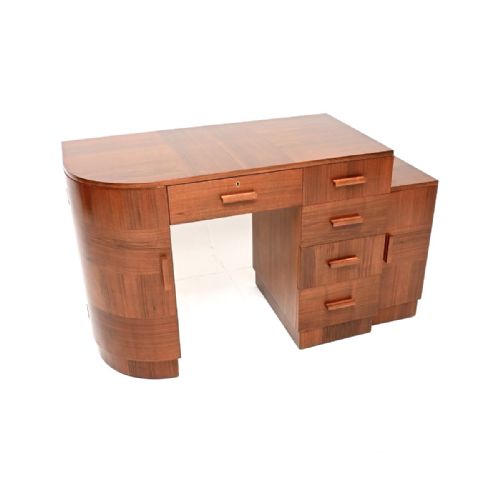


Art Deco Executive Desk
An art deco executive desk brings commanding presence and striking geometric lines into a modern study.
What an art deco executive desk is
An art deco executive desk is a substantial workspace designed to anchor a room with bold architectural form and refined presence. These pieces emerge predominantly from the 1920 and 1930 periods, capturing the sleek modernity of the interwar years.
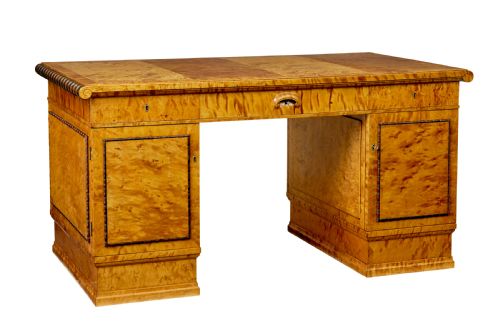
Buyers encounter pedestal office writing desks, extending dining tables utilised as grand surfaces, and specialised writing tables. The most common manifestations on this page span English and French interpretations of the Art Deco style.
Makers such as Heal's and Betty Joel shape the upper echelon of these forms, producing functional monoliths for prominent offices and domestic studies. Each piece balances imposing scale with careful attention to silhouette and surface pattern.
How they were made
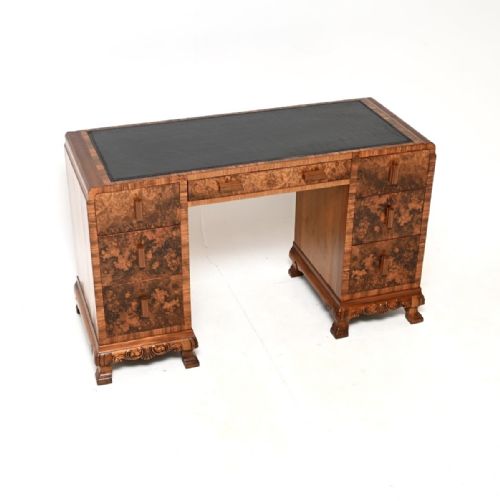
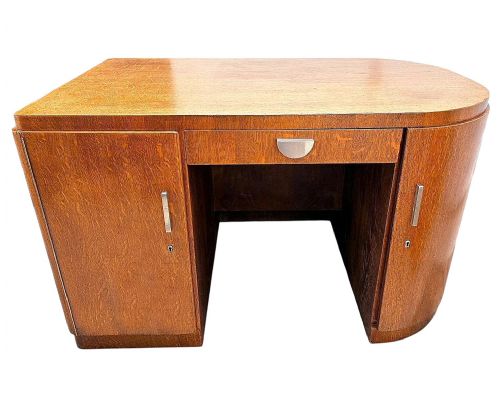
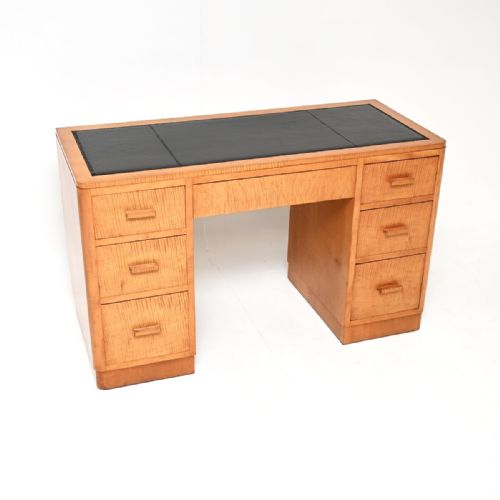
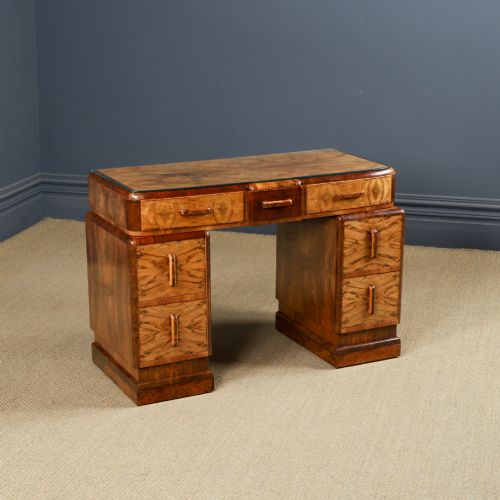
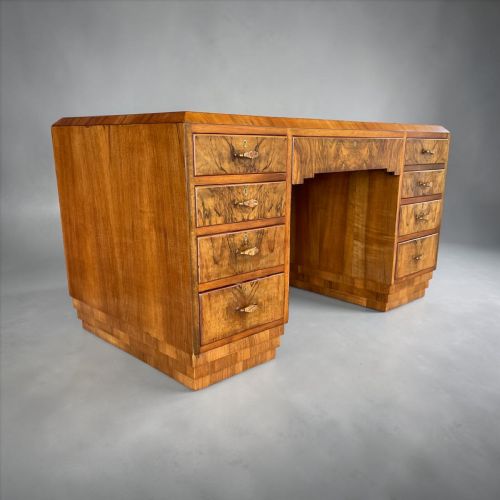
Cabinet makers construct these desks using dense hardwood timbers including walnut, burr walnut, burr elm, rosewood, oak, and bird's eye maple. Artisans apply these veneers in symmetrical grain patterns across expansive flat surfaces and curved pedestals.
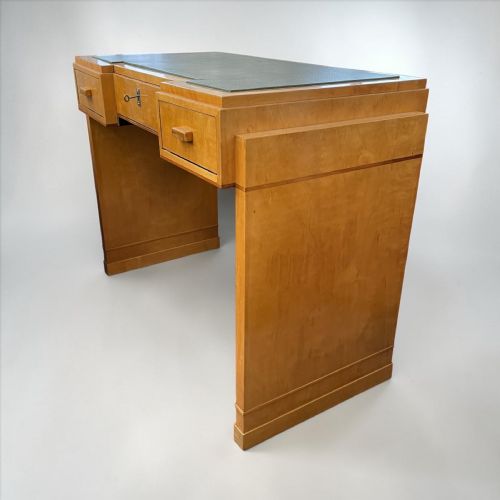
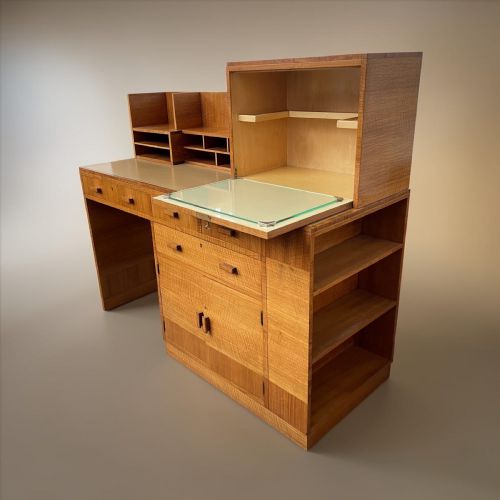
Construction frequently incorporates inset leather writing surfaces and polished glass or silvered glass tops to contrast with the rich timber frames. Metal details integrate into the structural design, adding industrial gleam to handles, trims, and skyscraper tiers.
Retail Price Guide 2026
Typical UK retail prices for art deco executive desk, calculated from the Sellingantiques database of over a million retail prices indexed since 2003. This retail price guide relies exclusively on Sellingantiques data; no external sources or auction records are used, so the figures do not describe the wider market.
Current listings feature pieces exclusively from the 1920 and 1930 periods, constructed in walnut, rosewood, burr elm, oak, glass, and metal.
What varies in quality
Quality differentiates through the ambition of the timber selection and the complexity of the cabinetry. Pieces featuring matched burr walnut, burr elm, or figured rosewood demand superior skill in veneer matching compared to plain domestic hardwoods.
The sophistication of the silhouette defines the upper tier, seen in stepped skyscraper pedestal designs and multi-material compositions involving glass and metal. Attributed works by established makers demonstrate finer joinery and deliberate proportioning against anonymous production items.
Heal's·Betty Joel
The Art Deco Executive Desk Glossary
- Art Deco
- A design style emerging in the 1920s and 1930s characterised by geometric shapes, streamlined forms, and modern industrial materials. It dominates the aesthetic of these executive desks.
- Burr Walnut
- A highly prized timber cut from the abnormal growths on walnut trees, yielding swirling, knotty grain patterns. Cabinet makers deploy it to create decorative, highly figured surfaces.
- Pedestal Desk
- A heavy freestanding writing table supported by two structural pillars or columns containing drawers. This form provides the central architecture for executive workspaces.
- Skyscraper Pedestal
- A stepped architectural form echoing early twentieth-century urban high-rise design. It elevates the visual drama of office writing desks from this era.
- Veneer
- A thin layer of superior hardwood applied over a stable secondary timber base. This technique allows makers to display striking grain figures without risking structural warping.
Frequently Asked Questions
What defines an art deco executive desk?
An art deco executive desk is characterised by bold geometric lines, architectural pedestal forms, and striking use of figured veneers. These pieces project authority through substantial scale and modern styling.
They originate primarily from the 1920 and 1930 periods, incorporating materials like walnut, rosewood, and glass into functional workspace designs.
How do I identify a 1930 desk?
Desk designs from 1930 frequently employ stepped skyscraper pedestals, symmetrical burr walnut or burr elm veneers, and contrasting metal or glass accents.
Maker attribution and distinct modernist silhouettes also help distinguish pieces from this specific interwar decade.
Are these desks suitable for daily use?
These robust pieces offer generous surface area, integrated drawer pedestals, and durable leather or glass writing panels. They function exceptionally well as modern office anchors.
Careful placement away from direct heat sources helps preserve the delicate hardwood veneers and polished finishes.
What is burr walnut?
Burr walnut is a decorative wood harvested from tree growths that produce intricate, swirling knot formations. Cabinet makers use it to create captivating visual patterns across desktop surfaces.
Its presence usually indicates a higher grade of manufacture within period furniture.
How do English and French styles differ?
English pieces from this era often favour architectural walnut and oak structures with practical pedestal layouts. French variants tend to embrace more exotic timbers like rosewood and dramatic, experimental silhouettes.
Both national traditions share a commitment to clean geometric lines and luxurious materials.