

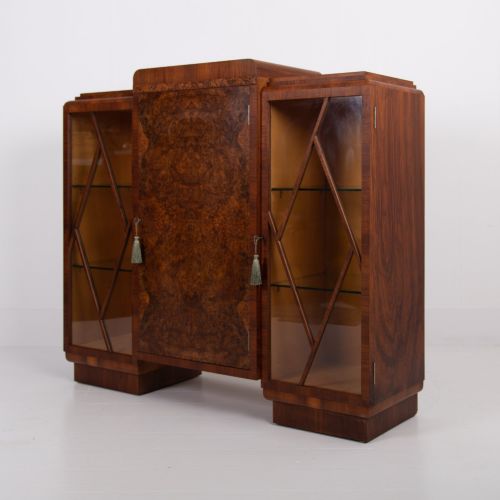


Art Deco Cocktail Cupboard
An art deco cocktail cupboard brings the bold glamour of twentieth-century entertaining directly into a modern living room.
Art Deco Cocktail Cupboard
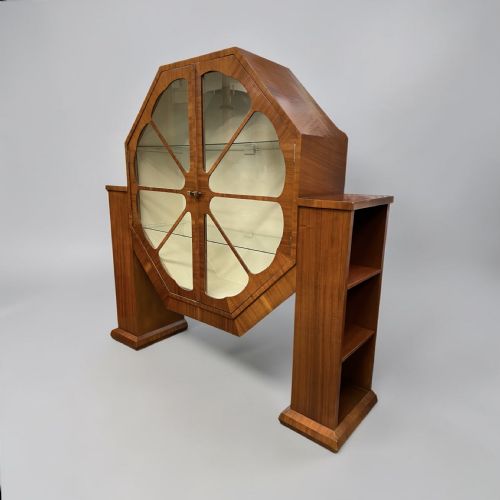
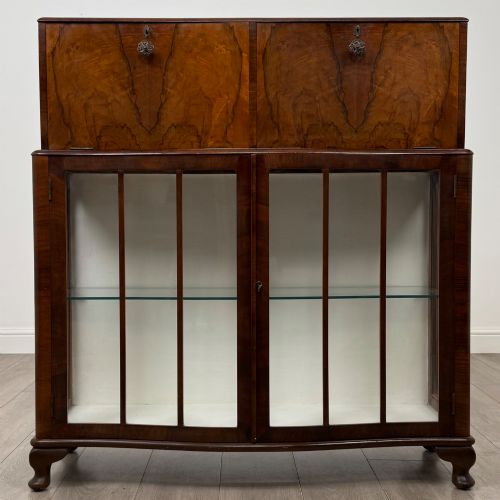
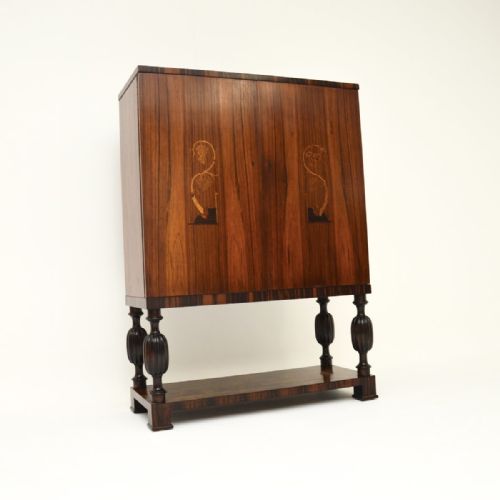
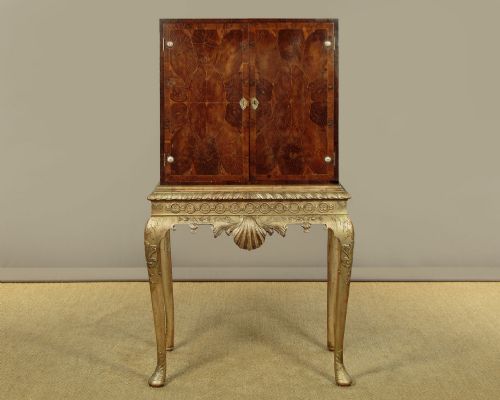
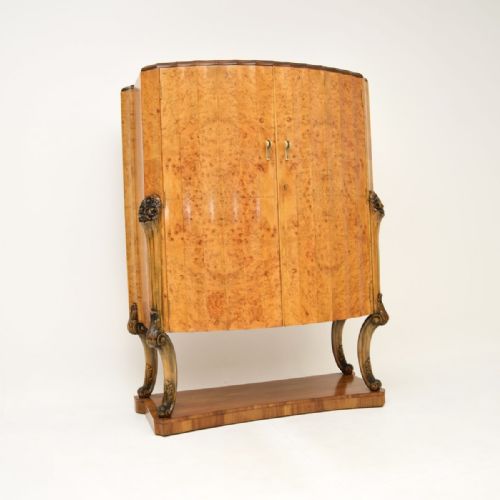
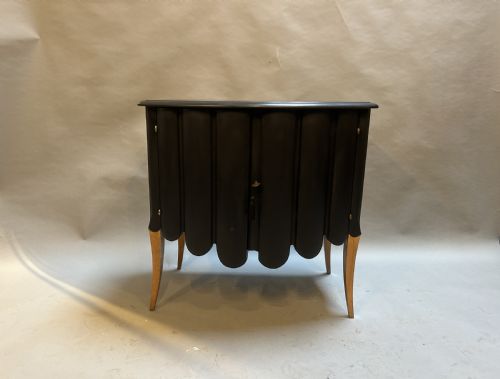
An art deco cocktail cupboard is a dedicated piece of furniture designed for storing spirits, glassware and mixing equipment during the height of twentieth-century entertaining. Buyers searching for an art deco cocktail cupboard encounter various forms, including double bow fronts, corner units, and cabinets on stands, though freestanding upright carcases dominate the selections. These pieces span periods from the Edwardian era through the nineteen-thirties and nineteen-forties, frequently emerging in styles such as Art Deco, Swedish Grace, and Queen Anne Revival.
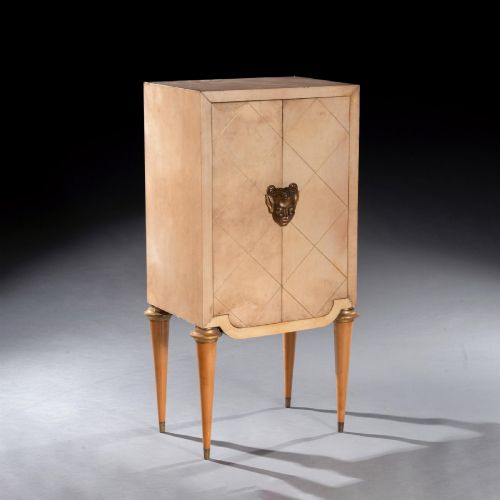
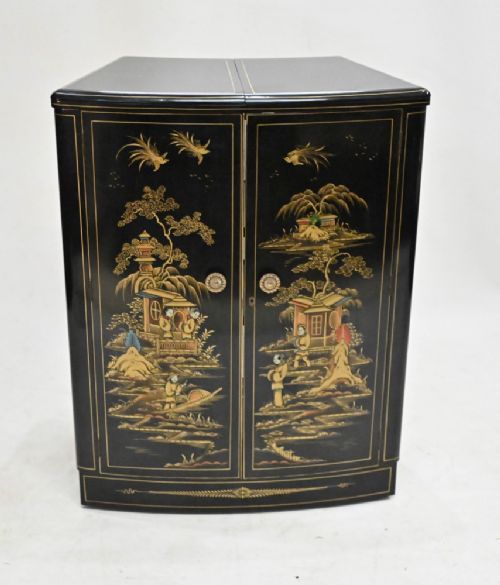
The interiors typically feature mirrored backs, pull-out slides for mixing drinks, and specialised shelving designed to hold bottles securely. Exterior styling relies heavily on figured woods like burr walnut, alongside occasional surprises in parchment inlay, lacquered chinoiserie, or Scandinavian birch and elm. While some listings function primarily as display cabinets or side cabinets, the core typology remains centred on serving refreshments.
Materials and construction
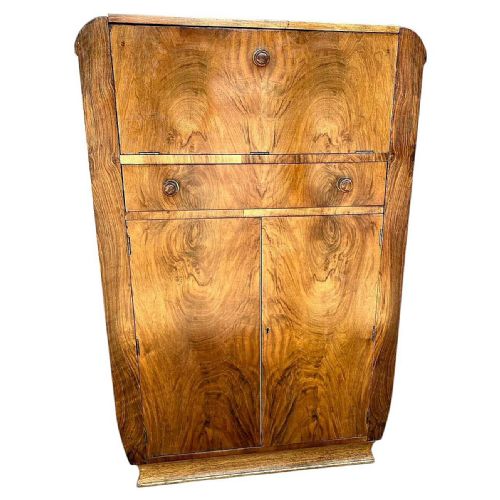
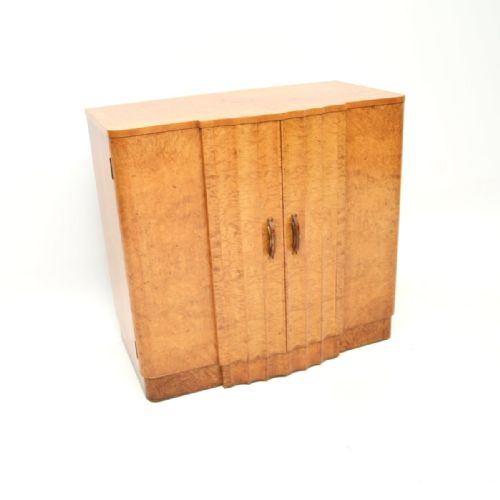
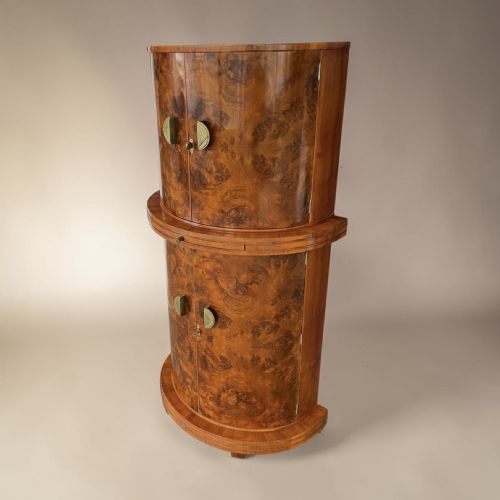
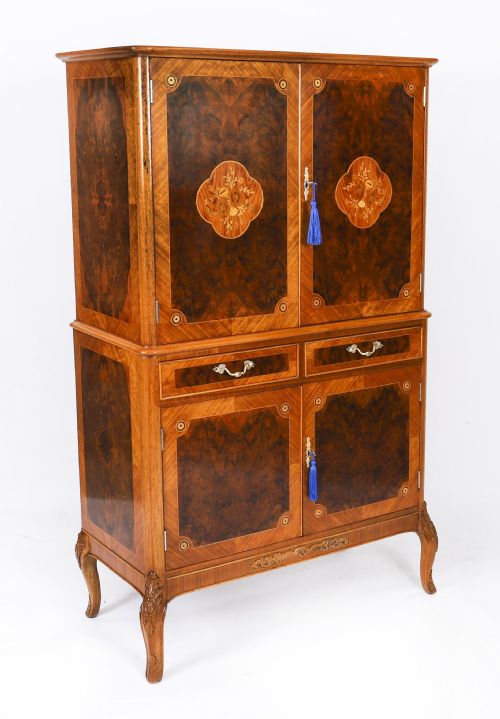
Cabinet makers utilised rich wood veneers, predominantly burr walnut and figured walnut, laid over sturdy carcases of oak or pine to create striking symmetrical grain patterns across the front doors. Brass hardware, glass panelling, and mirrored interiors complete the standard construction, while specialised examples incorporate delicate marquetry, silver gilt stands, or parchment inlays.
Makers shaped these woods into curved double bow fronts or clean geometric lines characteristic of the period, often applying deep lacquered finishes to enhance the natural figuring of the timber. Interior fittings included pull-out wooden slides surfaced for glass placement, alongside tailored pigeonholes and bottle racks built to withstand heavy daily use.
Listings span multiple decades, incorporating Edwardian antiques alongside nineteen-twenties, thirties, and forties productions.
Judging the range
The distinction between standard production and top-tier pieces rests on the complexity of the timber selection and the sophistication of the interior mechanics. Superior examples exhibit continuous, perfectly matched burr walnut veneer wrapping around curved doors, complemented by intricate internal fittings like pull-out mixing trays and specialised glass holders.
Attribution to notable workshops or makers elevates a piece, as seen in signed works by Epstein, Hille, or Waring and Gillow. Lesser examples rely on simpler wood veneers and basic shelving without the elaborate internal mirrors, lighting compartments, or custom hardware found on the finest surviving specimens.
Harry and Lou Epstein·Epstein·Hille·Maurice Jallot·Waring and Gillow
The Art Deco Cocktail Cupboard Glossary
- Burr walnut
- A highly figured wood veneer harvested from walnut tree growths, prized for its swirling, organic patterns. It forms the primary decorative surface on the vast majority of these drinks cabinets.
- Marquetry
- The art of applying pieces of veneer to a structure to form decorative patterns and pictures. Makers used this technique to add geometric and floral motifs to cabinet doors.
- Chinoiserie
- European interpretations of Chinese and East Asian artistic traditions, often featuring hand-painted lacquered scenes. This style appears on select cabinets to create an exotic, high-status finish.
- Silver gilt
- Silver applied to the surface of another metal or wood stand to give a rich, metallic sheen. It elevates the supporting base of select compact cabinets.
- Swedish Grace
- A refined neoclassical style popular in Scandinavian design during the interwar years. It combines classical proportions with simplified, modern detailing.
Art Deco Cocktail Cupboard: Frequently Asked Questions
How were these cabinets originally used?
These pieces served as private home bars during the roaring twenties and nineteen-thirties, when cocktail parties became a fashionable social ritual. Hosts kept spirits, shakers, and glassware hidden behind locked wooden doors until guests arrived.
The pull-out slide acted as a temporary counter for pouring drinks, while the mirrored interior reflected the bottles to create a sense of theatrical abundance.
Where should I place a cocktail cupboard?
A living room or dining room provides the ideal setting, allowing the striking burr walnut grain to act as a focal point. Ensure the piece sits away from direct sunlight to protect the polished wood veneers from fading.
Leave enough clearance around the cabinet doors so they can swing fully open, giving easy access to the internal bottle racks and serving slides.
How do I distinguish Art Deco from Edwardian examples?
Art Deco pieces display bold geometric symmetry, clean vertical lines, and dramatic wood veneers like burr walnut without excessive ornamentation. Edwardian predecessors lean towards more traditional revival styles, incorporating softer curves and historical references.
The hardware also offers clues, with deco designs favouring sleek, streamlined brass fittings compared to the heavier cast mounts of earlier decades.
Are these cabinets practical for modern storage?
Modern collectors find them exceptionally functional for holding modern spirit bottles, cocktail shakers, and glassware sets. The internal shelving and built-in racks keep barware neatly organised and out of sight.
Many units include locking doors, which remain useful for securing valuable glassware or bottles away from children and pets.