



Walnut Bar Sideboard
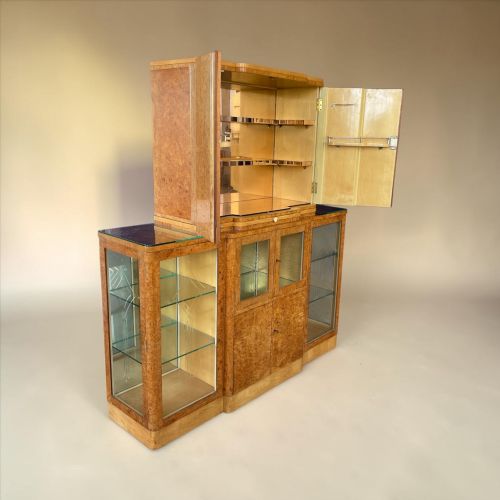
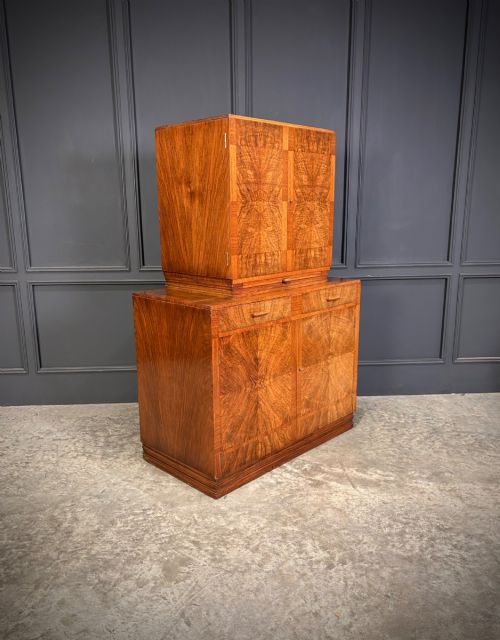
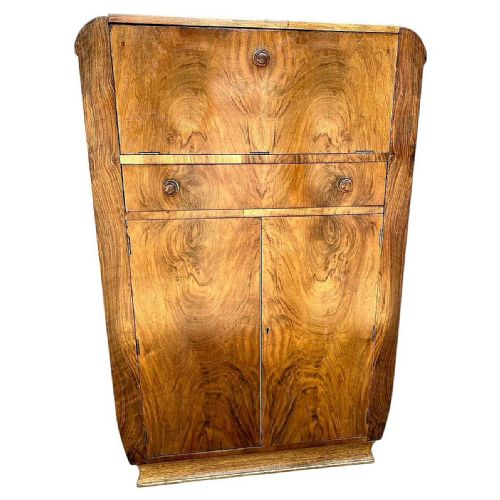
These walnut bar sideboard pieces combine serious storage with drop-down cocktail preparation, largely hailing from the Art Deco period.
Walnut Bar Sideboard
A walnut bar sideboard functions as a dedicated drinks cabinet or cocktail cabinet, merging traditional serving furniture with specialised beverage storage. Most examples encountered here date from the 1930s Art Deco era, alongside pieces from the Edwardian and Victorian periods.
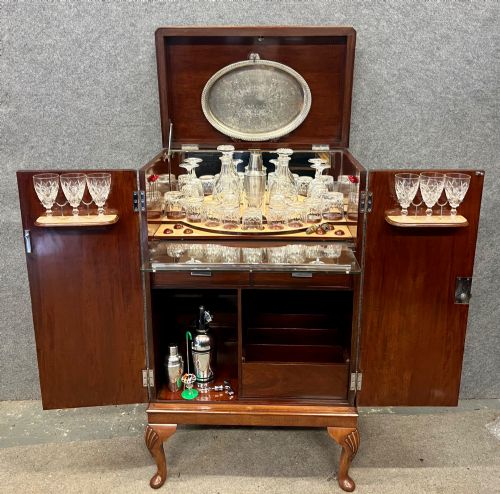
Makers designed these items to house glassware, bottles, and mixing gear behind fitted doors, often incorporating pull-down flaps for serving. The selection ranges from serpentine-shaped marquetry pieces and double bow front designs to corner cabinets and models on stands.
While earlier Victorian and Edwardian iterations lean towards traditional revival styles, the 1930s versions embrace bold geometric lines and figured veneers. Buyers searching this phrase will find a strong emphasis on entertaining furniture built to showcase fine timber.
Materials and construction methods
Cabinetmakers utilised walnut and burr walnut veneer over solid carcases to create rich, swirling grain patterns across the front panels. Figured veneers were carefully matched and laid symmetrically to catch the light on curved surfaces.
Makers incorporated brass hardware, mirrored interiors, and glass shelving to elevate the practical serving space within the drink compartments. Secondary timbers like oak provide structural support, while specialist workshops applied marquetry inlay to shape intricate decorative motifs.
Walnut Bar Sideboard Retail Price Guide 2026
Typical asking prices for walnut bar sideboard among the pieces listed under this phrase on Sellingantiques today, from the lower quarter to the upper quarter. They describe what is for sale here now, not the wider market.
The listings on this page span the Victorian, Edwardian, 1920, and 1930 periods, with Art Deco styling dominating the selection.
Distinguishing quality across the range
The sophistication of the veneer selection and timber matching defines the upper tier of these cabinets, where burr walnut covers entire curved doors and cabinet fronts. Lesser examples rely on plainer walnut surfaces with minimal figure.
Interior execution separates standard production from superior workshops, particularly in the complexity of pull-down mechanisms, fitted glass holders, and mirrored light boxes. The precision of the joinery on bow fronts, serpentine shapes, and marquetry inlay dictates the lasting architectural integrity of the piece.
Harry and Lou Epstein·Waring and Gillow·Edward Barnsley·Shapland and Petter
The Walnut Bar Sideboard Glossary
- Burr walnut
- A specialised timber cut from the warted growths of walnut trees, prized for its dense, swirling grain patterns. It forms the primary decorative surface on many high-end cabinet doors.
- Figured walnut
- Wood exhibiting an attractive grain pattern caused by growth irregularities or branch junctions. Craftsmen arranged these sections symmetrically for visual impact.
- Marquetry
- The art of applying small pieces of veneer to a structure to form decorative patterns or pictures. This technique appears on select serpentine fronts.
- Demi-lune
- A half-moon or semicircular shape utilised in the footprint of certain tables and cabinets. It allows furniture to sit flush against a wall while offering curved storage.
- Bow front
- A convex, outwardly curving front profile common on cabinets and sideboards. This shape requires advanced woodworking skill to veneer accurately.
Walnut Bar Sideboard: Frequently Asked Questions
What is inside a walnut bar sideboard?
These cabinets typically feature dedicated storage for bottles, glassware, and cocktail equipment behind paired doors or drop-down serving flaps. Many incorporate mirrored backs, glass shelves, and pull-out slides designed for mixing drinks.
Inside spaces often include specialised racks for glassware and smaller compartments intended for bar accessories. The internal layout reflects the specific entertaining requirements of the 1930s and earlier periods.
How do I date a walnut bar sideboard?
Dating relies heavily on stylistic markers, construction techniques, and the prevalent use of specific walnut veneers. Pieces from the 1930s generally display Art Deco geometry and dramatic burr walnut figuring, whereas Edwardian and Victorian versions follow revival aesthetics.
Hardware choices, such as brass pulls and hinges, also offer clues to the manufacturing decade. Cabinet shapes like the double bow front or demi-lune point towards distinct eras of design popularity.
Where should I place a drinks cabinet?
These pieces suit dining rooms, living spaces, or reception rooms where entertaining takes place. Their finished backs and decorative walnut veneers allow them to command attention as focal points in a room.
Because many include drop-down flaps or mirrored interior lights, positioning them near power sources or social seating areas maximises their functional use. Sufficient clearance must be allowed for doors and flaps to open fully without obstruction.
How do I care for walnut veneer?
Maintaining walnut veneer requires keeping the timber away from direct sunlight and extreme temperature fluctuations to prevent drying and cracking. Regular dusting with a soft, dry cloth preserves the polished finish without harming the grain.
Periodic application of appropriate furniture wax nourishes the wood and protects the historical surface. Moisture should be wiped away immediately to safeguard the delicate veneer layers from staining.