



Epstein Furniture Drinks Cabinet
An Epstein furniture drinks cabinet is a statement piece of Art Deco luxury, crafted to house spirits and glassware with undeniable glamour.
Epstein Furniture Drinks Cabinet
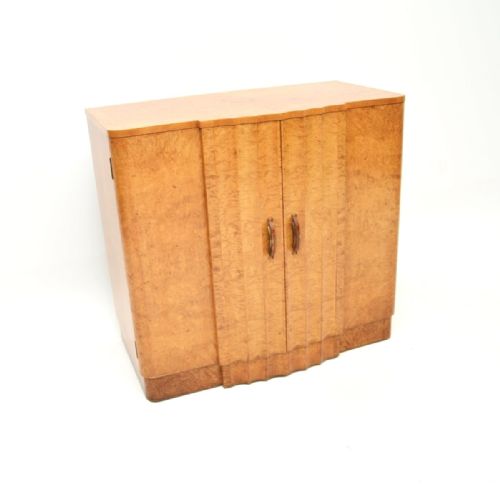
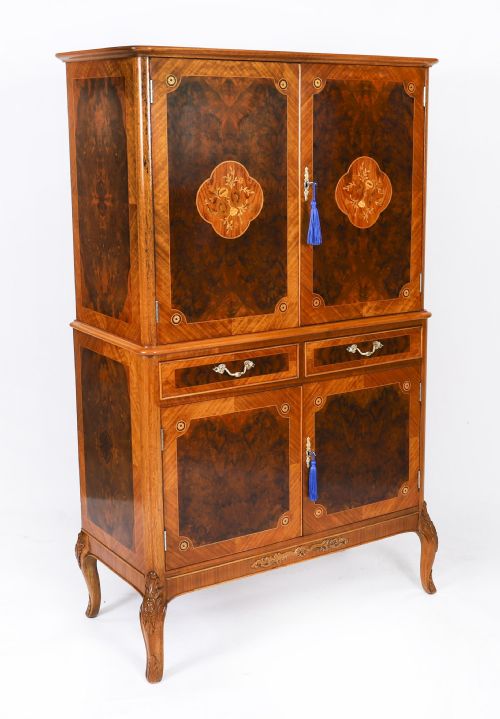
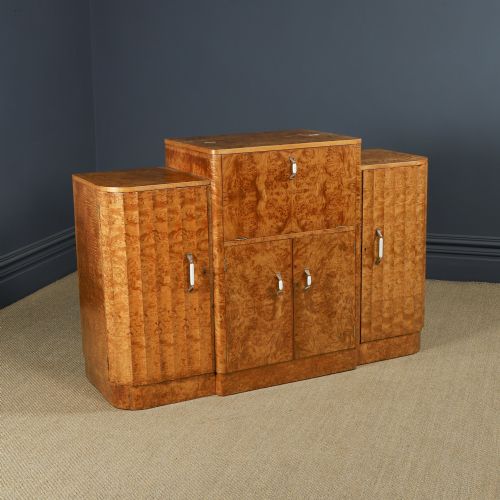
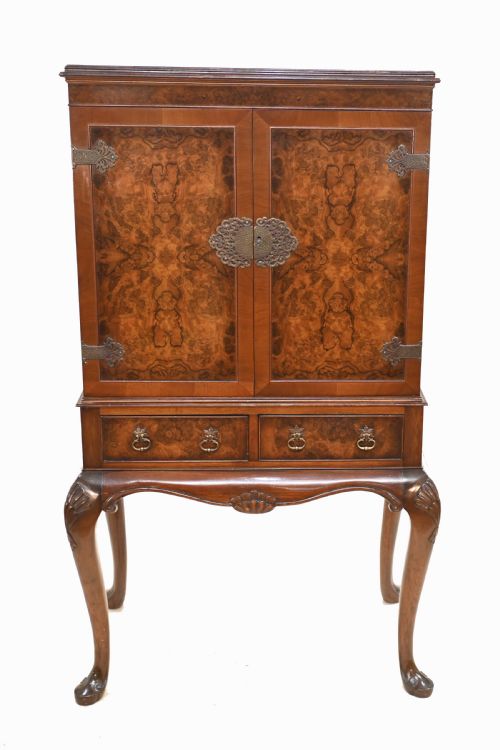
When you search for an Epstein furniture drinks cabinet, you enter the opulent world of 1930s Art Deco design. These sophisticated pieces serve as cocktail cabinets, dry bars, and cocktail chests, designed for entertaining in style. You are most likely to meet striking examples in burr walnut or plain walnut, often featuring fitted interiors for bottles and glasses.
The aesthetic is unapologetically modern for its era, drawing on the master craftsmanship associated with Harry and Lou Epstein. Alongside traditional walnut, the selection reveals variations such as satinwood, blonde maple, and black lacquer sideboard hybrids. Each form is built to command attention in a reception room, combining storage with theatrical flair.
Materials and construction
Makers utilised high-grade wood veneer over solid carcases, prized for dramatic grain patterns. Burr walnut and satinwood dominate the surface decoration, applied to create symmetrical patterns and optical movement across the front doors.
Metal and glass play vital roles in the internal and external architecture, incorporating brass fittings alongside original glass tops and fitted mirrors. Bakelite appears among the hardware details, while electric components occasionally light the interior compartments.
Epstein Furniture Drinks Cabinet Retail Price Guide 2026
Typical asking prices for epstein furniture drinks cabinet among the pieces listed under this phrase on Sellingantiques today, from the lower quarter to the upper quarter. They describe what is for sale here now, not the wider market.
Electric cocktail cabinets from this era brought the theatrical magic of illuminated ice buckets straight into the domestic living room.
Evaluating quality and design
The distinction between standard production and top-tier pieces rests upon the ambition of the timber selection and the complexity of the internal fit-out. Highly figured burr walnut veneers carefully matched across multiple doors elevate a piece far above simpler plain walnut surfaces.
Richer examples integrate contrasting timbers like satinwood or exotic blonde maple paired with black lacquer, showing greater ambition from the workshop. The presence of intact original glass tops and functional internal lighting further separates the finest survivals from simpler sideboard hybrids.
Harry and Lou Epstein·Epstein and Co Furniture·H and L Epstein
The Epstein Furniture Drinks Cabinet Glossary
- Art Deco
- A design style spanning the 1920s and 1930s characterised by sleek geometric shapes, stylised motifs, and luxurious materials. It defines the aesthetic of interwar British cabinet making.
- Burr Walnut
- A timber harvested from the irregular growths of walnut trees, yielding complex, swirling grain patterns. It was heavily favoured by high-end makers for dramatic surface veneers.
- Veneer
- A thin slice of superior wood applied over a secondary timber base to create decorative patterns without heavy structural weight. Master makers booked-matched these slices for symmetry.
- Satinwood
- A pale, lustrous hardwood originating from tropical regions, known for a natural sheen resembling satin. It provides a bright contrast against darker walnut frames.
- Bakelite
- An early form of synthetic plastic developed in the early twentieth century, utilised for durable handles, knobs, and electrical fittings on period furniture.
Epstein Furniture Drinks Cabinet: Frequently Asked Questions
What is an Epstein drinks cabinet?
An Epstein drinks cabinet is an Art Deco cocktail storage unit made by the prominent London-based Epstein family firm during the interwar period. These cabinets combine striking wood veneers with elaborate internal compartments designed for bottles, glasses, and mixing.
They function as both practical furniture and decorative centerpieces, embodying the luxury of 1930s entertaining.
How do I identify Epstein furniture?
Identification relies on recognising signature Art Deco proportions, high-gloss finishes, and dramatic use of burr walnut or blonde maple veneers. The build quality is substantial, often featuring rounded waterfall edges and sophisticated internal fittings.
While some pieces carry maker attributions in their design, others are identified through distinct stylistic traits unique to the Epstein brothers' workshops.
Where were these cabinets placed?
These cabinets were designed for principal reception rooms, dining rooms, and home cocktail lounges where hosts entertained guests. Their imposing presence made them natural focal points for interior socialising during the interwar decades.
Today, owners continue to place them in living spaces and dining areas to serve their original purpose as functional cocktail bars.
How do I care for burr walnut?
Burr walnut requires gentle maintenance away from direct sunlight and excessive heat fluctuations to prevent the delicate veneers from drying out or cracking. Regular dusting with a soft, dry cloth preserves the polished surface sheen.
Application of appropriate furniture wax helps nourish the timber and maintain the depth of the grain pattern over time.