

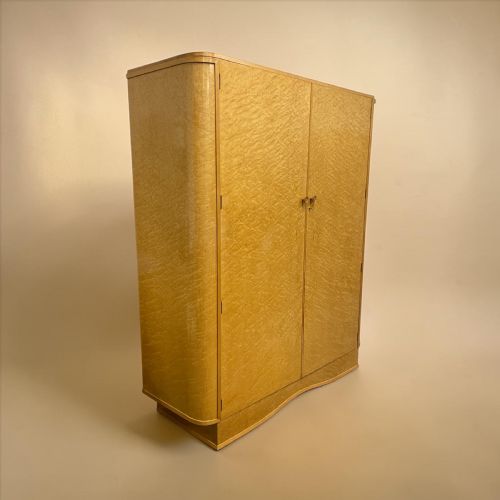
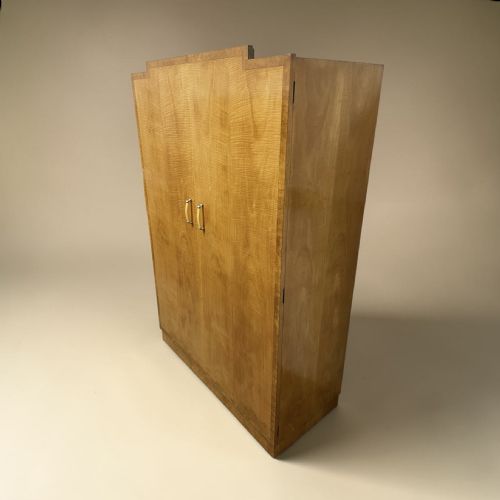


Art Deco Clothes Armoire
An art deco clothes armoire brings strong geometric presence and practical storage to a bedroom, combining striking veneers with generous internal capacity.
Art Deco Clothes Armoire
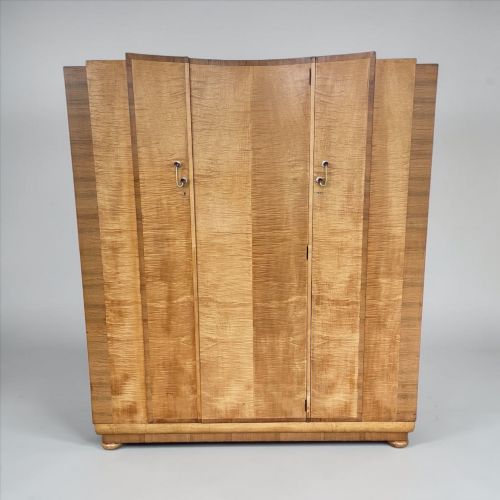
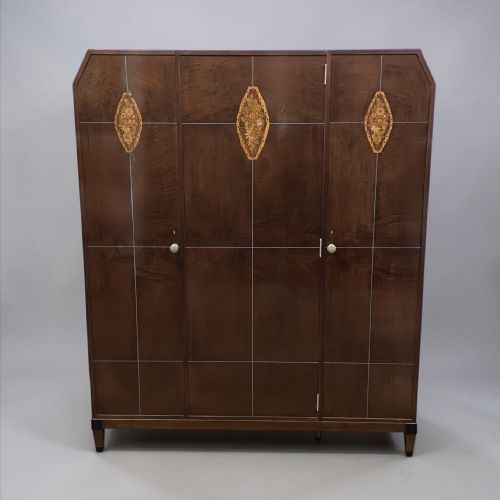
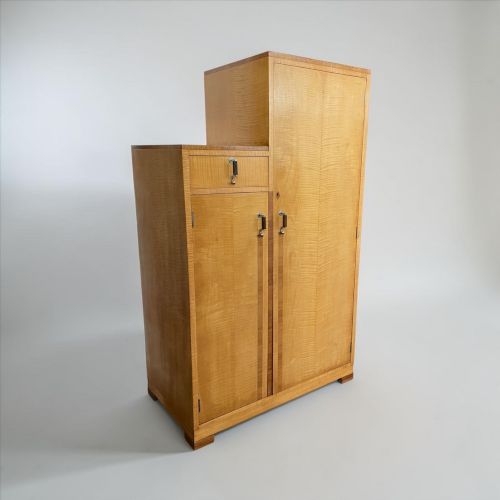
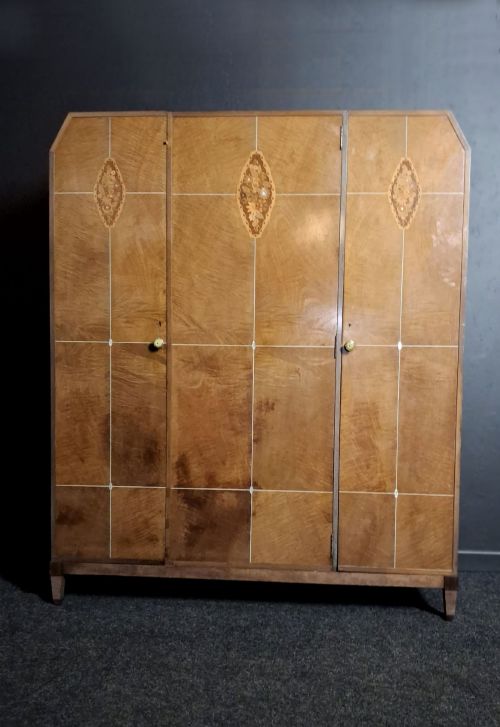
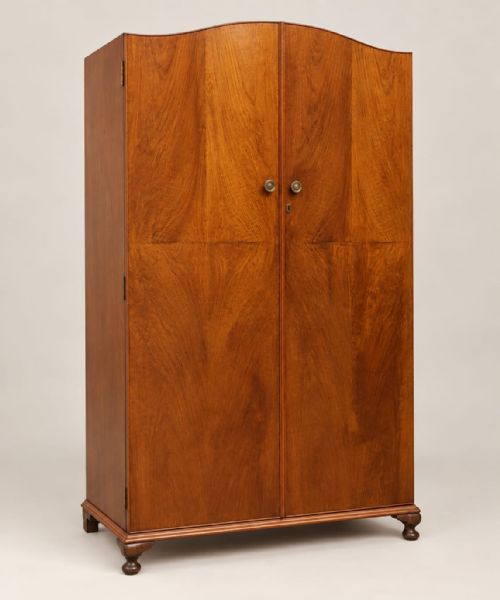
When you search for an art deco clothes armoire, you find substantial bedroom furniture designed for hanging garments, often featuring fitted interiors and compactum sections. These pieces mostly date from the nineteen twenties and nineteen thirties, reflecting the dominant aesthetic of the period.
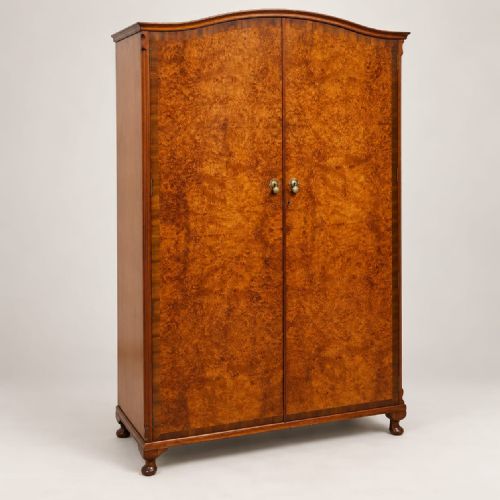
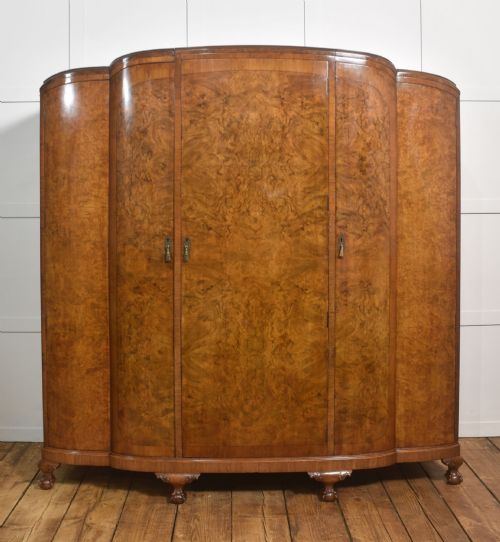
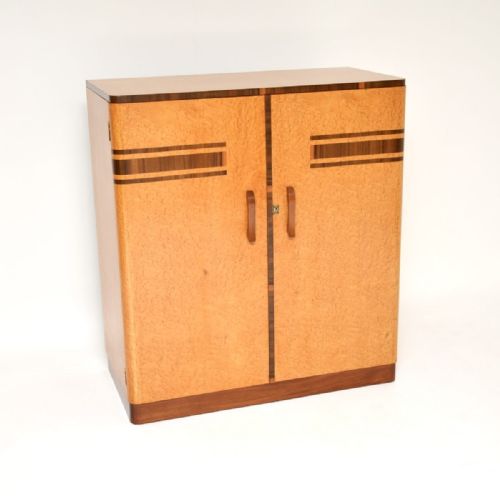
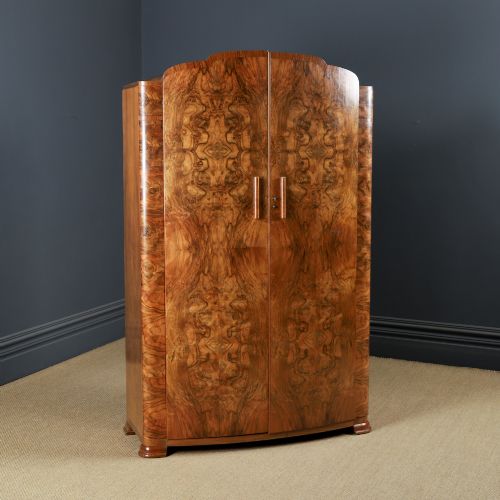
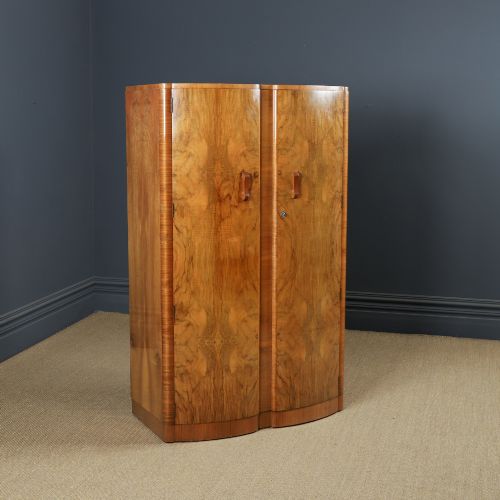
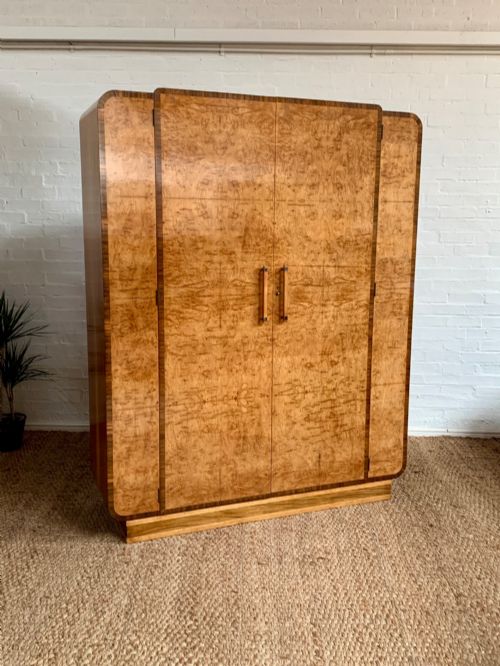
The versions most commonly met on this page are double and triple wardrobes constructed in walnut, burr walnut, and oak. Forms range from simple bow front designs to large breakfront configurations and matching bedroom suites.
Originating primarily from English workshops and notable makers of the interwar years, these wardrobes demonstrate the transition from earlier revival styles into bold modernism. Buyers select them for their combination of architectural silhouettes and rich timber figuring.
How they were made
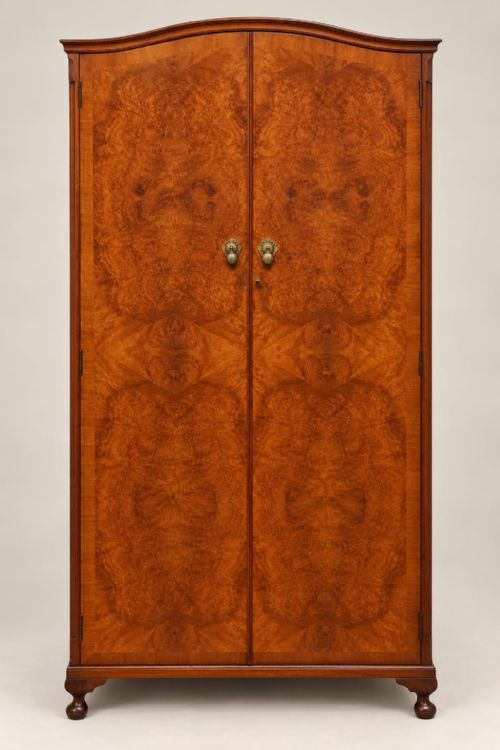
Cabinet makers constructed these wardrobes using solid carcases faced with figured walnut, burr walnut veneer, and oak, applying careful grain matching across the doors. This technique created symmetrical patterns that define the visual impact of the front elevation.
Metal components such as brass handles, hinges, and occasional glass elements were integrated to punctuate the dark timber surfaces. Interiors often received fitted shelving, hanging rails, and internal drawers executed in secondary woods like birch.
Art Deco Clothes Armoire Retail Price Guide 2026
Typical asking prices for art deco clothes armoire among the pieces listed under this phrase on Sellingantiques today, from the lower quarter to the upper quarter. They describe what is for sale here now, not the wider market.
Listings span three distinct decades, starting from nineteen ten through the nineteen twenties and into nineteen thirty.
What varies in quality
The standard of timber selection largely dictates the quality of a piece, particularly the complexity and book-matching of the burr walnut or figured walnut veneers across wide door panels. Finer examples display continuous grain patterns that flow seamlessly from one door to the next.
Internal configuration and joinery execution also set pieces apart, moving from basic hanging spaces to fully fitted compactum interiors with specialised compartments. Maker attribution and original labels further distinguish exceptional pieces from standard commercial production.
Heals of London·Jean Faure·Harry and Lou Epstein
The Art Deco Clothes Armoire Glossary
- Compactum
- A fitted wardrobe combining hanging space with internal drawers, shelves, and compartments in a single unit. This design maximises storage efficiency within a relatively compact footprint.
- Breakfront
- A cabinet design where the central section projects forward from the flanking wings. This architectural arrangement adds depth and shadow lines to large wardrobes.
- Veneer
- A thin layer of figured timber applied over a stable secondary wood base. This method allows cabinet makers to display expensive grain patterns without risking the warping associated with solid exotic boards.
- Bow front
- A convex, outwardly curved front elevation typical of many interwar cabinet designs. The curve softens the rigid geometry often associated with the period.
Art Deco Clothes Armoire: Frequently Asked Questions
How do I fit hangers inside a vintage armoire?
Many period wardrobes feature older wooden rails or hooks positioned front-to-back rather than side-to-side due to shallow internal depths. Modern slimline hangers or specialised adapters allow standard garments to hang properly without fouling the doors.
Some fitted interiors include pull-out hanging arms that swing outward when the door opens, making garment selection easier despite the traditional cabinet depth.
Are these wardrobes easy to dismantle for transport?
Construction methods varied significantly during the interwar period, with some larger triple and breakfront wardrobes built as modular carcasses that bolt apart. Others were constructed as single, solid units that require professional removal and careful clearance measurement for stairways.
Checking the internal corners for concealed fixing bolts reveals whether a particular wardrobe can be broken down into manageable sections for delivery.
What is a compactum wardrobe?
A compactum is a specialised multi-functional wardrobe that divides its interior space between hanging areas, linen shelves, and internal drawers. This layout was designed to house an entire wardrobe within a single piece of bedroom furniture.
Split-side variations often separate the hanging section from the drawer stack, providing organised storage for smaller garments alongside full-length coats.
How do I care for walnut veneer surfaces?
Walnut veneers respond best to stable environmental conditions away from direct sunlight and strong heat sources that can dry out the timber. Regular dusting with a soft, dry cloth maintains the finish without requiring heavy polishes.
Occasional application of a mild, beeswax-based conditioner helps nourish the grain and protects the polished surface from minor atmospheric moisture.