



Art Deco Compactum Cabinet
An art deco compactum cabinet offers serious storage with a streamlined silhouette, combining hanging space and drawers in a single footprint.
Art Deco Compactum Cabinet
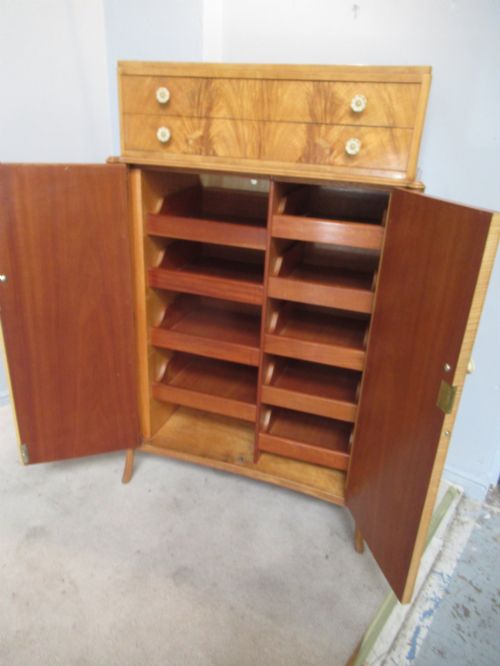
When you search for an art deco compactum cabinet, you encounter substantial storage furniture designed during the 1930 and 1940 decades. These pieces merge wardrobe compartments with internal drawers, sometimes accompanied by fitted shelves and shoe rails.
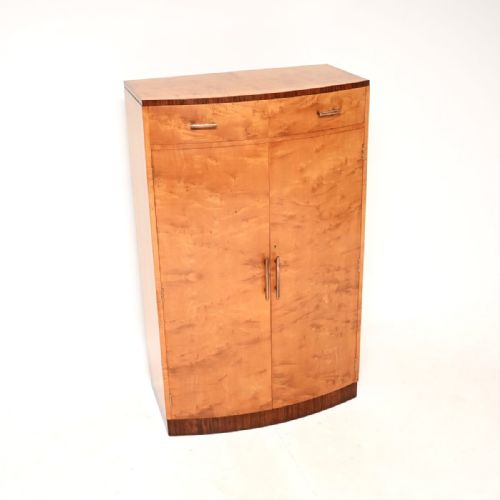
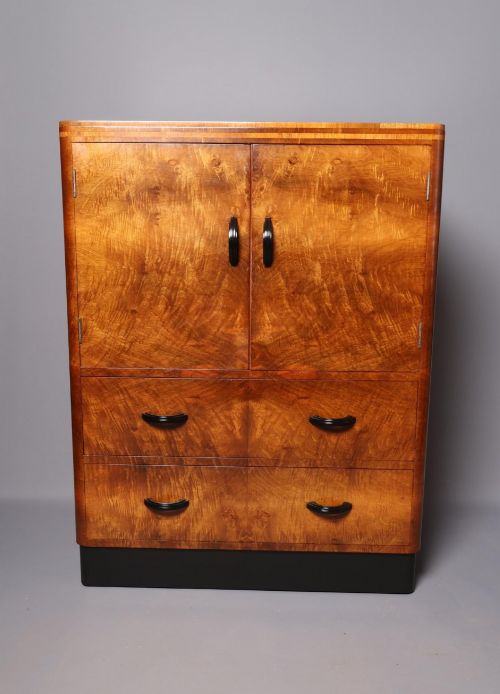
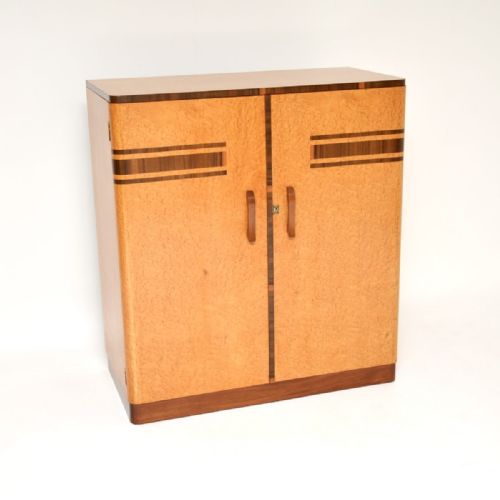
The most common versions on this page are walnut and burr walnut wardrobes and tallboys, frequently enriched with contrasting veneers like birds eye maple or mahogany. They present clean architectural lines characteristic of the Art Deco style without excessive ornamentation.
Makers and designers of the period organised the internal space meticulously to accommodate gentlemen's or ladies' attire within a compact floor area. The forms vary from tall single-section units to wide split-side wardrobes equipped with central mirrored or panelled doors.
How they were made
Cabinet makers constructed these pieces using solid carcases faced with decorative wood veneers such as walnut, satin birch, and birds eye maple. The grain patterns were carefully matched across the doors and drawer fronts to create symmetrical geometric designs.
Hardware played a functional and decorative role, incorporating polished brass handles and occasionally bakelite fittings. Wood surfaces were finished to highlight the natural figure of the timber, contrasting darker walnut bodies with lighter maple or mahogany interior details.
The listings on this page span the 1930 and 1940 periods, predominantly featuring walnut, birds eye maple, and mahogany finishes.
What varies in quality
Quality rests primarily on the choice and execution of the veneer work, where book-matched grain patterns demonstrate superior craftsmanship. The richness of the walnut or birds eye maple figure elevates the visual impact of the piece significantly.
Internal configuration and the integration of original brass or bakelite hardware distinguish standard utility pieces from finer commissions. Solid construction of the interior sliding trays and drawers reveals the underlying standard of manufacture.
Heal's
The Art Deco Compactum Cabinet Glossary
- Compactum
- A multi-functional wardrobe combining hanging space, drawers, and shelving within one unified cabinet. It was designed to maximise storage efficiency in interwar bedrooms.
- Veneer
- A thin layer of decorative timber applied to a stable underlying wood base. This technique allowed cabinet makers to utilise striking grain patterns like burr walnut.
- Tallboy
- A tall chest of drawers or a wardrobe-chest hybrid that rises higher than a standard dresser. It provides extensive vertical storage while occupying minimal floor space.
- Bakelite
- An early synthetic plastic utilised for handles and decorative trim during the interwar period. Its dark, lustrous finish contrasts sharply against light maple and walnut timbers.
Art Deco Compactum Cabinet: Frequently Asked Questions
What is an art deco compactum cabinet?
An art deco compactum cabinet is a multi-functional piece of bedroom furniture that combines hanging space, drawers, and shelves into a single, cohesive unit. These pieces date primarily from the 1930 and 1940 decades and feature the streamlined geometry typical of the period.
They were designed to provide comprehensive wardrobe storage within a relatively modest floor footprint. The interior typically divides into hanging sections on one side and stacking drawers or shelves on the other.
How do I use a compactum cabinet today?
These cabinets serve admirably as primary bedroom wardrobes, offering dedicated spaces for folded garments alongside longer hanging items. Their internal divisions make them exceptionally practical for organising modern clothing.
In living spaces or hallways, a smaller tallboy or compactum variant functions as a statement storage piece for linens or occasional items. The fitted interior shelves and drawers adapt easily to contemporary storage needs.
What woods were used in these cabinets?
Cabinet makers relied heavily on walnut and burr walnut for the primary exterior surfaces, often selecting timber with prominent, swirling grain patterns. Contrasting light woods such as birds eye maple, satin birch, and pale mahogany frequently highlight drawer fronts and borders.
The combination of dark walnut bodies with lighter maple interiors creates the characteristic two-tone aesthetic of the era. These veneers were applied over sturdy carcase woods to achieve both stability and decorative richness.
How do I date a 1930s compactum?
Dating relies on stylistic markers such as stepped cornices, geometric veneer layouts, and the presence of original brass or bakelite hardware. Pieces from this era embrace clean architectural lines rather than historical revival ornamentation.
Construction methods also provide clues, as interwar workshops combined traditional cabinet-making joints with newly developed plywood and veneer presses. Dated stamps or maker marks inside the drawers occasionally confirm the exact decade of manufacture.