


1920s Art Deco Wardrobe
A 1920s art deco wardrobe brings architectural symmetry and striking timber grain to the bedroom.
1920s Art Deco Wardrobe
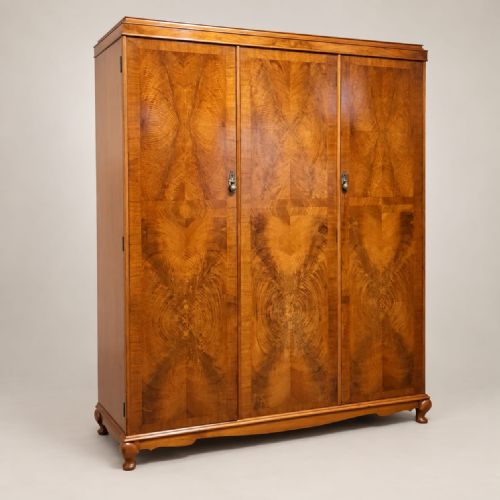
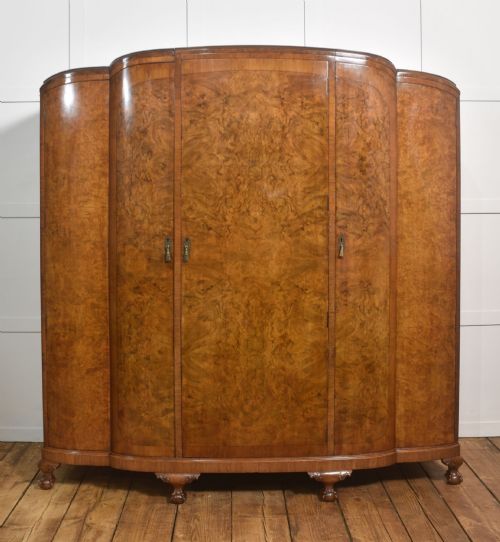
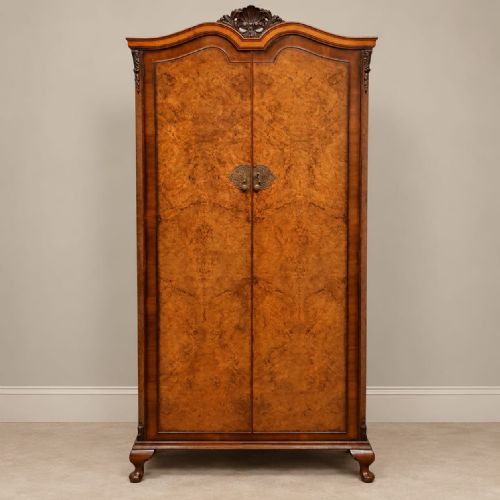
A 1920s art deco wardrobe provides substantial bedroom storage through large-scale cabinetry designed in the modernist aesthetic of the period. These pieces originate from the 1920s and 1930s, appearing as standalone wardrobes, fitted cupboards, tallboys, and complete bedroom suites. The burr walnut triple wardrobe stands out as the most common form encountered on this page.
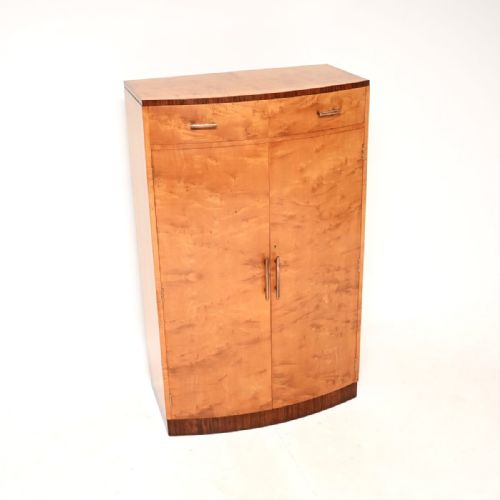
Makers and designers of the era produced variations ranging from simple oak compactum wardrobes to signed high art deco pieces. Alongside standard wardrobes, collectors encounter tallboys and compactum models that combine hanging space with internal drawers and shelving. Pieces associated with Heal's of London and signed works by Jean Faure represent the specific outputs of the era.
How they were made
Makers utilised walnut, burr walnut veneer, satin birch, and oak as the primary woods for these large case pieces. Burr walnut veneer provides the distinctive, highly figured patterned surfaces that define the visual impact of the doors and drawer fronts. Solid timber construction frames these veneered panels to ensure structural stability across large wardrobe surfaces.
Metal, brass, glass, and bakelite appear as secondary materials used for handles, hinges, internal fittings, and decorative accents. Cabinetmakers constructed compactums and tallboys with internal compartmentalisation, integrating drawers and specialised storage behind symmetrical exterior doors. Labelled pieces show evidence of workshop production standards from major London retailers and cabinetmakers.
Some wardrobe doors swing wide with such confident symmetry that they practically demand an audience for your morning outfit change.
What varies in quality
Quality separates simple utility furniture from ambitious designer pieces through the selection and matching of burr walnut veneer across the front elevation. Superior examples demonstrate continuous grain patterns across multiple doors, whereas lesser pieces display random or mismatched timber figures. The complexity of the internal configuration also distinguishes standard wardrobes from fitted compactums and tallboys.
Attribution and provenance elevate certain items, particularly those bearing maker labels or signatures from established firms like Heal's or cabinetmakers such as Jean Faure. The integration of high-grade hardware, including original brass, glass, and bakelite fittings, indicates a higher tier of original manufacture. Construction methods that maintain rigid door alignment across large triple-wardrobe frames dictate the long-term utility of the piece.
Heals of London·Jean Faure
The 1920s Art Deco Wardrobe Glossary
- Compactum wardrobe
- A multi-compartment wardrobe that combines hanging space with internal drawers and shelving within a single cabinet. This form maximises bedroom storage efficiency.
- Tallboy
- A case piece standing taller than a standard chest of drawers, often combining a cupboard section with lower drawers. These items share the vertical proportions seen in related wardrobe designs.
- Burr walnut veneer
- Thin slices of decorative burr walnut timber applied to a stable core wood to create elaborate grain patterns. This technique defines the primary decorative surface of art deco cabinetry.
- Breakfront
- A cabinet design where the central section projects forward from the flanking wings. This architectural arrangement creates depth and shadow on large wardrobe facades.
- Queen Anne revival
- A traditional revival style referencing early eighteenth-century forms that occasionally appears alongside modern art deco furniture in period room settings.
1920s Art Deco Wardrobe: Frequently Asked Questions
How do I choose between a wardrobe and a compactum?
A standard wardrobe provides primarily hanging space behind large doors, suited for garments requiring full vertical drop. A compactum integrates internal drawers and shelves alongside hanging sections to handle folded items within the same footprint.
Selecting between them depends on your specific storage requirements and the available floor space in the room. Both formats utilise the same decorative veneers and period styling.
What is a tallboy used for?
A tallboy offers vertical storage that combines cupboard space with stacked drawers in a compact floor footprint. It functions well in bedrooms where a full wardrobe is unnecessary or where extra drawer capacity is required.
These pieces repeat the geometric lines and veneered surfaces found on larger matching bedroom furniture.
How do I care for burr walnut veneer?
Burr walnut veneer requires protection from direct sunlight and excessive humidity to prevent the thin wooden surfaces from fading or lifting. Regular dusting with a soft, dry cloth preserves the polished finish without introducing moisture.
Applying microcrystalline wax periodically helps maintain the natural lustre of the timber grain.
How do I distinguish 1920s pieces from 1930s pieces?
Pieces from the 1920s often incorporate traditional construction methods and occasional revival details alongside early modern forms. By contrast, 1930s designs frequently lean into more streamlined, symmetrical breakfront configurations and plain geometric surfaces.
Maker labels and dated workshop stamps provide the most reliable chronological markers.