



Art Deco Brooch Pin
An art deco brooch pin captures the geometric clarity and bold material contrasts of the interwar period, offering a wearable piece of history that fastens neatly to a lapel or scarf.
Art Deco Brooch Pin
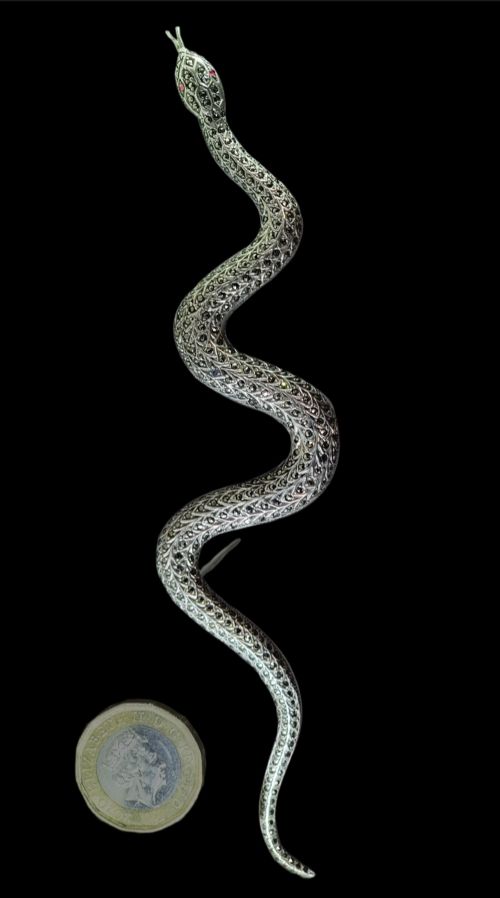
An art deco brooch pin serves as a decorative fastening device, encompassing streamlined bar designs, floral sprays, and figurative subjects like insects or reptiles. These items originate predominantly from the 1920s and 1930s, reflecting the modernist design shifts of the interwar decades.
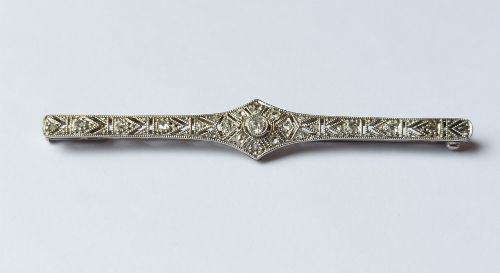
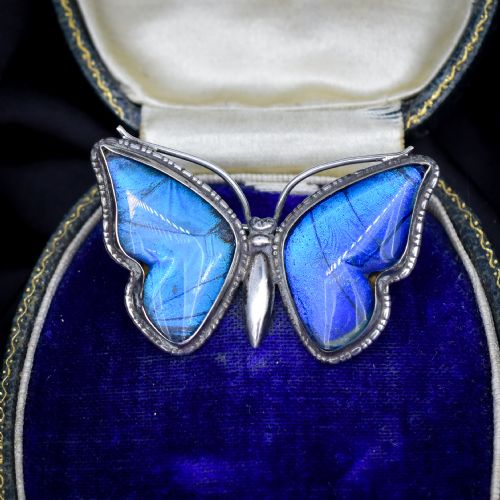
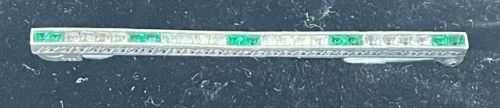
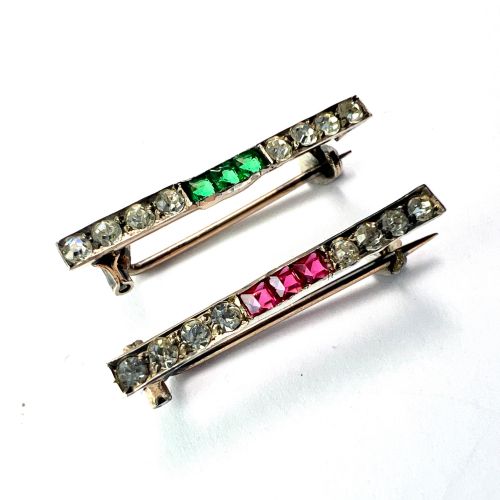
The version most commonly encountered on this page is the geometric platinum or white gold bar brooch set with diamonds, alongside silver iterations incorporating coloured paste or enamel. Many examples combine precious metals with contrasting dark stones or bright butterfly wings, following the eclectic tastes of the era.
Beyond standard dress clips, surviving forms include convertible pendant combinations, fob watches, and pictorial brass pieces. These ornaments highlight the shift from Edwardian complexity towards clean symmetry and stylised motifs.
Materials and Construction
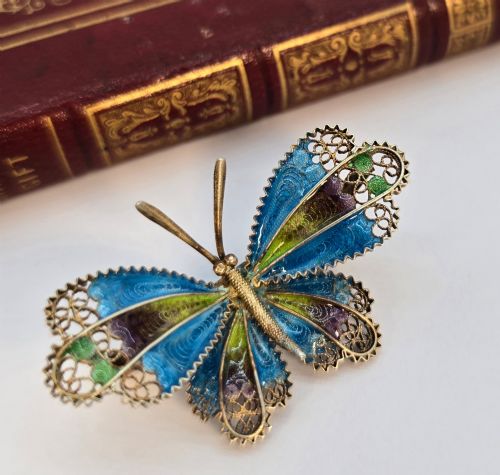
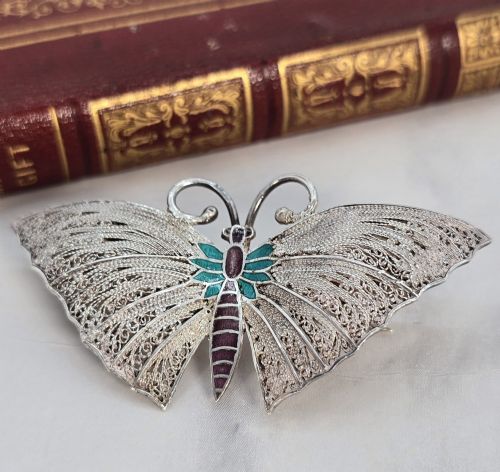
Metals such as platinum and white gold provide the robust yet ductile framework necessary for securing tight clusters of pavé-set stones. Sterling silver and silver gilt appear frequently in work utilising filigree wirework or supporting translucent enamel.
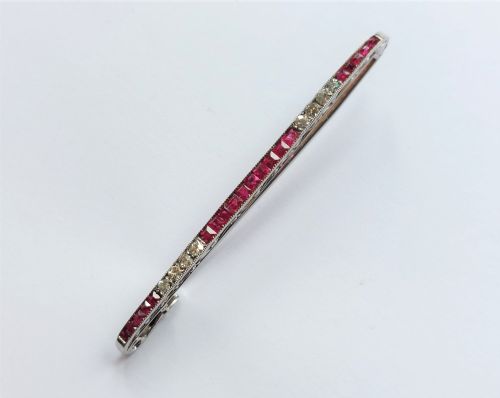
Gemstone selection relies heavily on high-contrast pairings, contrasting bright diamonds with black onyx, rock crystal, or calibration-cut rubies and emeralds. Enamelling techniques like guilloché apply translucent coloured layers over engine-turned metal bases to create rhythmic patterns.
Several butterflies lost their real wings decades ago, only to find eternal preservation beneath glass butterfly wing panels.
Assessing Craftsmanship and Design
Quality rests in the precision of the metalwork, particularly the fineness of the piercing and the tightness of the stone settings. Superior examples display meticulous hand-fabrication where the reverse side is finished with the same care as the front.
The harmony of the stone grouping also dictates the tier of the piece, with matched natural coloured gems and well-proportioned old-cut diamonds elevating the overall design. Maker signatures from prominent houses add historical weight, though anonymous workshop pieces often match them in technical execution.
Cartier Paris·Liberty London
The Art Deco Brooch Pin Glossary
- Guilloché
- A decorative technique where a mechanical lathe engraves precise, intricate geometric patterns into a metal substrate. Translucent enamel is subsequently applied over this engraved surface to allow light reflection.
- Paste
- Hand-cut and polished glass utilised to imitate precious gemstones. High-grade antique paste stones are foiled at the back to enhance their internal brilliance.
- Filigree
- Delicate jewellery-making work consisting of fine metal threads twisted and soldered together into open-work patterns. It appears frequently in silver butterfly and floral designs.
- Platinum
- A dense, strong white metal widely utilised during the period to hold diamonds securely with minimal visible claw work. Its strength allowed jewellers to create airy, lace-like frameworks.
Art Deco Brooch Pin: Frequently Asked Questions
How do I wear an art deco brooch pin safely?
Pin the piece through a sturdy weave of fabric, using a backing cap if the original clasp lacks a locking mechanism. Avoid delicate silks that might pucker under the weight of platinum and diamond settings.
For added security on valuable items, attach a small safety chain looped around a nearby buttonhole or clothing seam. This prevents loss if the primary pin fastening releases during movement.
Were these pins worn only on clothing?
While primarily designed for lapels, collars, and hats, many items served dual purposes as dress clips or central elements on ribbon chokers. Some larger forms convert easily into pendants via hidden loops at the reverse.
Fob watches and cape clips also functioned as functional accessories during the 1920s and 1930s. Their versatile construction allowed owners to shift mounts depending on current fashion requirements.
How do I distinguish 1920s pieces from 1930s designs?
Items from the 1920s often favour strict symmetry, platinum settings, and monochromatic diamond arrangements. They lean towards sharp architectural lines and abstract geometric interplay.
By contrast, 1930s examples frequently introduce warmer yellow golds, colourful gemstones like aquamarine or citrine, and more naturalistic floral or fauna motifs. Enamel work and silver filigree also become prominent in the later decade.
How should I clean my antique brooch?
Use a soft brush with warm water and mild soap to remove dust trapped behind stone settings. Avoid soaking pieces that contain enamel, butterfly wings, or foil-backed paste stones, as moisture damages organic materials and adhesives.
Dry the metal thoroughly with a soft cloth before storage. Periodic checks by a specialist ensure that claw settings holding heavier gems remain secure.