




Art Deco Blue Vase
An art deco blue vase brings geometric restraint and striking cobalt or azure tones straight from the interwar interior.
Art Deco Blue Vase
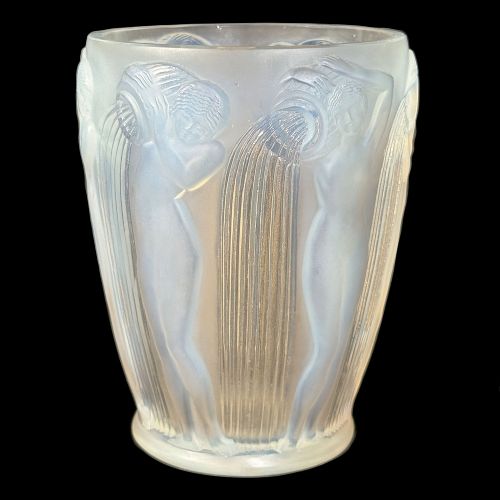
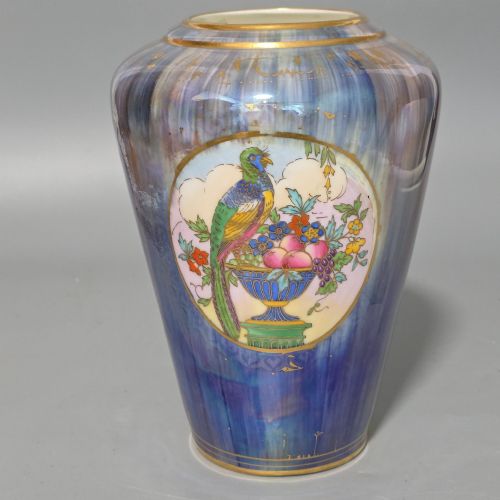
When you search for an art deco blue vase, you encounter moulded glass, earthenware, and porcelain shaped in the distinct aesthetic of the 1920 and 1930 periods. The selection spans straightforward geometric vessels to elaborate moulded glass creations featuring floral and figurative motifs.
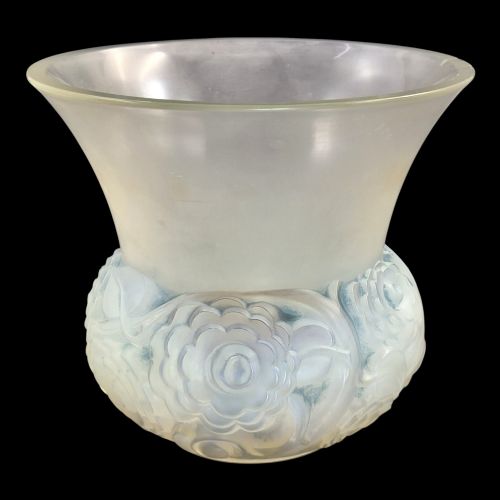
Moulded and pressed glass vessels dominate the forms, particularly French creations with opalescent finishes or blue staining that catch the light. Alongside glass, earthenware pottery pieces glazed in deep cobalt, lapis, or pale blue appear frequently across the listings.
Materials and Techniques
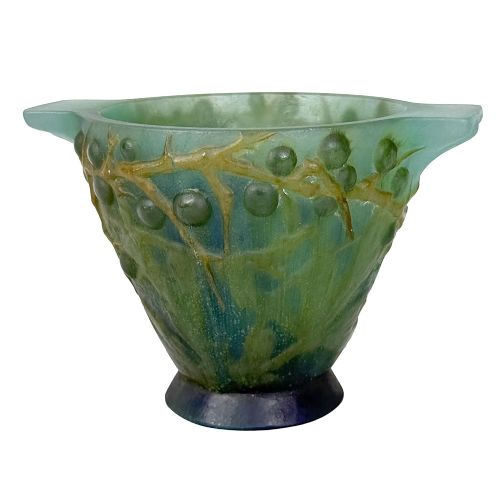
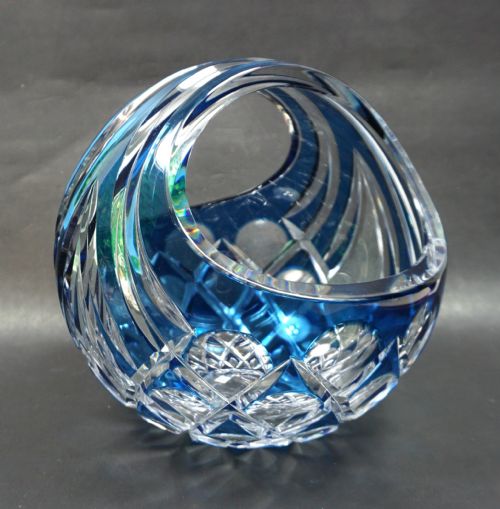
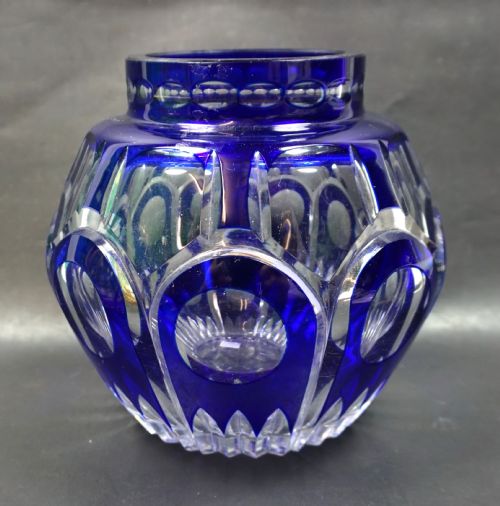
Glassmakers utilised pressing and moulding techniques, often employing pate de verre or layering clear crystal over coloured glass to achieve depth. Acid etching, frosting, and blue staining highlighted the raised motifs characteristic of the era's glasswork.
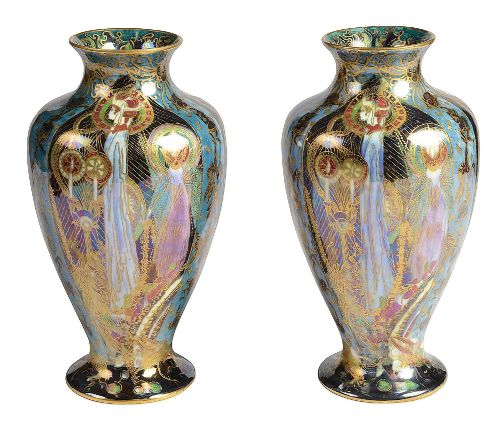
Potters applied rich glazes, enamel, and sometimes gold leaf onto earthenware and porcelain bodies. Crystalline and drip glazes created mottled, unpredictable surfaces during the firing process.
Several vases depict stylised water carriers and swimming mallards, bringing miniature aquatic scenes directly onto the living room mantelpiece.
Distinctions in Execution
Quality rests in the crispness of the moulding and the depth of the coloured glass or glaze. Pieces that retain sharp detail in high-relief glass or feature complex multi-fired lustre and enamel decorations demonstrate superior workshop execution.
The reputation of the designer and the specific execution of the colourway dictate distinction within the range. Controlled glass layering and precise hand-finishing elevate certain standard vessel shapes into exceptional examples of period production.
Rene Lalique·Wedgwood·Val St Lambert·Monart·Pilkingtons Royal Lancastrian·William Moorcroft·Carlton Ware·Moser
The Art Deco Blue Vase Glossary
- Opalescent Glass
- Glass that milky or translucent appearance where the material shifts in tone depending on the angle of the light. It is commonly found in interwar decorative moulded vases.
- Pate de verre
- A glass-casting method where crushed glass is packed into a mould and fused in a kiln. This technique produces dense, slightly granular vessels with rich coloration.
- Crystalline Glaze
- A ceramic finish that allows zinc silicate crystals to grow visibly within the glaze during firing. This produces distinct star-like patterns across the pottery surface.
- Baluster
- A vase shape characterised by a rounded body that tapers toward a narrow neck and wide base. It mimics the architectural form used in traditional stair railings.
Art Deco Blue Vase: Frequently Asked Questions
How do I date an art deco blue vase?
Dating relies on stylistic markers, materials, and specific production eras associated with the 1920 and 1930 decades. Moulded signatures or stamped factory marks beneath the base often provide definitive confirmation of the manufacturing period.
Changes in glass technology and shifting ceramic glaze recipes during the interwar years further help narrow down the decade of production.
Were these vases used for cut flowers?
Many of these vessels served a practical purpose on interwar sideboards and mantelpieces, holding fresh or dried floral arrangements. Heavier glass and earthenware forms provided necessary stability for daily domestic display.
More decorative or delicate examples functioned primarily as standalone art objects rather than utilitarian flower holders.
How do I clean antique art coloured glass?
Cleaning requires warm water and mild soap applied gently with a soft cloth to protect vulnerable surfaces and coloured stains. Abrasive materials and harsh chemical cleaners risk damaging the delicate finishes on opalescent or enamelled glass.
Thorough drying with a lint-free cloth prevents water spots from settling on the polished or frosted exterior.
What defines the art deco style in pottery?
The aesthetic relies on stylised symmetry, geometric patterns, and simplified representations of natural forms such as flowers and animals. Bold colour contrasts and clean vertical lines replace the flowing organic curves seen in earlier movements.
Potters translated these architectural principles into repeating painted motifs, moulded reliefs, and vibrant monochrome glazes.