


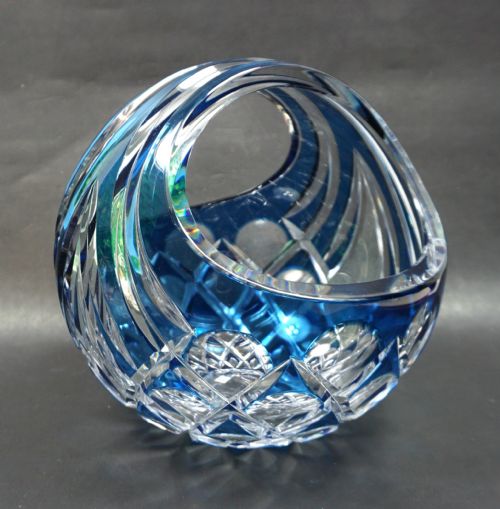


Cobalt Blue Cut Crystal
Cobalt blue cut crystal brings striking colour and deep facets to a room, catching the light across decanters, vases and chandeliers.
Cobalt Blue Cut Crystal
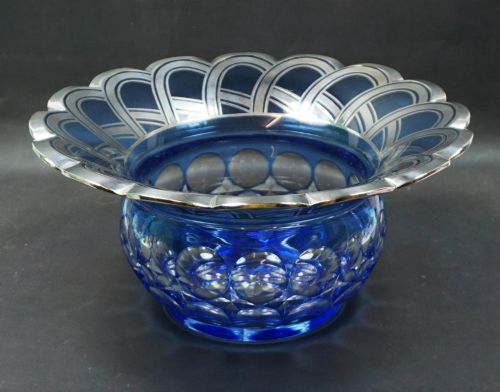
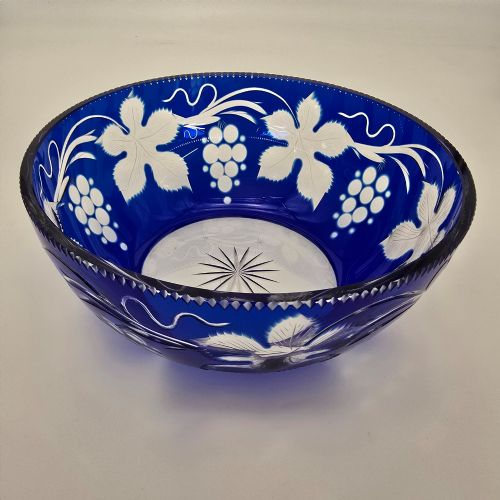
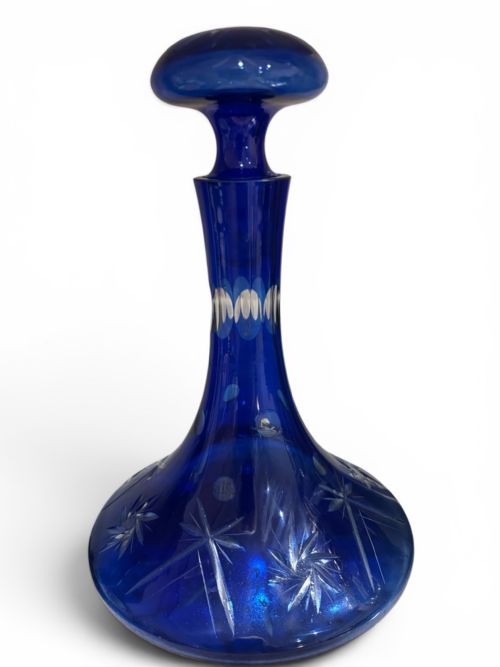
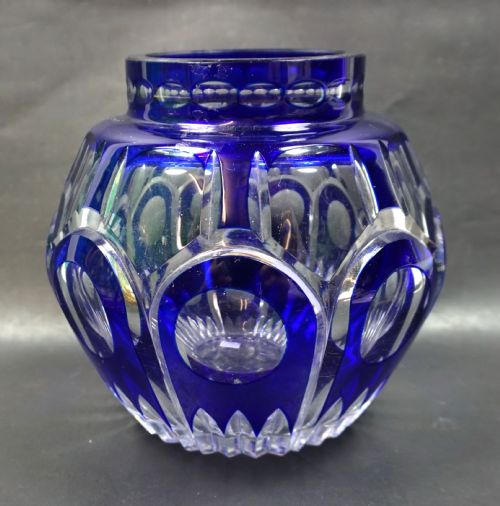
Cobalt blue cut crystal pieces span functional tableware and decorative items, featuring decanters, bowls, vases, champagne flutes, lustres and chandeliers. These objects display a deep blue hue shaped by cutting techniques that reveal the clear material beneath.
The selection here encompasses Victorian, Art Deco and Vienna Secession styles alongside Bohemian and Belgian origins. Buyers frequently encounter nineteenth century items alongside pieces from the early decades of the twentieth century.
Vessels and glassware range from large bowls and decanters to matched sets of wine glasses and elaborate chandeliers. Each form showcases the interplay between dark blue glass and meticulous surface cutting.
How they were made
Makers utilised lead crystal, glass and cased glass, often applying a layer of cobalt blue over a clear crystal base. Artisans then cut deeply through the coloured outer layer to expose the clear material underneath, creating sharp contrast and pattern.
Mounts in silver and metal appear on specific decanters and glassware, adding structural detail to the glass body. The combination of heavy crystal casting and precise wheel cutting defines the weight and brilliance of these objects.
Cobalt Blue Cut Crystal Retail Price Guide 2026
Typical asking prices for cobalt blue cut crystal among the pieces listed under this phrase on Sellingantiques today, from the lower quarter to the upper quarter. They describe what is for sale here now, not the wider market.
What varies in quality
The depth and precision of the facet cutting dictate the visual sharpness of the pattern, separating routine work from master execution. Crisp edges where the blue meets the clear crystal show disciplined handwork.
The weight of the lead crystal and the uniformity of the cobalt overlay determine the resonance and colour saturation of the piece. Substantial thickness in the glass and balanced proportions across bowls and decanters indicate superior output from makers like Val St. Lambert or Moser.
Joseph Simon·Val St. Lambert·Moser·Otto Prutscher
The Cobalt Blue Cut Crystal Glossary
- Cased glass
- A method where a layer of coloured glass is fused over a clear or contrasting body before cutting. This overlay technique allows the cutter to reveal the underlying material.
- Cut to clear
- A decorative process where thick coloured glass is carved away to expose the clear crystal beneath. The resulting pattern creates a strong contrast between bright facets and deep blue.
- Mantel lustres
- Decorative ornamental vases hung with prismatic glass pendants designed for display on a fireplace mantel. Pairs of these objects often feature elaborate cutting and overlay work.
- Vienna Secession
- An artistic movement originating around nineteen hundred that rejected historicism in favour of clean geometric forms. Objects from this circle emphasise modern design principles.
Cobalt Blue Cut Crystal: Frequently Asked Questions
What is cobalt blue cut crystal?
Cobalt blue cut crystal refers to glassware featuring a rich blue colouration combined with geometric or linear facet cutting. The process typically involves cutting through a blue surface layer to expose clear crystal underneath.
These pieces include decanters, vases, champagne flutes and chandeliers originating from European glasshouses during the nineteenth and early twentieth centuries.
How do I care for crystal?
Wash crystal items by hand in lukewarm water using mild detergent to protect the surface and any silver mounts. Avoid sudden temperature changes to prevent cracking the heavy lead glass.
Dry the pieces gently with a lint-free cloth to maintain the brilliance of the cut facets and the depth of the blue colour.
Are these pieces heavy?
Lead crystal items possess significant heft due to the density of the material and the thickness required for deep cutting. Decanters, bowls and vases feel solid and substantial when lifted.
This weight distinguishes quality crystal from lighter pressed glassware and contributes to the stability of tall items like chandeliers and lustres.
How do I date these objects?
Dating relies on stylistic markers such as Victorian ornamentation, Art Deco geometry or Vienna Secession minimalism, alongside manufacturing signatures. Examining the depth of the cut and the characteristics of the glass helps place an item in its period.
Makers' marks, where present on the base or mounts, provide definitive evidence of origin and production era.