


Art Deco Bedroom Vanity
An art deco bedroom vanity brings distinct geometric lines and rich figuring to a dressing space, offering both a surface for preparation and a sculptural focal point.
Art Deco Bedroom Vanity
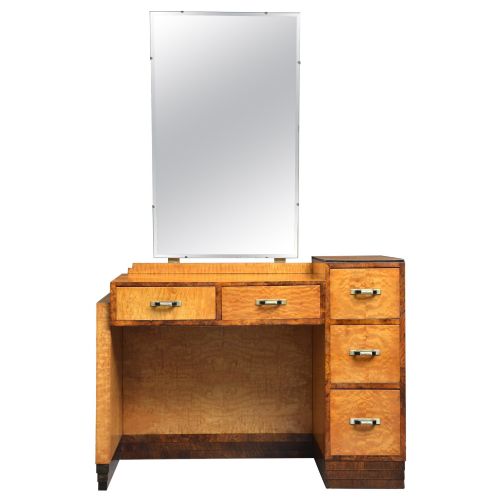
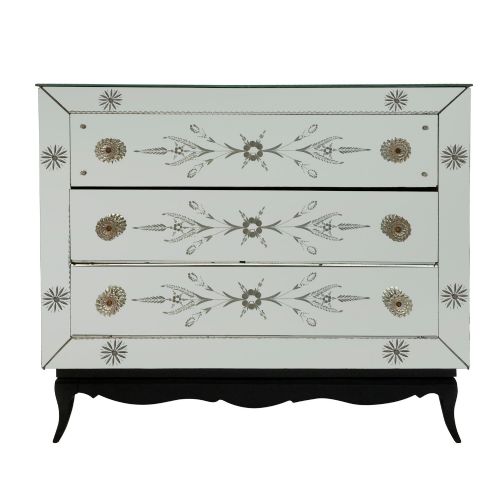
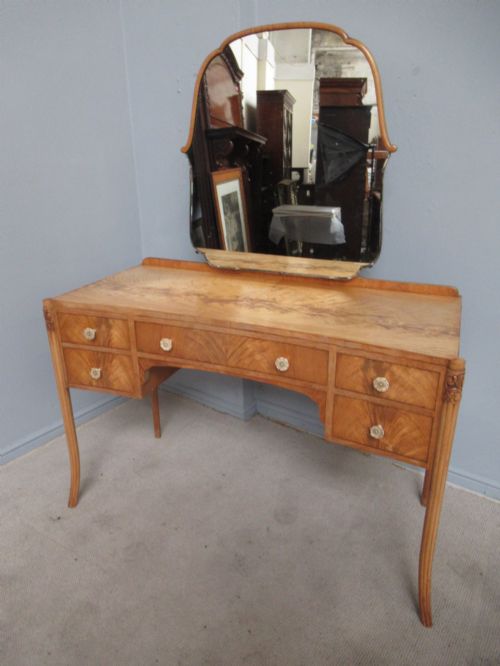
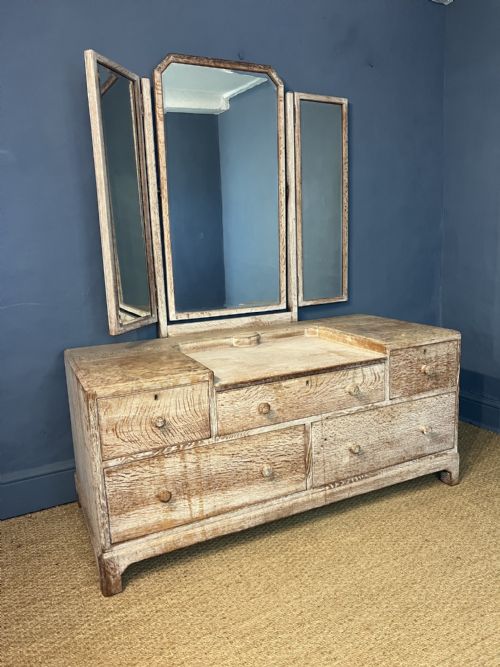
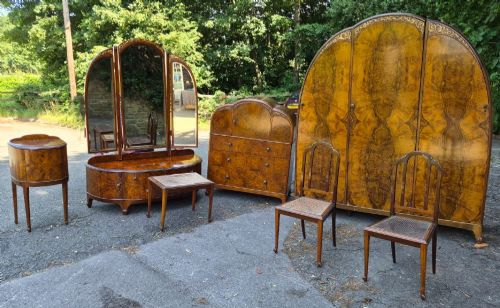
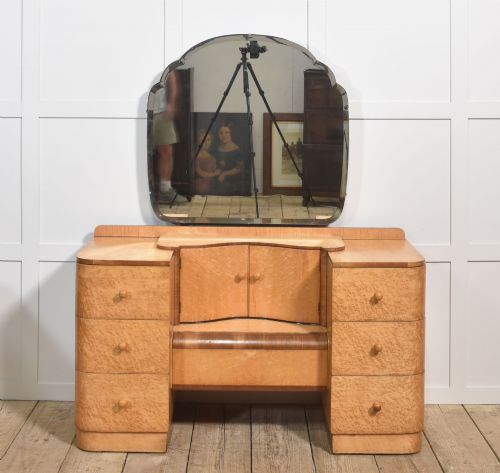
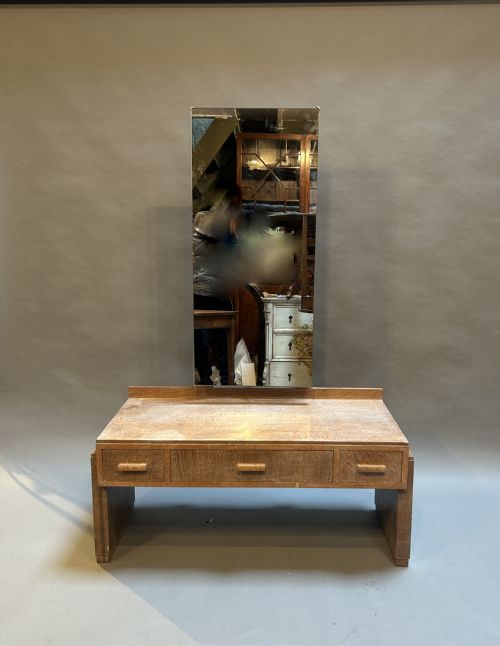
When you search for an art deco bedroom vanity, you encounter dressing tables, dressing chests, and matching stools originating predominantly from the nineteen twenties and nineteen thirties. These pieces often form part of larger bedroom suites or appear as standalone vanity tables complete with original mirrors.
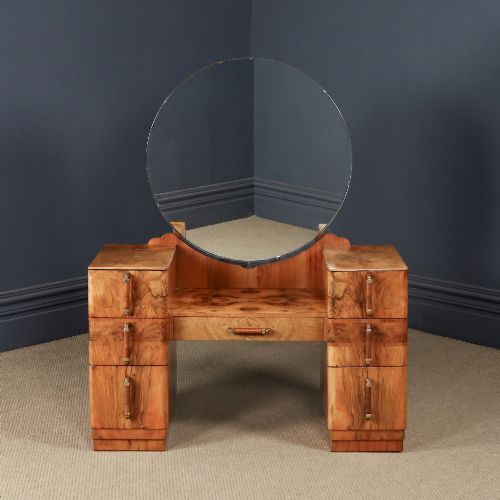
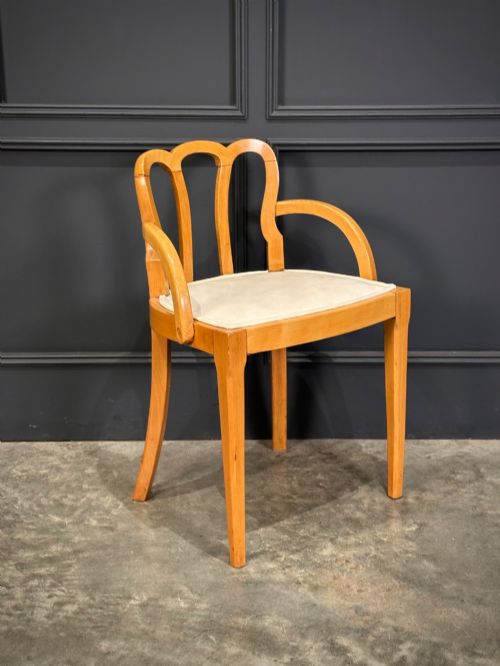
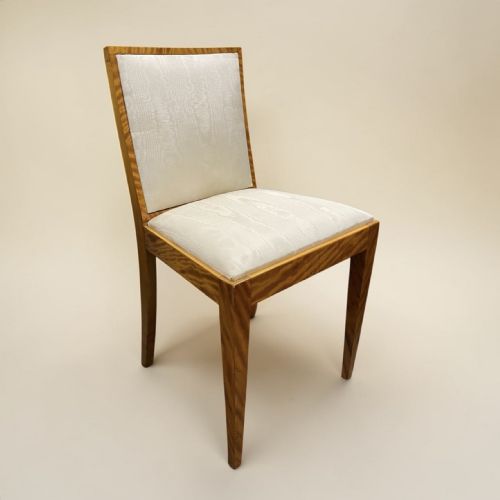
The English and French examples on this page showcase the signature forms of the period, ranging from pedestal dressing tables to drum-shaped stools and upholstered bedroom chairs. Walnut, burr walnut, and oak dominate the furniture listings, frequently paired with matching seating upholstered in leather or fabric.
Materials and construction methods
Cabinet makers utilised choice veneers such as burr walnut, maple, sycamore, and pale mahogany over sturdy timber carcases, creating striking grain patterns across flat surfaces and drawer fronts. Marquetry inlay and contrasting wood selections defined the surface decoration of many pieces.
Functional elements incorporated mirror glass, polished brass hardware, and specialised glass panels. Seating pieces combined solid wood frames with fabric or leather upholstery to complement the accompanying dressing tables.
Assessing quality in period pieces
The distinction between standard production and exceptional craftsmanship lies in the selection of wood veneers and the sophistication of the cabinetry. Pieces featuring highly figured burr walnut, sycamore, or meticulous marquetry represent the upper tier of design.
Attribution to notable workshops and makers elevates a piece, as does the survival of original integrated mirrors, matching stools, and complete bedroom suites rather than isolated items.
Frank Taylor & Co.·Bath Cabinet Makers·Harry & Lou Epstein·Maurice Adams·B Cohen & Sons·Betty Joel·Rowley Gallery
The Art Deco Bedroom Vanity Glossary
- Burr walnut
- A veneer taken from the wart-like growth on a walnut tree, prized for its swirling, highly decorative grain patterns on dressing table drawers.
- Pedestal dressing table
- A vanity unit featuring twin banks of drawers supporting a central mirror and writing surface.
- Limed oak
- A finish applied to oak timber that leaves a pale pigment in the grain, characteristic of modernist cabinet making from the period.
- Marquetry
- The art of applying pieces of veneer to a structure to form decorative patterns and pictorial designs on furniture surfaces.
Art Deco Bedroom Vanity: Frequently Asked Questions
What defines an art deco vanity?
An art deco vanity is characterised by geometric forms, symmetrical layouts, and the prominent use of figured wood veneers such as walnut and maple. These dressing tables typically incorporate circular or shield-shaped mirrors.
They serve as both functional preparation spaces and central decorative elements within a bedroom scheme, frequently accompanied by matching stools or chairs.
How do I identify a nineteen thirties dressing table?
Nineteen thirties dressing tables are identified by their streamlined silhouettes, absence of fussy ornamentation, and emphasis on the natural beauty of wood grains. Elements like stepped cornices and circular mirrors are common indicators.
Cabinet makers of this era favoured materials like oak, walnut, and sycamore, often combining them with subtle brass fittings.
Are mirrors usually original to these vanities?
Many surviving dressing tables retain their original mirror glass, which may show light patination or foxing appropriate to its age. These mirrors are frequently shaped in arched, circular, or multi-panelled configurations attached directly to the rear of the table.
Replacement mirrors do occur, so inspecting the fixing brackets and the silvering on the glass helps determine originality.
How do I care for walnut veneer?
Walnut veneer requires protection from direct sunlight and excessive moisture to prevent fading and lifting of the delicate wood layers. Regular dusting with a soft, dry cloth maintains the polished surface.
Occasional application of appropriate furniture wax helps nourish the timber and preserves the rich figuring without building up heavy residues.