






Art Deco Barware Accessories
Art deco barware accessories bring geometric polish and mechanical cleverness to the home bar through cocktail shakers, novelty sticks, and ice buckets.
Art Deco Barware Accessories
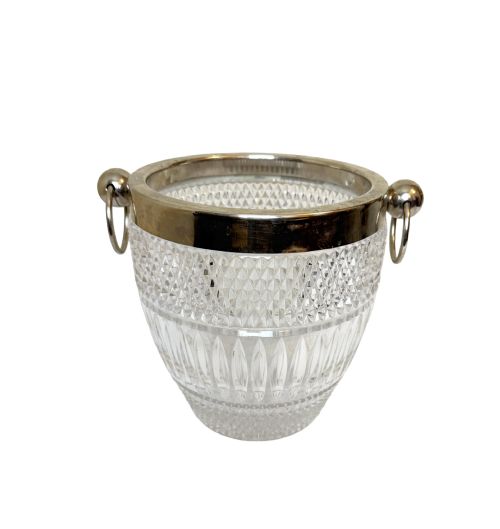
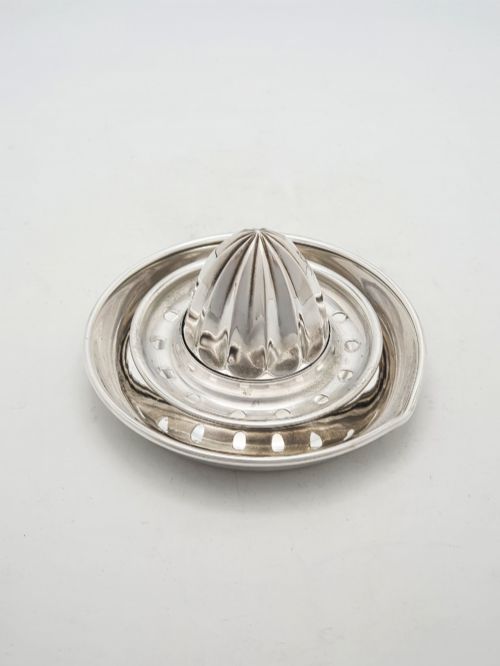
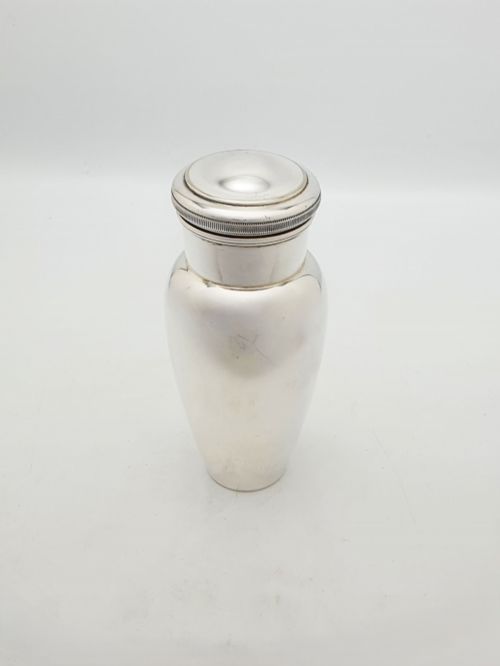
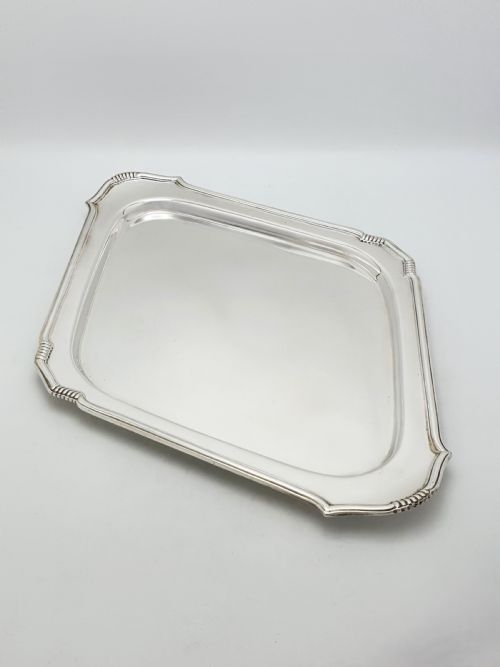
Art deco barware accessories encompass the specialised equipment and entertaining tools produced during the 1920s, 1930s, and 1940s. These pieces include cocktail shakers, citrus juicers, serving trays, ice buckets, and fitted sets of cocktail sticks.
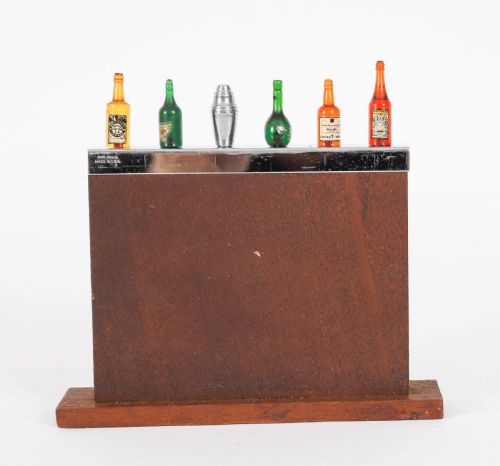
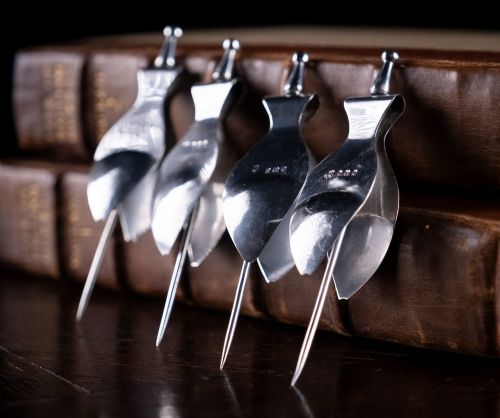
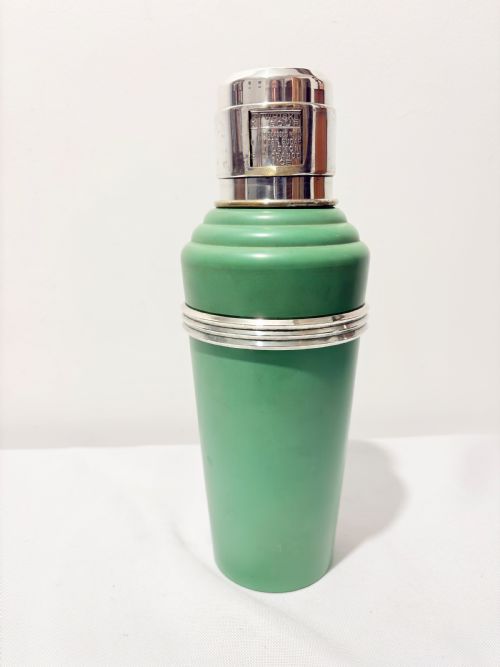
The most common forms found here are silver-plated cocktail shakers and novelty cocktail stick sets featuring enamelled figural toppers. Pieces range from plain geometric trays to intricate Italian and Swiss recipe shakers with revolving outer cylinders.
Originating largely from British, French, and Italian workshops, these items reflect the era's enthusiasm for home cocktail culture. Collectors encounter everything from bachelor shakers to giant spirit flasks.
How they were made
Manufacturers utilised silver plate, electroplated nickel silver, and sterling silver over base metals, often combining them with cut glass, chrome, and wood. Enamel provided vibrant colour accents for figural cocktail sticks and decorative shaker details.
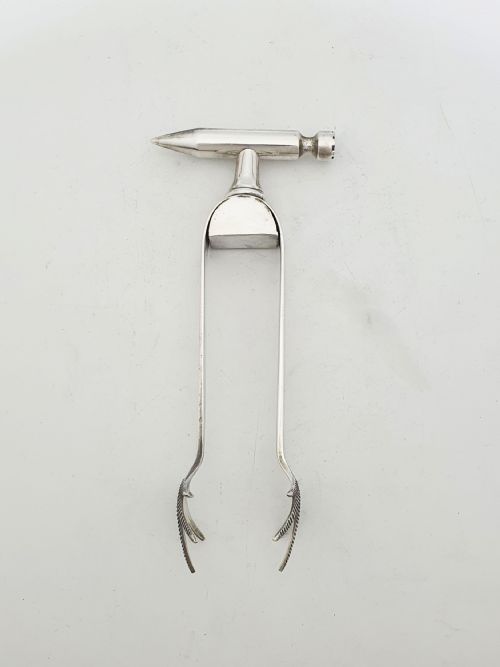
Makers shaped metal through spinning and stamping, then applied mechanical elements like integral lemon squeezers, ice breakers, and rolling mixer recipes. Glass liners and cut crystal bodies were blown, moulded, and fitted precisely into metal mounts.
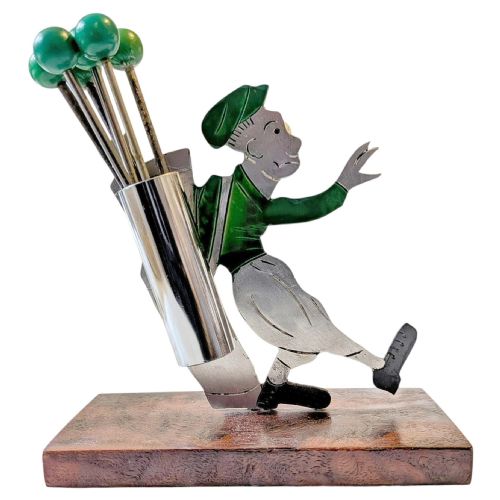
A comical golfer with a caddy stands ready to spear your olives.
What varies in quality
Quality rests upon the weight of the metal, the crispness of the stamping, and the integrity of the silver plate over the underlying base. Maker attribution significantly elevates a piece, particularly when bearing marks from established silversmiths and design houses.
The complexity of the mechanism also sets examples apart, such as functional rolling recipe cylinders and intact enamelled figural details on cocktail sticks. Preservation of original cut glass liners and unblemished enamel finish mark superior survival.
Sudre·Richard Comyns·Keith Murray·J. B. Chatterley & Sons·James Dixon & Sons·William Suckling·Angelletti·C S Green & Co·Asprey
The Art Deco Barware Accessories Glossary
- Bachelor shaker
- A smaller cocktail shaker designed for single servings rather than group entertaining. These compact vessels appeared frequently during the 1920s and 1930s.
- Electroplated nickel silver
- A base metal alloy of copper, nickel, and zinc coated with a layer of pure silver through electrolysis. Commonly abbreviated as EPNS on historical barware pieces.
- Recipe shaker
- A cocktail shaker featuring engraved or printed drink formulas directly on the outer body. Some variants include rotating cylinders to align ingredients.
- Baton
- A straight, slender rod form often utilised in the design of cocktail shakers and stirring implements. It defines the clean vertical lines associated with the period.
Art Deco Barware Accessories: Frequently Asked Questions
What is a bachelor cocktail shaker?
A bachelor cocktail shaker is a smaller vessel built to mix single or double portions rather than rounds for a large party. They appeared widely in the 1920s and 1930s for intimate home use.
These compact shakers often feature built-in strainers and occasionally integrated citrus squeezers. Their reduced scale makes them distinct from standard bar shakers.
How do recipe shakers work?
Recipe shakers display cocktail formulas directly on the outer metal surface through engraving, etching, or printed text. Users reference the body of the shaker to measure proportions.
Certain advanced versions utilise double-walled rotating cylinders that reveal different drink recipes as the outer sleeve turns. They combine utility with interactive novelty.
What materials make up these accessories?
Makers utilised silver plate, electroplated nickel silver, sterling silver, chrome, and metal alongside cut glass and crystal. Enamel and Bakelite provided colour contrasts for handles and decorative accents.
Wood occasionally appeared on trays and handles, grounding the metallic finishes. These mixed media constructions defined the material palette of the era.
How should I clean silver plated barware?
Silver plated pieces require gentle washing with warm water and mild soap, followed by immediate drying with a soft cloth. Abrasive cleaners damage the delicate plated surface.
If polishing is necessary, use a formulation specifically intended for silver plate to preserve the underlying metal. Avoid submerging items with glued glass components or enamel.