
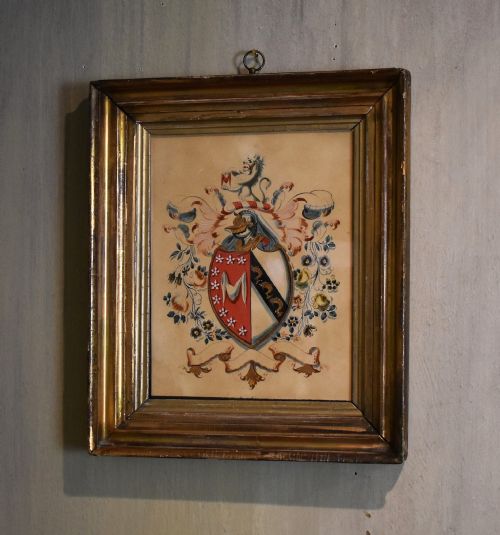
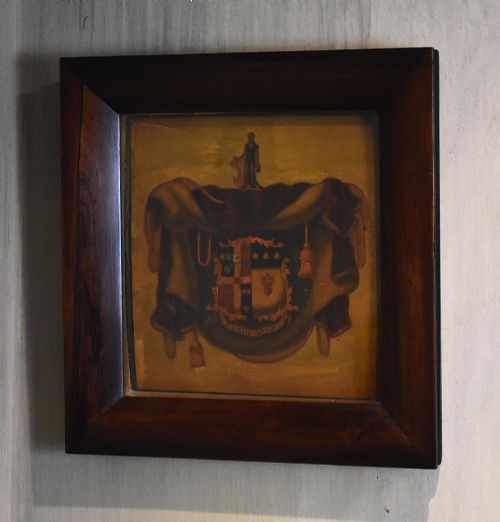

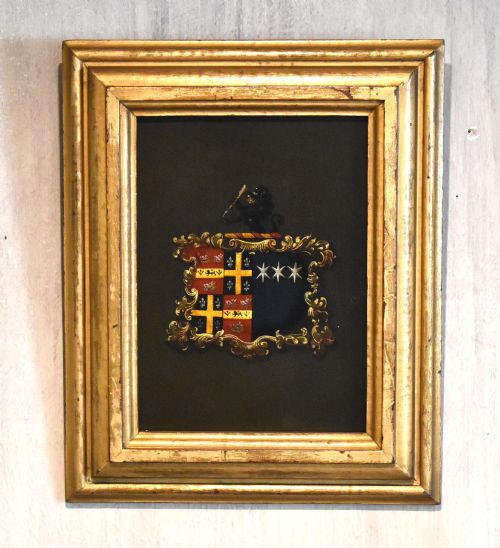
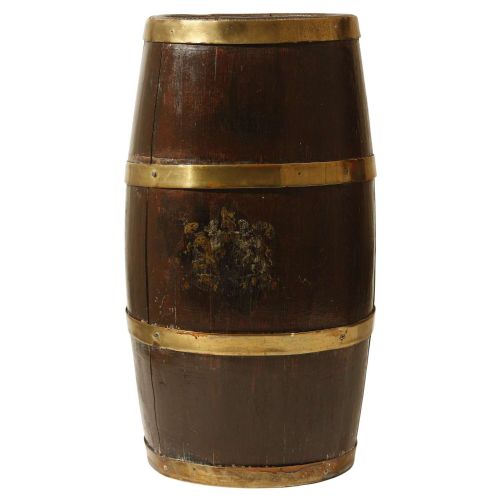


Armorial Coat of Arms
An armorial coat of arms displays familial lineage and civic identity through centuries of decorative arts.
Armorial Coat of Arms
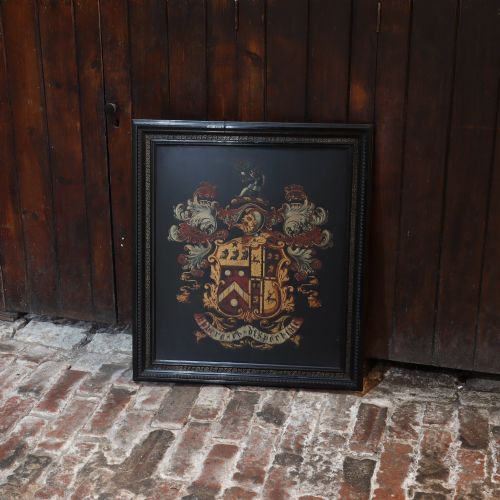
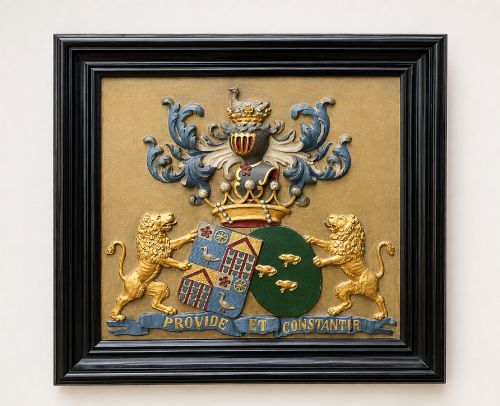
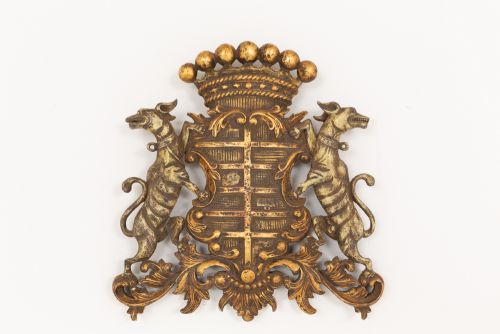
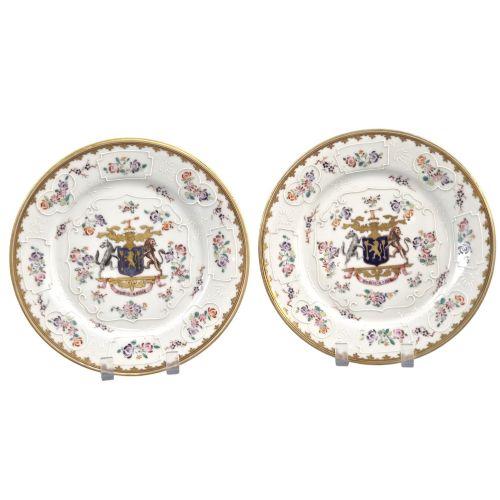
When you search for an armorial coat of arms, you encounter heritage items bearing heraldic insignia across ceramics, metalwork, wood, and textiles. These objects range from 18th-century Chinese export porcelain and Georgian dining plates to large Victorian cast iron plaques and carved oak shields.
The version you are most likely to meet on this page is a 19th-century ceramic plate, wooden wall plaque, or cast metal architectural element. Such pieces record family alliances, civic bodies, and royal commissions spanning the Georgian, Victorian, and later periods.
Collector interest centres on the specific provenance of the heraldic devices shown on each piece. Tracing the arms connects the object to documented families and historical estates.
Materials and methods
Makers applied armorial designs using porcelain enamel, hand paint, and gold leaf on surfaces like Chinese export porcelain, English earthenware, and glass. Artisans also carved motifs directly into oak and hardwood shields, or cast them in iron, brass, and bronze.
Metalwork pieces utilise Old Sheffield plate, sterling silver, and cast bronze, often featuring engraved or applied heraldic crests. Glass objects employ wheel engraving to render detailed coats of arms on rummers and decanters.
Ceramic factories such as Chamberlains Worcester, Coalport, and Minton combined transfer printing with polychrome hand painting and gilding to execute complex armorial services.
Some pieces bear the arms of forgotten dynasties, while others record the crest of a London goldsmith or a Welsh family.
Assessing quality
Quality rests upon the precision of the heraldic painting and the crispness of the carving or casting. Skilled artisans rendered intricate mantling, charges, and mottos with fine brushwork and sharp relief.
The prestige of the original commission influences value and interest, with royal warrants and documented aristocratic families commanding attention. Associated makers, from 18th-century Chinese kilns to prominent English porcelain works, set the standard for execution.
Chamberlain Worcester·Barr Flight And Barr·Coalport Porcelain·Minton
The Armorial Coat of Arms Glossary
- Armorial
- Relating to heraldic arms or a coat of arms. These designs identify specific families or corporate bodies.
- Mantling
- The stylized foliage or drapery flowing from the helmet above the shield. It derives from the cloth attached to medieval helms to protect against the sun.
- Crest
- The component of a coat of arms situated above the helmet or shield. It frequently takes the form of an animal, bird, or symbolic object.
- Old Sheffield plate
- A composite material formed by fusing a sheet of silver to a copper base. This technique prevailed before modern electroplating.
- Famille rose
- A palette of opaque enamel colours dominated by pink, introduced in Chinese porcelain decoration during the 18th century.
Armorial Coat of Arms: Frequently Asked Questions
What is an armorial coat of arms?
An armorial coat of arms is a distinct visual design on a shield or object that signifies a particular family, institution, or monarch.
These symbols developed in the Middle Ages to identify knights in battle and later evolved into decorative markers of lineage and status on household goods.
How were armorial pieces used originally?
Families commissioned armorial porcelain, silver, and glass for daily dining, formal entertaining, and display in great houses.
Larger wooden shields, iron plaques, and painted panels decorated interior walls, carriage doors, and civic buildings to declare authority and heritage.
How do I identify the family on a coat of arms?
Identification relies on studying the specific heraldic elements, including the charges on the shield, the crest, and any accompanying mottos.
Consulting historical armorial reference books allows you to match these visual components to the recorded families who originally held the rights to those arms.
How should I care for antique armorial items?
Preservation depends on the primary material of the piece, requiring gentle cleaning methods for delicate enamels and gilding.
Wood, metal, and ceramics all benefit from stable indoor humidity and protection from direct sunlight to maintain the integrity of the painted and carved surfaces.