

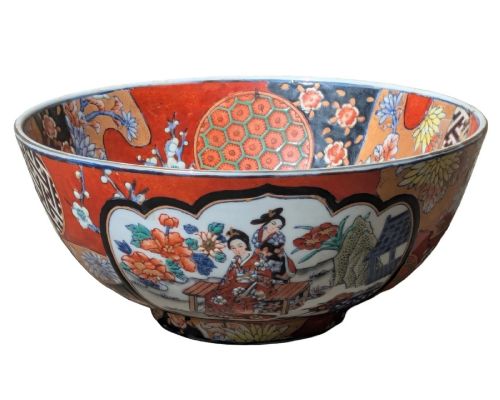

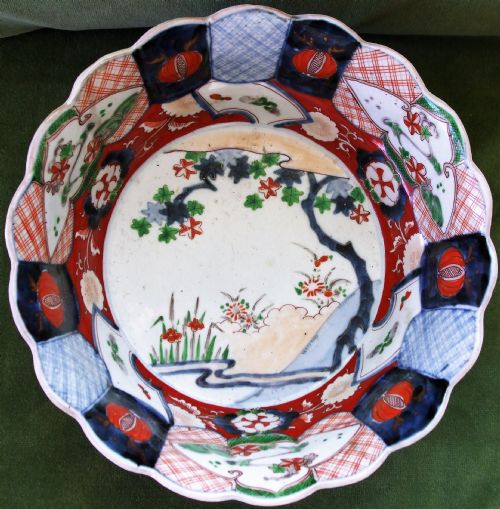
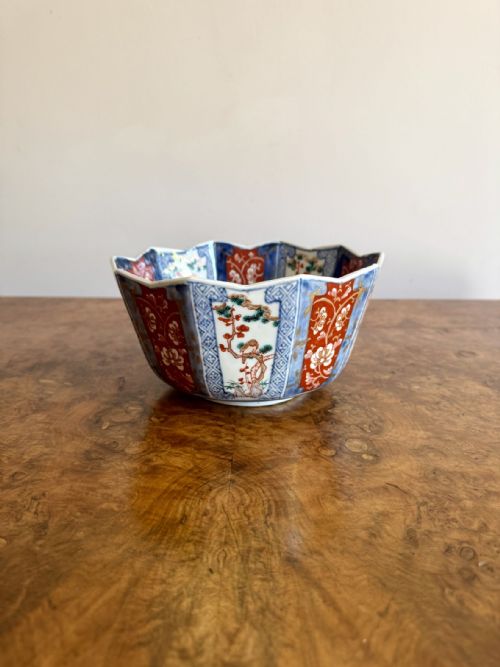


Arita Imari Basin
An arita imari basin brings the vibrant palette and intricate hand-painted detail of Japanese kilns straight into a room.
Arita Imari Basin
An arita imari basin is a ceramic vessel originating from the town of Arita in Japan, combining deep cobalt blue underglaze with iron red and gilt overglaze highlights. These pieces span from the seventeenth century through the Meiji period and into the twentieth century, taking the form of large chargers, jardinieres, scallop edge bowls, and shallow decorative dishes.
The selections on this page are dominated by nineteenth century and Meiji period examples, alongside earlier seventeenth and eighteenth century pieces. Buyers encounter various bowl forms featuring traditional Japanese Imari styles, designed both for ornamental display and functional use as planters or serving vessels.
How they were made
Makers shaped refined porcelain clay on the potter's wheel before applying cobalt blue pigments beneath a clear glaze for the initial high-temperature firing. Artisans then added secondary overglaze enamels, particularly iron red and rich gold leaf or gilding, followed by a subsequent firing to fix the colours.
The decorative surfaces frequently incorporate hand-painted motifs executed with fine precision across scalloped edges and wide basin interiors. Gilding and enamel layers sit visibly raised on the porcelain body, reflecting the traditional techniques of historic Arita kilns.
Materials recorded across the inventory include cobalt glaze, enamel, gold leaf, and traditional gilding applied to porcelain bodies.
What varies in quality
Quality rests in the crispness of the hand-painted brushwork and the vibrancy of the cobalt blue underglaze paired with the enamel overglaze. Superior examples display precise control over the iron red and gold leaf details without blurring or running into the surrounding glaze.
The weight of the porcelain body and the complexity of the vessel form, such as tripod feet or intricate scallop edges, separate standard production from finer workmanship. Preservation of the original gilding and enamel across centuries of handling determines the standing of each piece.
The Arita Imari Basin Glossary
- Arita
- The Japanese town where porcelain production began in the seventeenth century. Kilns here produced the wares exported through the nearby port of Imari.
- Imari
- A traditional style of Japanese porcelain decorated in underglaze cobalt blue, iron red, and gilt. The name derives from the port from which these goods shipped to Europe.
- Meiji Period
- The era in Japanese history spanning from eighteen sixty-eight to nineteen twelve. Pieces from this time often exhibit exceptional hand-painted detail and technical refinement.
- Jardiniere
- A large decorative pot or basin designed to hold plants or flowers. These vessels feature sturdy porcelain bodies suited for holding soil and water.
- Gilding
- The application of gold leaf or powdered gold to the surface of the porcelain. This technique highlights specific motifs within the painted design.
Arita Imari Basin: Frequently Asked Questions
How do I care for an antique porcelain basin?
Wash the porcelain gently in warm water using a mild soap, avoiding abrasive sponges that might scratch the old enamel or gilding. Dry the vessel thoroughly with a soft cloth to protect the surface.
Keep the basin away from direct sunlight and sudden temperature shifts to preserve the integrity of the nineteenth century or earlier glazes.
Were these basins used for water or plants?
Many larger vessels served as jardiniere planters, holding soil and greenery within domestic interiors. Others functioned as decorative bowls and chargers displayed on furniture.
Their robust porcelain construction allowed them to handle everyday placement while remaining primarily ornamental focal points in a room.
How do I distinguish Meiji period pieces from earlier ones?
Meiji period items date from the late nineteenth and early twentieth centuries, typically showing bright enamels and precise hand-painted compositions. Earlier seventeenth and eighteenth century examples often feature heavier porcelain bodies and deeper cobalt tones.
Examining the foot ring, glaze texture, and brushwork style helps clarify the likely production period of each individual bowl.
What is the difference between an Imari bowl and a standard porcelain bowl?
An Imari bowl relies on a specific tripartite colour scheme of cobalt blue, iron red, and gold leaf. Standard porcelain might use only a single pigment or a completely different palette.
The distinct Japanese aesthetic combines rich patterning with contrasting underglaze and overglaze techniques unique to this tradition.