

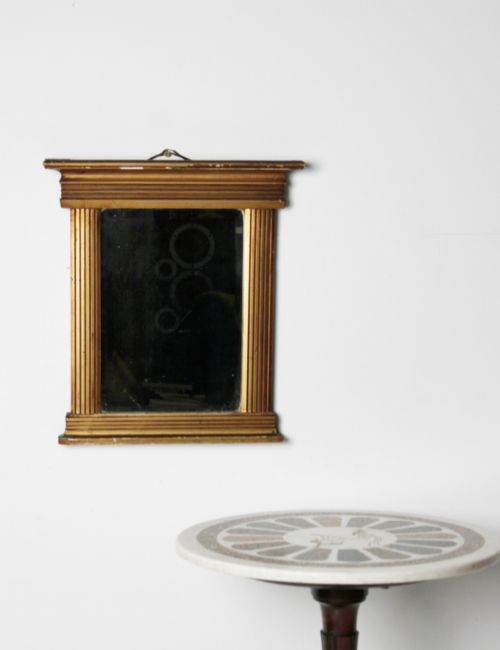


Architectural Pier Mirror
An architectural pier mirror brings classical proportion and reflected light to a room, hung traditionally between two windows.
Architectural Pier Mirror
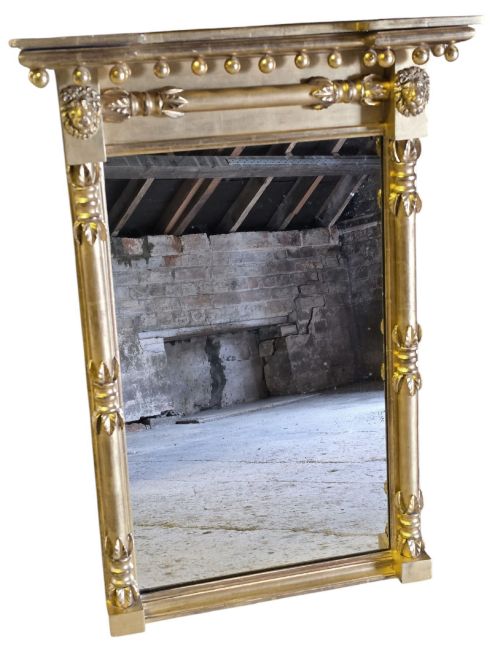
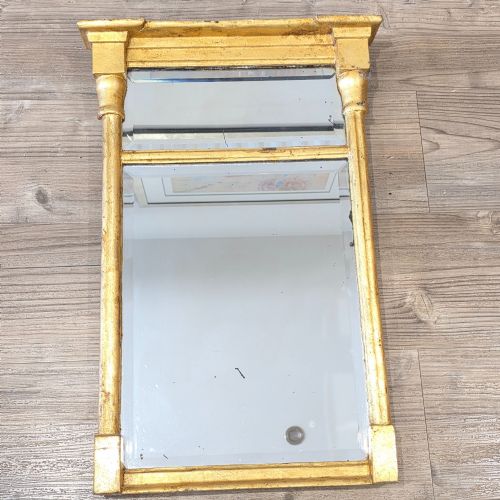
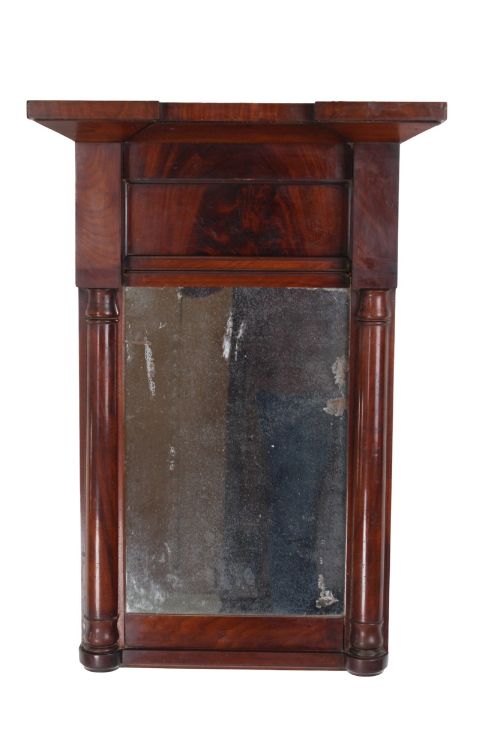
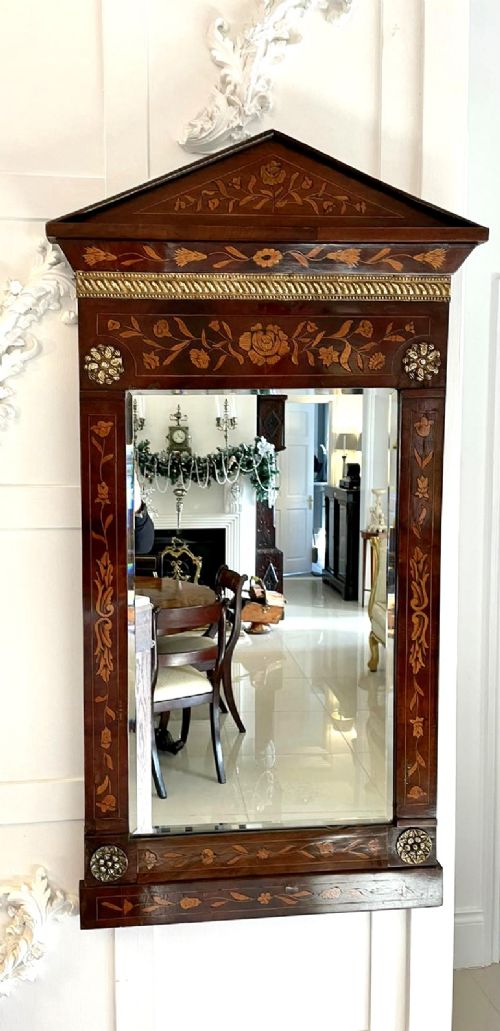
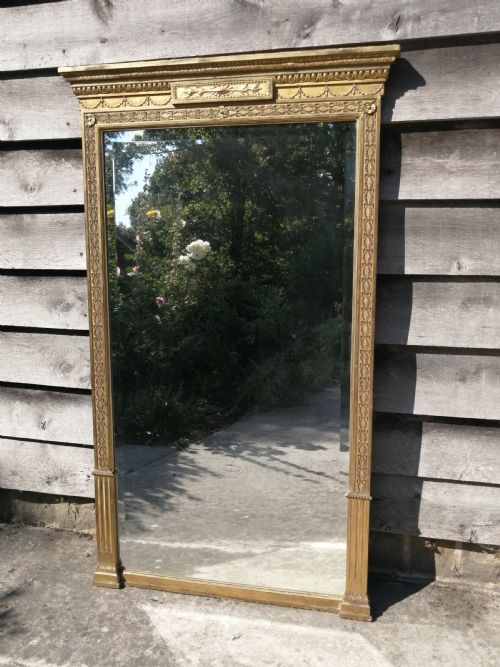
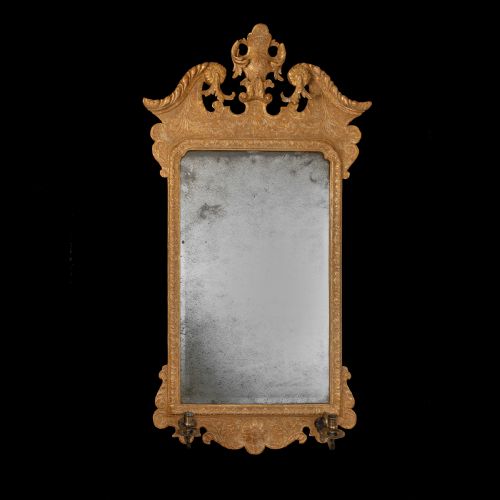
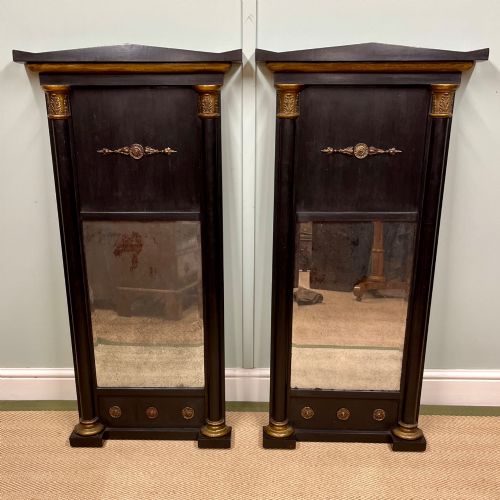
An architectural pier mirror is a tall, vertical wall glass designed specifically to sit on the narrow stretch of wall between windows, known as the pier. The examples seen here span from the 18th century through the Victorian era, encompassing Georgian, Regency, and Empire styles alongside Biedermeier and French provincial forms.
Buyers will most frequently encounter giltwood and mahogany frames, often incorporating architectural elements like columns, pilasters, or pediments. These pieces range from small domestic mirrors to monumental, tall proportions intended for large country house interiors and grand salons.
How they were made
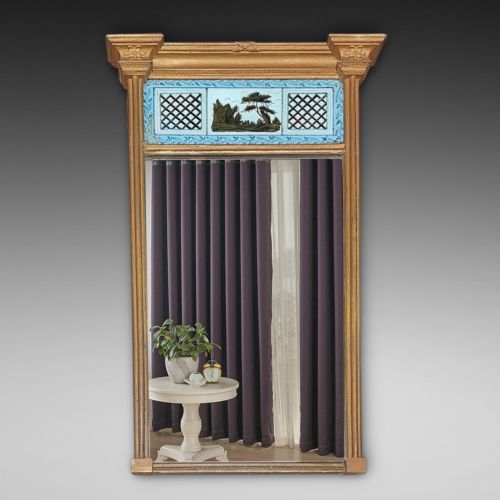
Maker-craftsmen constructed the primary frames using solid timbers such as mahogany, walnut, and birch, frequently applying gesso to wood before gilding with gold leaf. Giltwood and parcel-gilt surfaces often required intricate carving, while specialised techniques like verre églomisé introduced reverse-painted glass panels into the upper sections.
Mirror plates were set by hand into the timber rebates, occasionally retaining their original mercury or early silvered glass plates. Structural joinery relied on traditional pinned mortise and tenon joints suited to supporting the considerable weight of heavy glass and timber.
Several mirrors include original verre églomisé panels, offering a glimpse of centuries-old reverse-glass artistry reflecting softly back into the room.
What varies in quality
The degree of crispness in the carved gesso and wood ornamentation dictates much of the visual merit. Sharply defined acanthus leaves, crisp moulding profiles, and well-balanced proportions separate superior commissions from simpler provincial interpretations.
The preservation of original surfaces, including untouched gilding and undisturbed mirror plates with appropriate foxing, elevates the stature of a piece. The integration of architectural details, such as intact columns and original verre églomisé panels, marks the work of more ambitious workshops.
Nosotti s·William Kent
The Architectural Pier Mirror Glossary
- Pier mirror
- A tall wall mirror designed to hang on the wall space between two windows. These pieces often feature vertical proportions and architectural framing to complement the room's fenestration.
- Verre églomisé
- A cold decoration technique involving painting and gilding on the reverse side of glass panels. It frequently appears in the upper frieze of Regency and classical mirrors.
- Gesso
- A plaster-like mixture applied to wood frames to provide a smooth base for subsequent gilding or painting. High-quality gesso allows for deep, sharp relief carving.
- Parcel gilt
- A finishing method where only selected portions of a wooden frame are gilded while the underlying timber grain remains visible. Walnut and mahogany frames frequently employ this technique.
- Palladian
- An architectural style deriving from Andrea Palladio that influenced 18th-century furniture and mirror design. These pieces often incorporate classical pediments, columns, and symmetrical order.
Architectural Pier Mirror: Frequently Asked Questions
Where should I hang an architectural pier mirror?
Traditionally, these mirrors were positioned on the narrow wall between two windows to reflect natural light back into the room. Placing one above a console table or mantelpiece also works well given their vertical proportions.
Ensure the wall construction can support the substantial weight of these timber and glass objects, using appropriate fixings suited to heavy hanging furniture.
How do I identify a Regency period pier mirror?
Regency mirrors often display classical restraint, featuring reeded columns, ebonized details, and convex or flat giltwood frames. Look for ball-decorated cavetto cornices and panels incorporating verre églomisé.
Construction traits such as pine secondary woods and older retaining wedges behind the glass plate help confirm the period of manufacture.
Are the mirror plates original?
Many older pieces retain their original glass plates, which frequently exhibit minor oxidation, dark spots, and soft distortions known as foxing. These natural ageing characteristics confirm the antiquity of the object.
Replacement plates are common in mirrors of this age due to historical breakage, though surviving original glass remains desirable for collectors.
What is the difference between an overmantel and a pier mirror?
Pier mirrors are built with tall, narrow vertical proportions specifically intended for narrow wall spaces between openings. Overmantel mirrors are generally wider than they are tall to span the horizontal space above a fireplace.
Both forms draw on architectural vocabulary, but their distinct aspect ratios dictate where they sit within a period interior.