
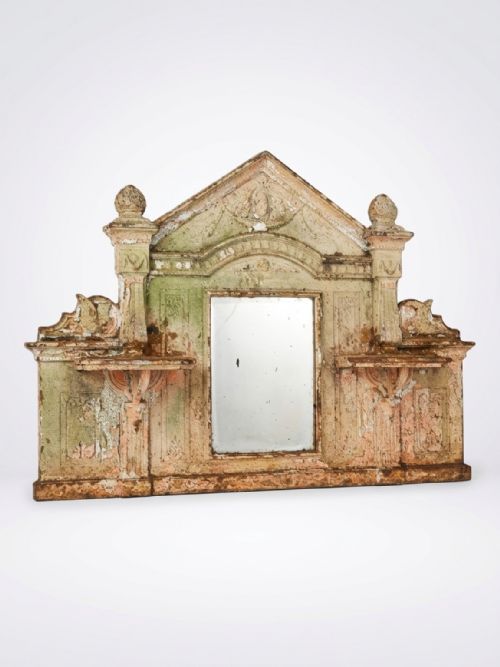
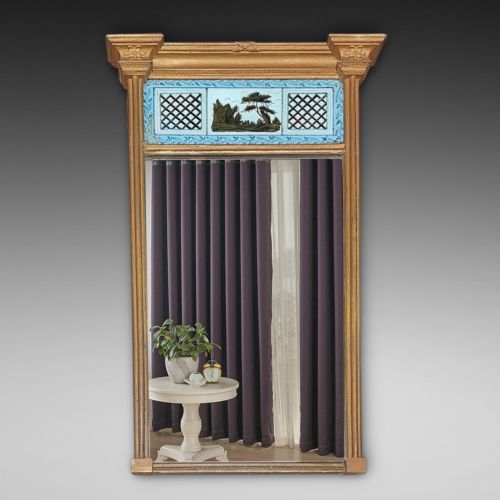
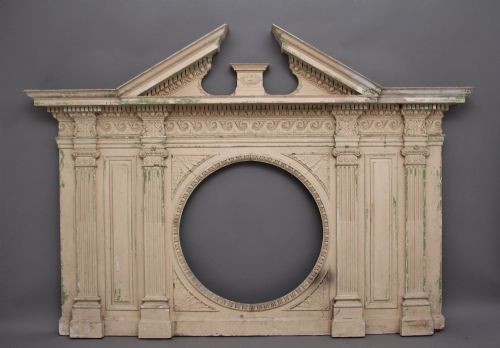


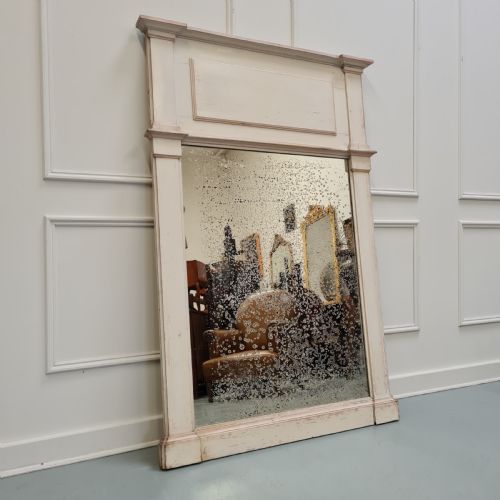


Painted Architectural Mirror
A painted architectural mirror brings structural form and surface colour into a room, framing light through classical lines.
Painted Architectural Mirror
A painted architectural mirror translates building design into interior furnishings, drawing on classical motifs like columns, cornices, and pediments. When you search for a painted architectural mirror, you encounter wall-mounted pieces, overmantels, and floor-standing dressing mirrors derived from eighteenth-century and nineteenth-century forms.
The selection ranges from grand French trumeau panels and pier mirrors to English overmantels and arched window mirrors. Most examples originate from the nineteenth century, including specific dates across the 1850s, 1860s, 1870s, 1880s, and 1890s, alongside eighteenth-century works and Regency designs.
Makers and workshops constructed these pieces to anchor a room, often placing them above fireplaces or between windows. The forms adopt styles spanning Victorian, Regency, Georgian, French Empire, Neoclassical, and Industrial aesthetics.
How they were made
Craftsmen shaped frames primarily from wood such as pine, oak, and carved timber, applying layers of gesso to build up decorative reliefs and architectural details. Paint finishes were then laid over the wood or gesso ground, frequently combined with parcel gilt or full giltwood highlights.
Glass plates, including original mirror glass and specialised panels like verre eglomise, were set within these frames. Construction techniques involved joining carved wood sections to support heavy glass, particularly in large overmantels and floor-to-ceiling trumeau mirrors.
Current listings feature materials including cast iron, gesso, painted wood, and giltwood across styles from French Provincial to Industrial.
What varies in quality
The refinement of the carved wood and gesso ornamentation dictates the visual weight of the piece, distinguishing finely detailed column frames and vitruvian scroll work from simpler mouldings. The depth and integrity of the original paint and gilding layers also influence the character of the surface.
The survival of original mirror glass and the clarity of the architectural proportions determine the overall execution. Pieces featuring complex structural elements like triptych sections, triple arches, or verre panels reflect higher ambition in design.
The Painted Architectural Mirror Glossary
- Trumeau mirror
- A decorative mirror designed to fit a specific wall pier or space between windows, frequently incorporating a painted or carved panel above the glass.
- Overmantel mirror
- A large horizontal mirror intended to be hung directly above a fireplace mantelpiece, often echoing the architectural woodwork of the room.
- Verre eglomise
- A process of applying cold painting and gilding to the rear of glass panels to create a reflective, decorative border or frieze.
- Pier mirror
- A tall, narrow mirror made to hang on the wall space between two windows, reflecting additional light into the interior.
- Gesso
- A plaster-like mixture applied to wood frames to create a smooth surface for subsequent painting and gilding.
Painted Architectural Mirror: Frequently Asked Questions
Where should I hang an architectural mirror?
These pieces function best when hung above a mantelpiece or mounted on a principal wall to reflect light across the room. Their structural frames work as focal points in reception rooms or hallways.
Ensure the wall construction supports the weight of carved wood and glass assemblies, particularly with large overmantel or floor-standing formats.
How do I identify a nineteenth-century mirror?
Nineteenth-century examples often display specific stylistic markers such as Victorian, Regency, or French Empire detailing, alongside construction methods using pine or oak with gesso layers.
Dates recorded on these pieces frequently span the 1850s through the 1890s, matching the structural proportions popular in that era.
What is a trumeau mirror?
A trumeau is an architectural mirror featuring a decorative painted or carved panel incorporated into the frame above the glass. Originating in French interior design, they were built to occupy specific wall sections.
They combine panel painting with mirror glass to alter the perceived scale of a room.
Are these mirrors suitable for floor placement?
Certain large formats are designed specifically as floor-standing dressing mirrors or full-height pieces. They lean against walls to provide a vertical architectural element.
Check the base construction to ensure stability when placing large frames directly on floor surfaces.