
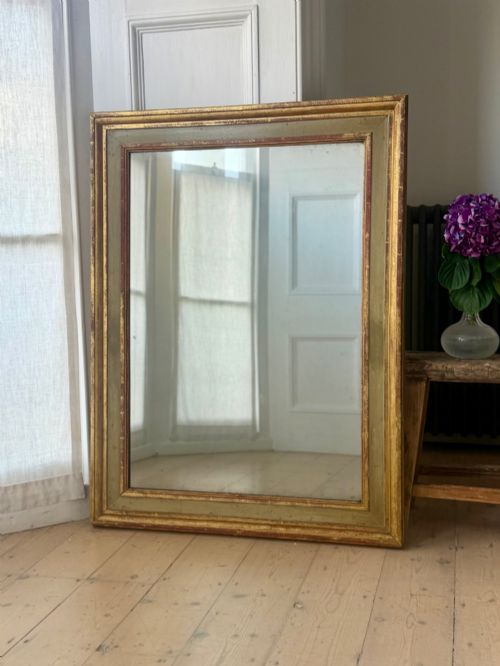
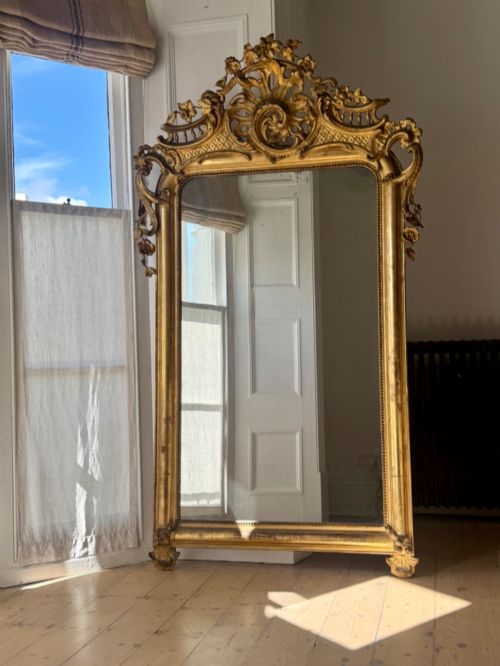
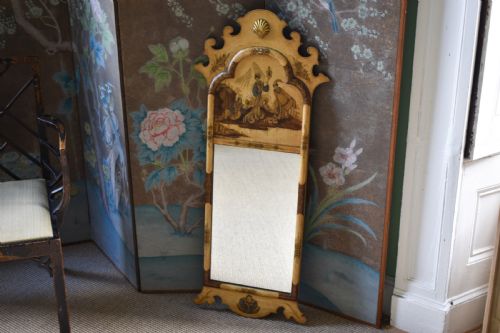
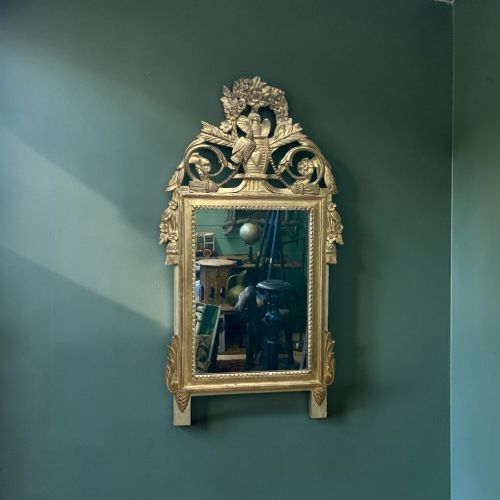
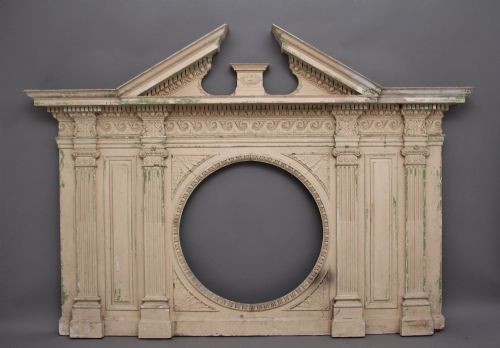


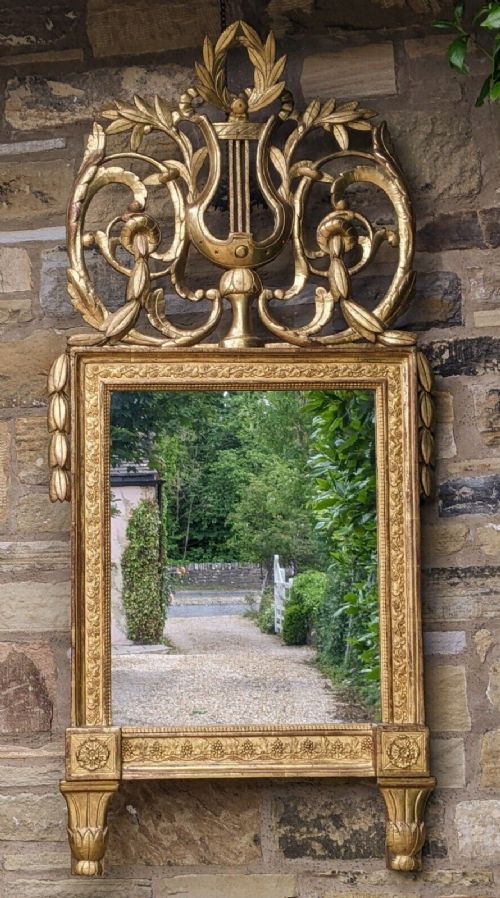


18th Century Trumeau Mirror
An 18th century trumeau mirror brings architectural presence and painted charm to a room, offering the classic combination of plate glass and decorative panels.
18th Century Trumeau Mirror
An 18th century trumeau mirror combines a vertical wall glass with a decorative upper panel, often featuring oil paint or carved detail. You will frequently encounter French examples from this era alongside pieces executed in the Louis XVI, Louis XV, or Rococo styles.
The form spans large overmantels, pier glasses, and architectural wall mirrors designed to sit between windows or above fireplaces. Surviving pieces draw upon Georgian and continental traditions, utilising painted wood, giltwood, and walnut.
Buyers seek these items for their historical character and the distinct vertical proportion that defines period interior decoration. The category also accommodates later 19th century interpretations and 1800s Directoire designs.
How they were made
Frames rely upon carved timber such as pine, walnut, and giltwood, sometimes finished with parcel-gilt details and applied gold leaf. Craftsmen built these architectural surrounds to house heavy reflective plates securely.
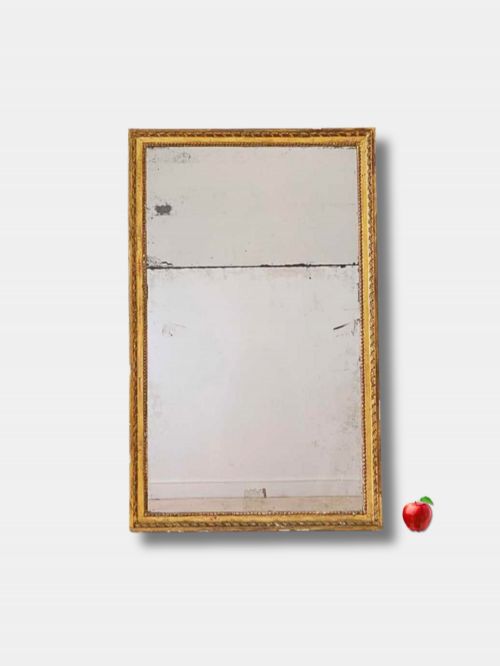
Glass production of the period utilised mercury glass, which exhibits a distinctive mottled, deep reflection rather than the uniform finish of modern float glass. Upper panels frequently received oil paint decorations or integrated artworks.
Materials recorded across the available pieces include mercury glass, giltwood, painted wood, oil paint, and walnut.
What varies in quality
The distinction between tiers rests upon the crispness of the wood carving and the depth of the original gilding or paint surface. Superior examples retain their untouched oil painted panels and authentic mercury glass plates without modern replacements.
Proportion and architectural harmony dictate the standing of a piece, with grand scale overmantels and large pier glasses representing the more ambitious commissions of the period.
The 18th Century Trumeau Mirror Glossary
- Trumeau mirror
- A wall mirror incorporating an upper panel that is painted or carved, typically designed to fit the architectural space between two windows.
- Mercury glass
- An early type of silvered glass created by pouring a mercury amalgam between two glass sheets, yielding a dark, mottled reflective surface.
- Giltwood
- Timber carved and coated with gold leaf or a gold-coloured finish to simulate solid gold enrichment.
- Pier glass
- A tall mirror specifically made to hang on the narrow wall space between windows, known as a pier.
- Overmantel mirror
- A wide mirror designed to sit directly above a fireplace mantelpiece, often featuring landscape proportions.
18th Century Trumeau Mirror: Frequently Asked Questions
Where should I hang a trumeau mirror?
These mirrors suit placement above a fireplace mantel or upon a principal wall where their vertical lines can draw the eye upward.
They function well in reception rooms and hallways, reflecting light while adding architectural depth to the space.
How do I identify mercury glass?
Mercury glass displays a dark, uneven reflection with small foxed spots and dark pooling behind the glass plate rather than a uniform modern silver backing.
This characteristic ageing process results from the historic amalgamation technique used during manufacture.
Are these mirrors purely French?
While many surviving examples originate from France in the Louis styles, continental workshops in places such as Holland also produced notable pier glasses and wall mirrors.
English Georgian makers similarly adopted the form, creating substantial overmantel and architectural variations.
How do I clean an antique mirror?
Dust the carved giltwood or painted frame gently with a soft, dry brush to protect the historic surface finishes.
Clean the glass plate sparingly using a soft cloth and a minimal amount of water, avoiding harsh chemical cleaners that might seep behind the plate.