
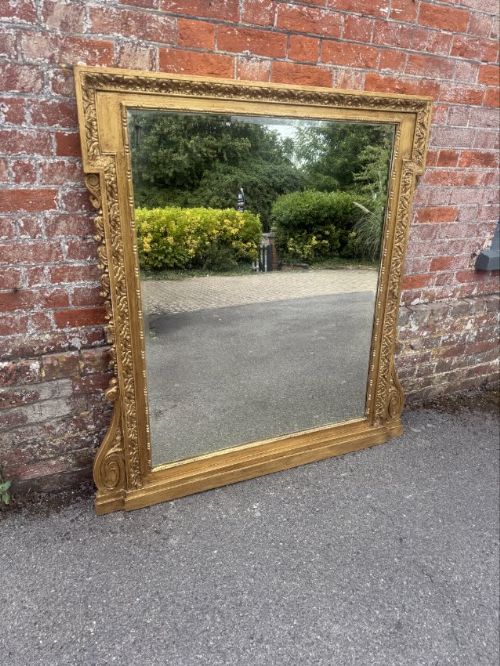
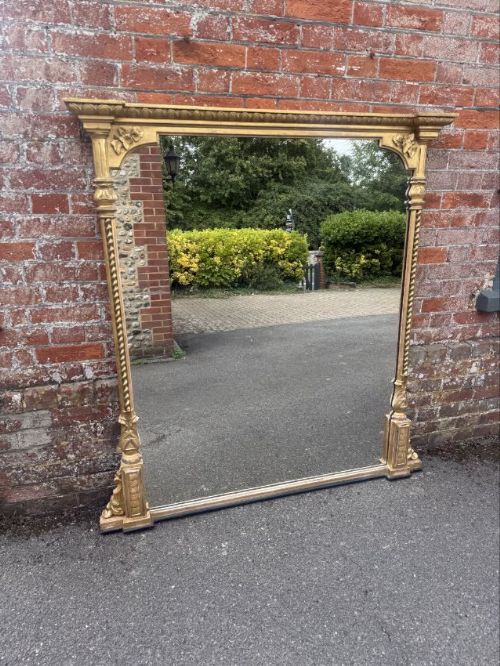
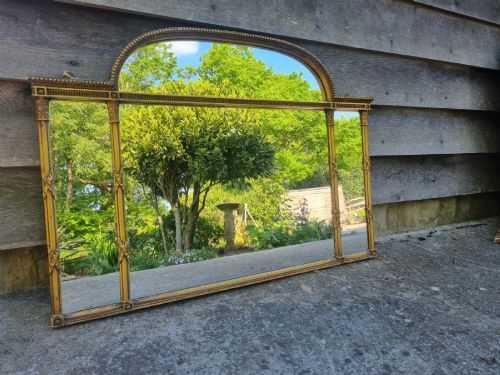
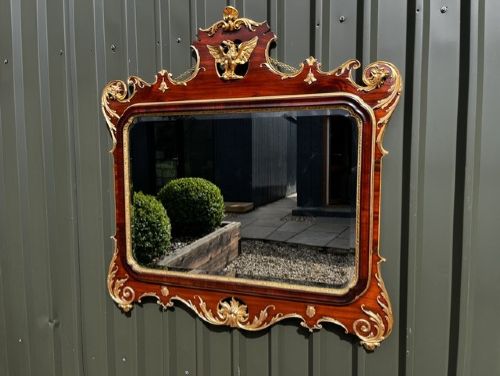


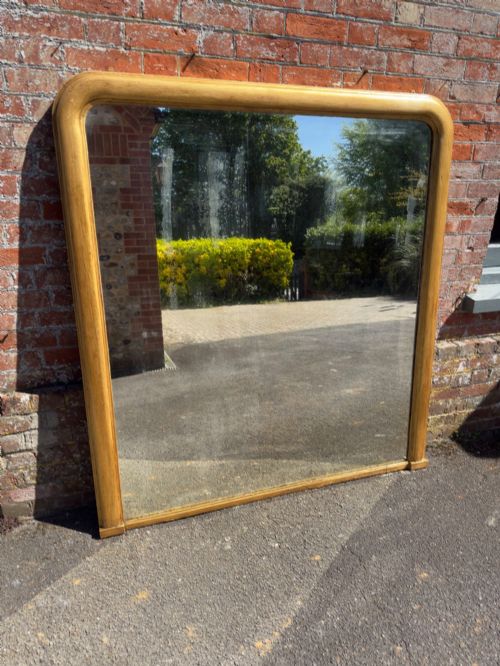


Large Giltwood Chimney Glass
A large giltwood chimney glass anchors a reception room with scale and reflected light, bringing a focal point to the traditional hearth.
Large Giltwood Chimney Glass
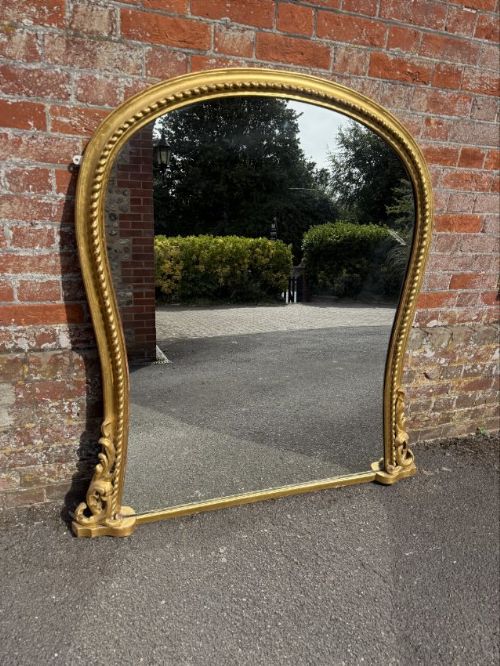
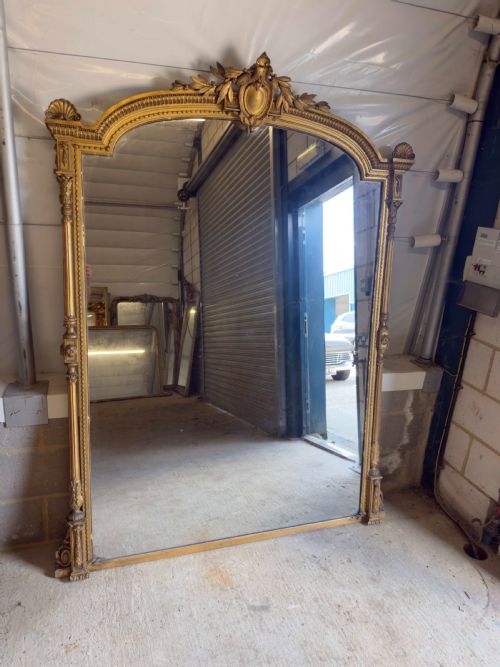
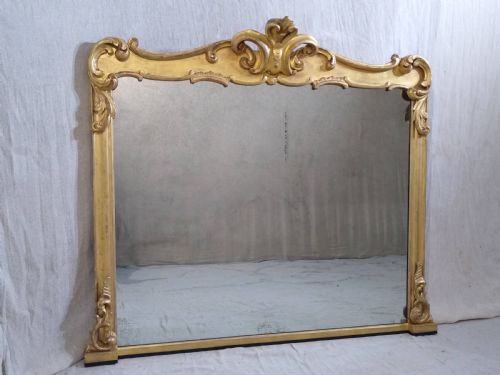
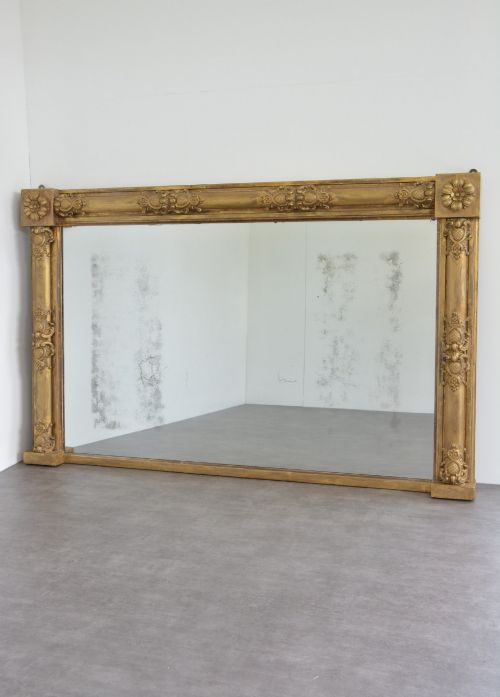
A large giltwood chimney glass functions primarily as an overmantel mirror designed to sit directly above a fireplace mantelpiece. These substantial looking-glasses reflect light across a room and provide architectural presence through their grand proportions.
The majority of pieces encountered here date from the nineteenth century, spanning Regency, Victorian, and later revival styles. They appear in formats such as arched tops, shaped pediments, and rectangular frames intended to fill the wall space above a hearth.
How they were made
Makers constructed the structural frames using timber such as pine or oak, often applying layers of gesso to build up decorative mouldings and relief details. Artisans then laid gold leaf or applied gilding over the prepared surface to create a brilliant metallic finish.
Mirror plates were set into these carved and gilded surrounds, sometimes showing the subtle imperfections of age such as light foxing. Composition ornament was frequently utilised alongside hand-carved wood to achieve elaborate neoclassical or rococo motifs.
Materials recorded in current stock include giltwood, gesso, pine, composition, and original mirror glass.
What varies in quality
Quality rests upon the depth and crispness of the carving and gesso work within the frame, where hand-finished details surpass mass-produced ornamentation. The integrity of the original gilding and the retention of early mirror glass further separate standard examples from finer works.
Proportion and scale dictate the visual weight of the piece, with balanced architectural framing commanding greater presence than simpler constructions. The complexity of the pediment, whether featuring rope twists, columns, or figural detail, determines the refinement of the object.
Ciceri and Co
The Large Giltwood Chimney Glass Glossary
- Giltwood
- Timber that has been coated with gold leaf or a gold-coloured finish. This surface treatment provides the bright, reflective exterior characteristic of formal antique mirrors.
- Gesso
- A plaster-like mixture applied to wood frames to create a smooth surface for carving and gilding. It allows for intricate relief ornamentation and crisp mouldings.
- Overmantel mirror
- A large looking-glass specifically proportioned to hang on the wall above a fireplace mantel. These pieces often repeat the architectural lines of the chimney breast.
- Foxing
- Age-related spots and discoloration within the silvering of a mirror plate. This natural oxidation process appears as soft, dark speckles across the glass.
- Composition
- A moulded material made from whiting, oil, resin and glue pressed into decorative shapes. It was widely used in the nineteenth century to form repetitive ornament on frames.
Large Giltwood Chimney Glass: Frequently Asked Questions
Where should a chimney glass be hung?
These mirrors belong directly above a fireplace mantelpiece where their scale relates naturally to the hearth below. Hanging them at the correct height allows the glass to reflect the room rather than the ceiling.
Ensure the wall fixings are secured safely into solid masonry or studwork to support the considerable weight of a large gilded frame and mirror plate.
How do I date a gilded overmantel mirror?
Dating relies on observing the construction methods of the timber frame, the composition ornaments, and the style of the carving. Regency and Victorian pieces often exhibit distinct neoclassical or rococo revival motifs.
Examining the backboards, fixings, and the characteristics of the mirror glass itself provides further clues regarding the manufacturing period.
What is the difference between a chimney glass and a wall mirror?
A chimney glass is traditionally proportioned to sit horizontally across the width of a fireplace breast. Its dimensions and weight are engineered specifically for that architectural position.
Standard wall mirrors may follow various shapes and scales suited to general placement on any room partition rather than anchoring a hearth.
How do I care for antique giltwood?
Dust the carved frame gently with a soft, dry brush to prevent the accumulation of dirt within the gesso relief. Avoid using commercial cleaning liquids or water on the gilded surface.
Keep the mirror away from direct sources of excessive heat or moisture to protect the fragile gold leaf and the wooden structure underneath.