




19th Century French Trumeau
A 19th century french trumeau brings architectural grandeur to a room through its combination of vertical mirror glass and an integrated decorative upper panel.
19th Century French Trumeau
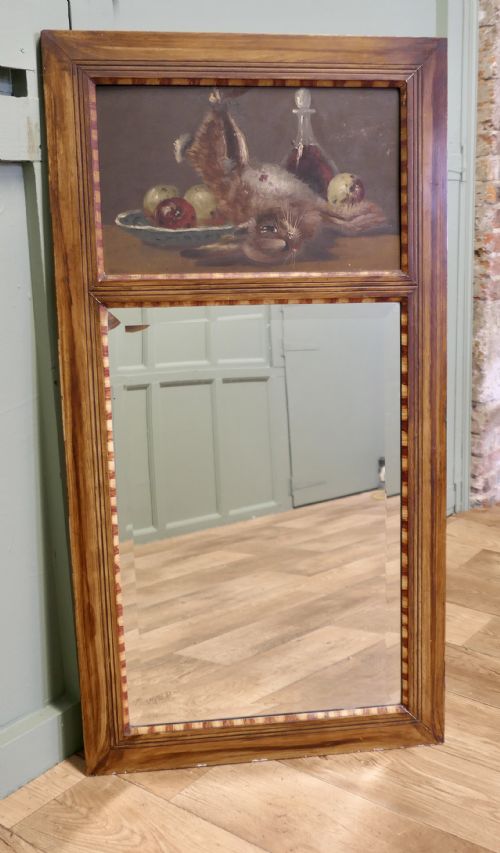
A 19th century french trumeau functions as an overmantle or pier glass designed to sit above a fireplace or between windows within a interior scheme. Buyers encounter tall wall-mounted formats that frequently incorporate painted panels or oil on canvas scenes above the glass plate.
The objects span styles including French Louis XVI Revival, Empire, and Neoclassical, reflecting domestic interiors from chateaux and country houses. Formats range from simple painted wooden frames to elaborate combinations featuring matching console tables.
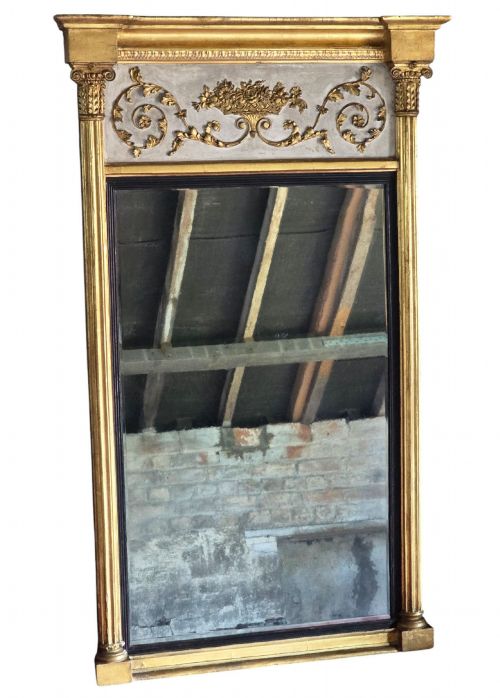
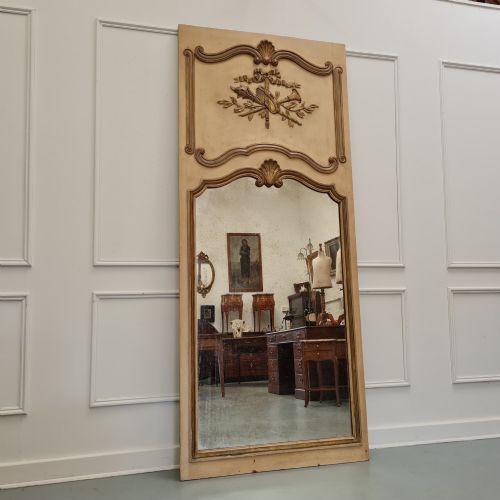
Surviving examples display various configurations such as arched tops, column-framed borders, and decorative relief panels depicting figures like Bacchus and cherubs.
How They Were Made
Carved wood provides the foundational structure for these mirrors, often enhanced with applied gesso to build up intricate surface details and relief motifs. Artisans applied paint, gold leaf, or giltwood finishes over the prepared wooden bases.
Upper sections frequently incorporate oil paint on canvas or wood panels, while lower sections house glass mirror plates framed within the architectural composition.
Several mirrors include cheerful painted panels depicting cherubs joining Bacchus in classic scenes.
What Varies in Quality
The refinement of the carved wood and gesso ornamentation dictates the distinction between standard decorative pieces and masterworks of the period. Original surface treatments, such as untouched paint and genuine gold leaf, separate pieces with preserved historical integrity from later re-paintings.
The integration between the primary mirror glass and the upper pictorial panel demonstrates the skill of the original maker, alongside the inclusion of companion console tables.
The 19th Century French Trumeau Glossary
- Trumeau
- An architectural pier glass mirror featuring an upper decorative panel containing a painting or carved relief. These pieces originated to fill the wall space between windows.
- Gesso
- A plaster-like mixture applied to wooden frames and carved to create raised decorative details before gilding or painting. It allows for crisp ornamental edges.
- Pier Mirror
- A tall mirror specifically designed to hang on the narrow pier of wall between two windows. They often stand above matching console tables.
- Eglomise
- A technique involving the application of gold or silver leaf to glass, combined with painting, to create a reflective ornamental panel. It appears in upper mirror sections.
- Overmantle Mirror
- A horizontal or vertical mirror scaled to fit directly above a fireplace mantelpiece. These form a focal point within period reception rooms.
19th Century French Trumeau: Frequently Asked Questions
Where should I hang a trumeau mirror?
These mirrors suit placement above a drawing room fireplace or between tall windows to reflect light.
They also function effectively in hallways when paired with a matching console table.
How do I identify a period trumeau?
Examine the construction of the wooden frame, the composition of the gesso, and the ageing of the mirror glass.
Period pieces display traditional joinery and hand-carved details rather than modern synthetic moulding compounds.
Did these mirrors always include paintings?
Many examples incorporate oil paintings on canvas or wood panels within the upper frame section.
Others feature carved wooden reliefs, gilt motifs, or simple painted wooden panels instead of pictorial art.
What is the difference between an overmantle and pier mirror?
Overmantle mirrors sit horizontally or vertically above fireplace surrounds to anchor the hearth.
Pier mirrors are typically taller and narrower, built to occupy wall spaces between architectural openings.