




Architectural Canvas Art
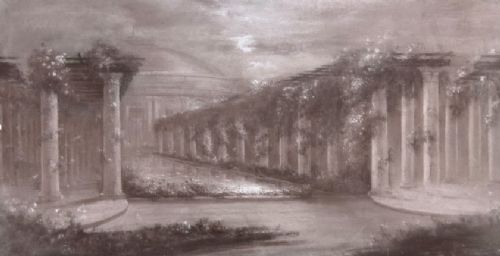
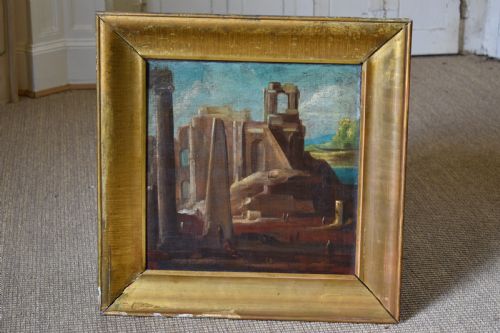
Architectural canvas art brings historical streetscapes, grand monuments and quiet courtyards directly onto the wall through the enduring medium of oil paint.
Architectural Canvas Art
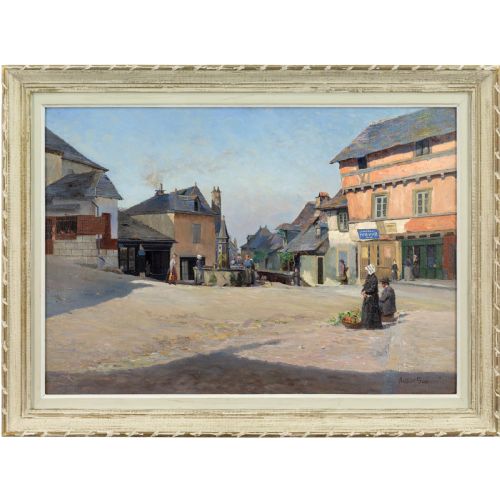
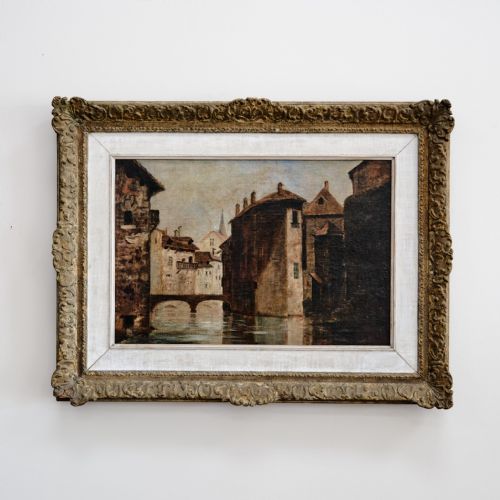
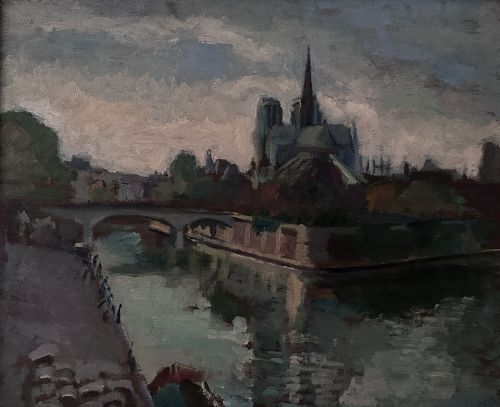
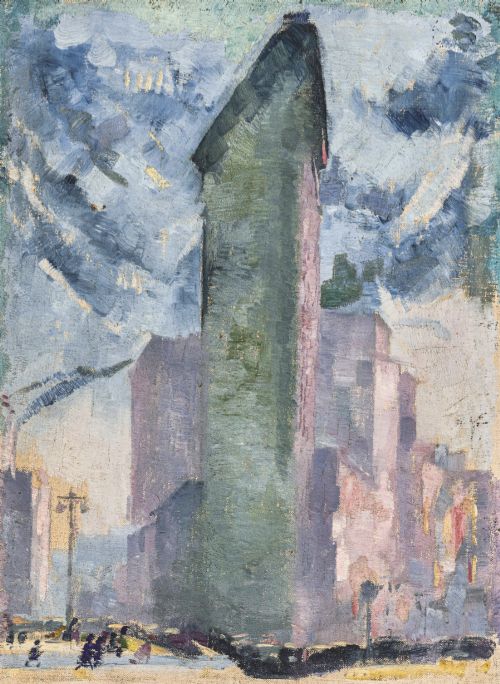
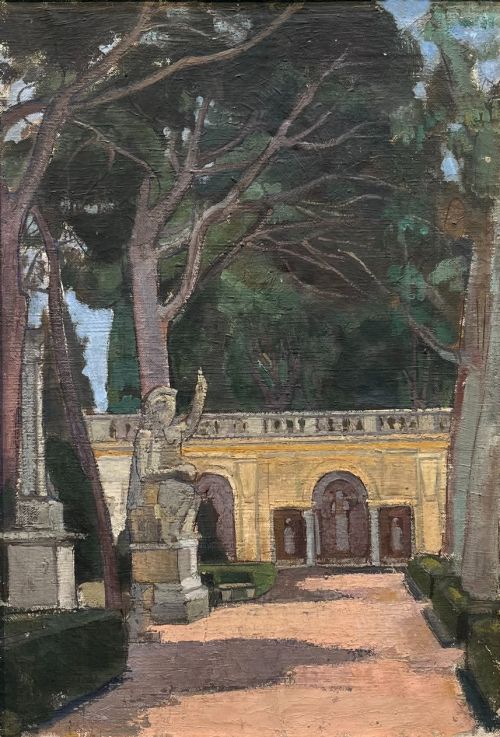
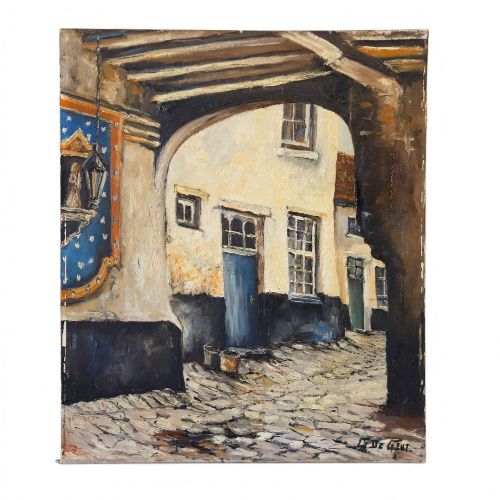
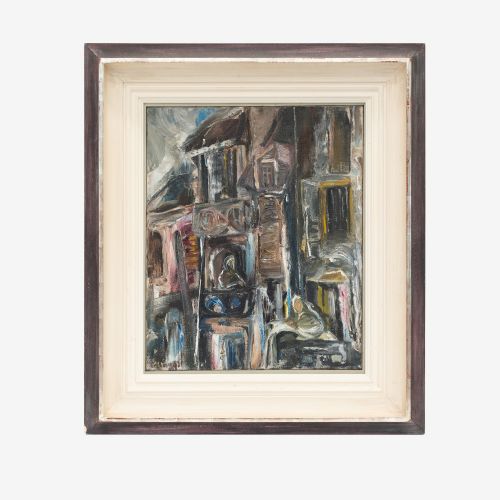
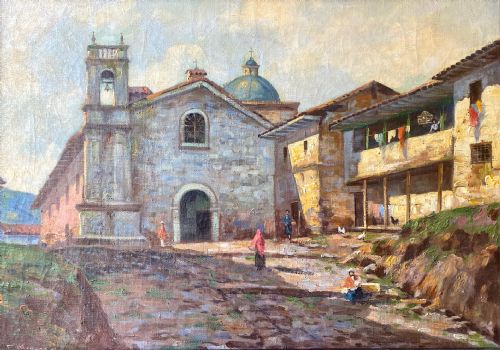
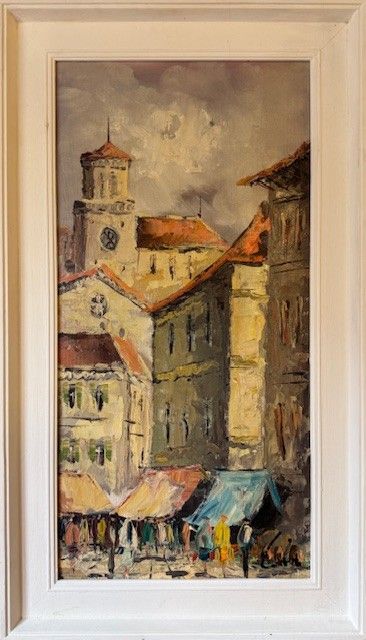
When you search for architectural canvas art, you encounter oil paintings depicting buildings, cityscapes, street scenes and historic monuments across several centuries. The selection spans the nineteenth century through to the mid-twentieth century, capturing subjects from Venetian canals and Parisian squares to English castles and Flemish street scenes.
You are most likely to meet mid-twentieth-century impressionist cityscapes and nineteenth-century continental town views on this page. These works frequently arrive framed in giltwood or gesso, applied directly to canvas stretched over wooden supports.
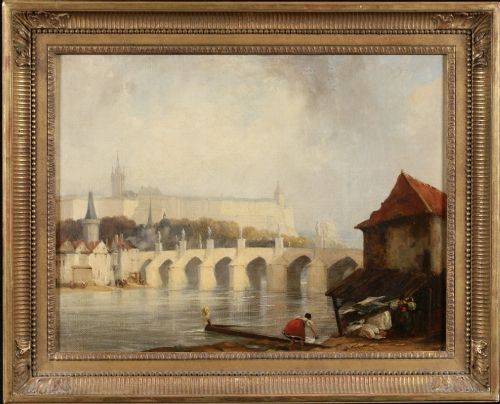
The assortment includes works by identified artists alongside pieces from British, French and Scottish school traditions. Subjects range from grand architectural landmarks such as St Peters Church and Prague Castle to intimate studies of houses and market squares.
Materials and Technique
These works rely on oil paint applied to canvas, occasionally incorporating impasto for texture or charcoal underdrawing beneath the pigment. The fabric canvas is typically secured over a wooden stretcher frame to maintain tautness.
Frames often consist of carved wood enhanced with gesso and gold leaf or giltwood finishes. This combination provides both structural support for the canvas and a decorative border suited to the period of the painting.
Several canvases capture bustling markets and quiet bridges where anonymous figures hurry past historic stone facades without knowing they would be immortalised.
Judging Quality
Quality rests upon the handling of light, perspective and atmosphere within the architectural subject. Masterful control of oil paint brings depth to stone facades and vibrancy to street scenes, whereas lesser examples produce flat, static representations of buildings.
The fidelity of the perspective and the proportion of structural elements reveal the skill of the hand behind the work. Hand-carved giltwood frames that match the period of the canvas also elevate the standing of a piece.
Arthur Gué·Alfred Wolmark·Lilian Colbourn·Caroline Burnett·Claude Lorrain·Cornelis Christian Dommersen·Frederick Tully Lott·William George Meadows·Karl Herrle·Armand Guillaumin·Job de Vogel·Pieter Cornelis Steenhouwer·Samuel Sidley·James Canter
The Architectural Canvas Art Glossary
- Impasto
- Paint applied thickly to a canvas, standing out in relief from the surface. This technique introduces tactile dimension to architectural elements such as stone walls or clouds.
- Gesso
- A plaster-like mixture applied to wood frames as a base for gilding. It provides a smooth surface for subsequent layers of gold leaf or paint.
- Stretcher
- The wooden frame that holds a canvas taut. Traditional stretchers allow the fabric to be adjusted using corner keys.
- Giltwood
- Wood carved and covered with a thin layer of gold leaf or metallic gilt. It frequently frames nineteenth-century and vintage oil paintings.
- Post-Impressionism
- An art movement extending French impressionism while rejecting its limitations. Artists working in this style emphasised symbolic content and heavier brushwork.
Architectural Canvas Art: Frequently Asked Questions
How should I hang heavy oil paintings?
Heavy oil paintings require sturdy wall fixings secured directly into masonry or wall studs rather than plaster alone. Utilising appropriate picture hooks matched to the weight of the frame ensures secure placement.
Position the centre of the canvas at eye level to achieve balanced visual weight within the room. Ensure the chosen wall avoids direct, harsh sunlight to protect the oil pigments over time.
How can I date a canvas?
Dating a canvas involves examining the weave of the fabric, the type of wooden stretcher used and any inscriptions on the reverse. Older stretchers often feature hand-cut joints and rusted iron tacks rather than modern staples.
Signatures, artist stamps and framing materials provide additional chronological clues. Comparing the painting style and subject matter to documented works helps narrow the decade of creation.
What is a Grand Tour painting?
Grand Tour paintings record the travels undertaken by wealthy young Europeans across continental sites during the eighteenth and nineteenth centuries. Travellers acquired these oil views of Rome, Venice and Paris as tangible memories of their journeys.
These artworks frequently depict famous architectural monuments and classical ruins viewed through romanticised perspectives. They serve as historical records of European cities before modern urban development altered their layouts.