


Antique Church Artwork
Antique church artwork captures centuries of ecclesiastical heritage through paintings, drawings, and illuminated texts that bring historic architecture and sacred scenes into contemporary interiors.
Antique Church Artwork
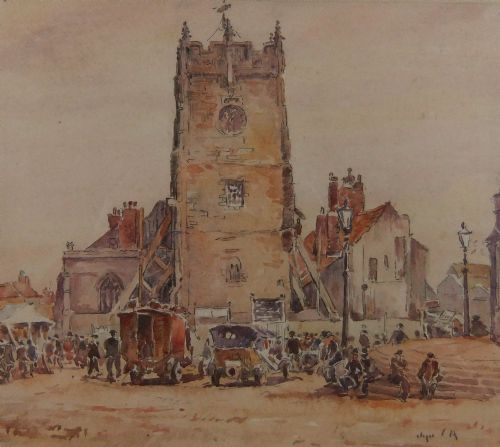
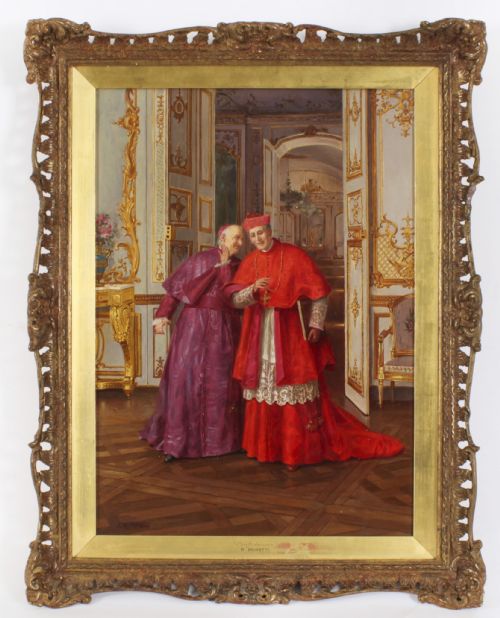
Antique church artwork encompasses paintings, watercolours, and architectural drawings featuring cathedrals, rural parishes, and religious subjects from the eighteenth, nineteenth, and early twentieth centuries. These pieces record historic ecclesiastical buildings, often capturing specific locations such as Yorkshire churches, Oxford colleges, and London landmarks.
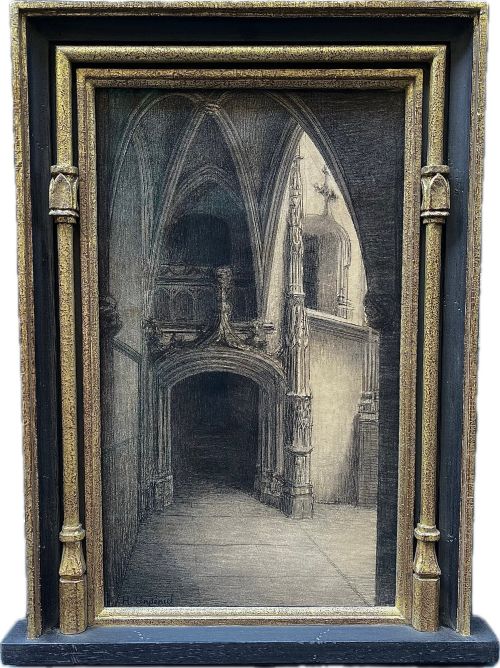
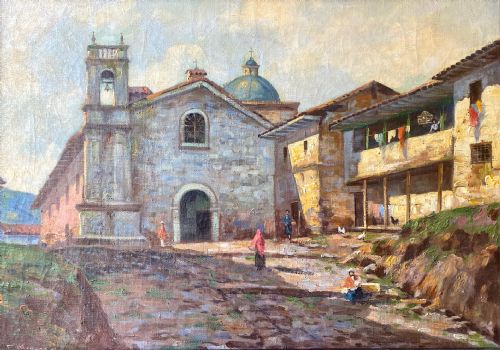
The selection here ranges from naive folk art panels and architectural studies to impressionist landscapes and detailed pen and ink drawings of cathedral interiors. Buyers encounter framed watercolours alongside large oil paintings on canvas and board, reflecting diverse interpretations of sacred spaces across various periods.
Origins span British and French schools, with artists documenting both grand Gothic structures and modest village churches. The material record preserves works from the Georgian, Victorian, and Edwardian eras, alongside pieces dated explicitly to the 1930s and 1940s.
Materials and methods
Artists utilised oil paint on canvas, board, and panel, applying pigments to build up landscapes and architectural studies. Watercolours on paper provide a lighter medium, often supplemented by pen and ink for precise architectural delineation.
Support materials include traditional canvas, heavy paper, and architectural drawing paper, frequently housed in period gilt frames or wood mounts. Specialised items incorporate illuminated text on metal panels from tin tabernacles, demonstrating varied craftsmanship within religious contexts.
Listings feature works in oil, watercolour, pen and ink, spanning the 18th, 19th, and early 20th centuries.
Distinctions in quality
The standard of execution in perspective, handling of light, and atmospheric depth distinguishes accomplished academic works from simpler folk art or naive representations. Stronger pieces demonstrate confident brushwork and precise draughtsmanship, particularly in architectural drawings of Gothic arches and stonework.
Condition of the medium and the integrity of the original frame influence overall merit. Works that retain their untouched surface texture and historical framing offer a more complete historic survival.
John Smith Atherton·Henri Charles Angéniol·Renato Moretti·William Greaves·John Edward Bale·Sir William Nicholson·Walter Meegan·Kershaw Schofield·John Cawthorn·Rowland Henry Hill·Maurice Asselin·John Jaques·Henri Therme·David Bates·Joseph Hansom·Frederick Underhill·Stephanie Cooper·Fred Lawson·Daniel Sherrin·William Marlow·John Thirtle
The Antique Church Artwork Glossary
- Gothic Revival
- An architectural and artistic movement reviving medieval forms, prominent in nineteenth-century church design and artwork. It draws inspiration from pointed arches and decorated stonework found in medieval cathedrals.
- Tin Tabernacle
- A prefabricated corrugated iron church building popular in the nineteenth century. These structures often contained specialised interior fittings and religious texts.
- Watercolour
- A painting method in which the paints are made of pigments suspended in a water-based solution. Artists use this medium on paper to capture translucent effects in landscape and architectural views.
- Naive Art
- Art produced by a self-taught creator, characterised by a departure from strict academic perspective and proportion. These works offer direct, unpretentious charm in depicting rural scenes and churches.
- Framed Artwork
- A piece enclosed in a protective border and housing structure designed to display and preserve the image. Period frames often contribute significantly to the historical context of the work.
Antique Church Artwork: Frequently Asked Questions
What periods do these church artworks cover?
The collection spans work from the eighteenth century through the Victorian and Edwardian eras up to the 1940s. These dates reflect changing artistic approaches to religious subjects over three centuries.
Earlier pieces often capture classical or Georgian structures, while nineteenth-century items lean heavily into Gothic Revival themes and detailed architectural recording.
How were these religious paintings originally displayed?
Many oil paintings and watercolours were created for domestic interiors as landscape decorations or devotional pieces. Others originated directly from ecclesiastical buildings or architectural offices.
Illuminated texts and architectural drawings served both functional and decorative roles within parish settings before entering private collections.
How do I identify a Gothic Revival artwork?
Gothic Revival pieces typically feature pointed arches, ribbed vaults, and ornate stonework inspired by medieval ecclesiastical architecture. Artists focused on the romantic and historical aspects of these sacred structures.
Skilled draughtsmen rendered these details with high precision, often accompanied by signatures or dates placing them firmly in the nineteenth century.
Are these artworks signed by the artists?
Numerous pieces feature artist signatures, inscriptions, or attribution notes detailing the specific church or cathedral depicted. Localities such as York, Oxford, and Norfolk frequently appear in the titles.
Unsigned works are attributed through stylistic analysis and comparison with known regional schools of British and French painting from the period.