

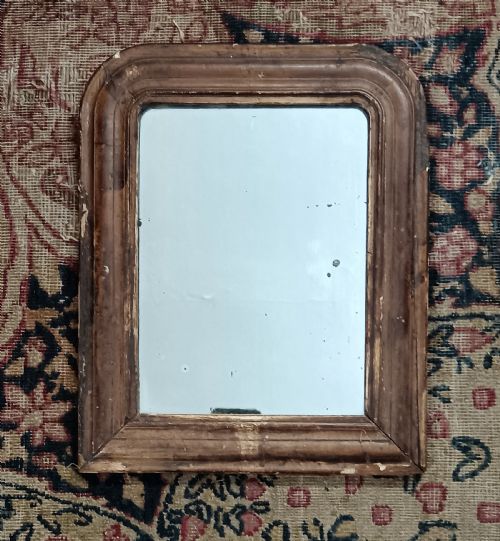


Arched Walnut Mirror
An arched walnut mirror brings warmth and architectural line to a room, drawing the eye with its characteristic curved crest.
Arched Walnut Mirror
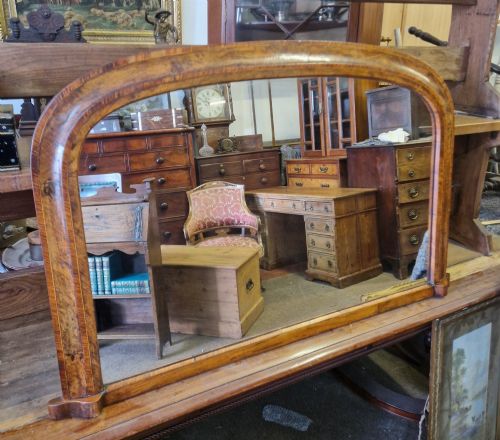
An arched walnut mirror is a wall-hanging or overmantel glass framed in timber showing rich brown grain, finished with a rounded top. You meet these pieces most frequently in Victorian overmantel formats and nineteenth-century French Louis Philippe designs.
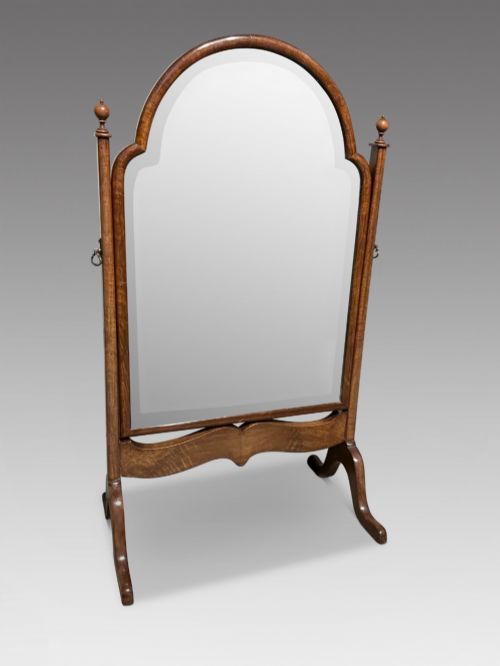
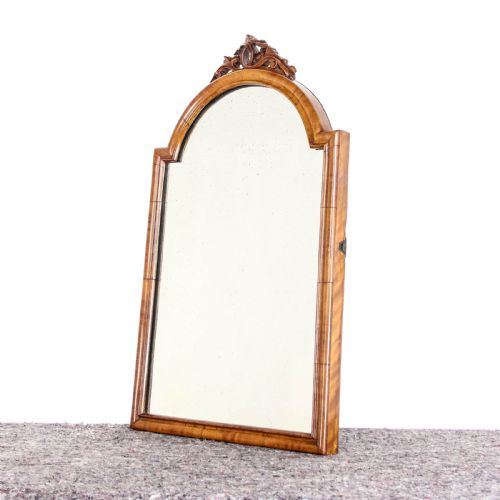
The selection ranges from compact table-top dressing mirrors to substantial nineteenth-century overmantel pieces designed to sit above a fireplace. Makers constructed these items across several eras, including the Victorian period and the early twentieth century.
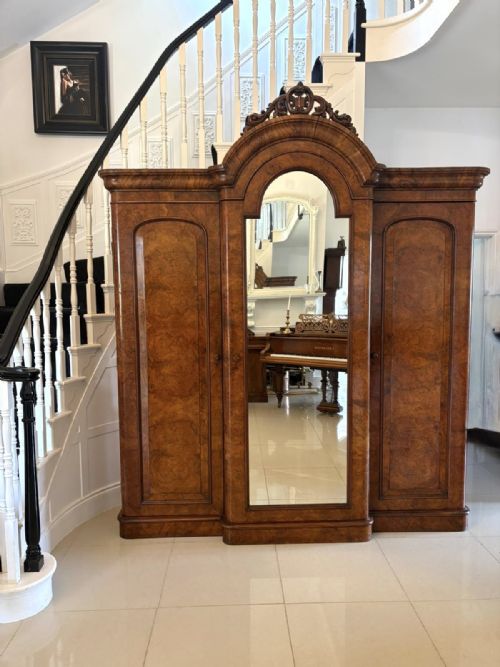
The form appears not only as standalone wall furniture but also integrated into larger pieces such as wardrobes, armoires, and dressing table fitments. Buyers seek them out for their combination of figured timber frames and curved glass headers.
Judging quality and character
Quality rests in the choice of timber and the depth of the figure in the walnut veneer, where highly figured burr surfaces and crisp hand-carving distinguish finer pieces from plain stock. The integration of the arched frame and the preservation of original mirror glass and backing boards hold significant weight for collectors.
Proportion dictates visual success, separating balanced nineteenth-century overmantels and French Louis Philippe frames from heavier, less harmonious revivals. The precision of the joinery around the curved apex reveals the competence of the workshop that produced it.
Listings feature arched walnut mirrors spanning the Victorian period, the nineteenth century, and early twentieth-century revivals like Art Deco.
Mercier
The Arched Walnut Mirror Glossary
- Overmantel mirror
- A large glass designed specifically to hang on the wall directly above a fireplace mantelpiece. These pieces often feature wide wooden frames shaped to anchor the space above a hearth.
- Burr walnut
- A prized timber harvested from the growth excrescences of walnut trees, yielding intricate, swirling grain patterns. Cabinetmakers used it as a veneer on high-status furniture surfaces.
- Louis Philippe
- A French style spanning the nineteenth century characterised by restrained curves, subdued ornamentation, and architectural simplicity. Mirrors from this tradition rely on clean arched lines rather than heavy carving.
- French Rococo
- A decorative style marked by asymmetrical scrolls, organic plant motifs, and exuberant ornamentation. Frames in this manner show deeply carved floral and shell details.
- Aesthetic Movement
- A late nineteenth-century design current that rejected heavy industrial ornamentation in favour of artistic refinement, simplicity, and Japanese-inspired motifs. Pieces from this circle often utilised ebonised finishes alongside walnut.
Arched Walnut Mirror: Frequently Asked Questions
How do I date an arched walnut mirror?
Dating relies on examining the construction methods of the wooden frame, the backing boards, and the characteristics of the mirror glass itself. Victorian and nineteenth-century examples often display hand-cut joinery and older silvering techniques.
Stylistic cues such as French Louis Philippe curves or Aesthetic Movement ebonised details provide further clues to the decade of manufacture. Compare the timber preparation with dated pieces from the same era to confirm the period.
Are these mirrors suitable for everyday use?
An arched walnut mirror serves practical daily functions in dressing rooms, over washstands, and in hallways as well as acting as decorative wall art. Table and dressing mirrors provide adjustable reflection angles for grooming tasks.
Regular use requires only gentle dusting of the walnut frame and standard glass cleaning. The sturdy construction of nineteenth-century frames ensures they withstand normal household environments.
What is the difference between a pier glass and an overmantel?
A pier glass traditionally hung on the narrow pier of wall between two windows, often paired with a console table underneath. An overmantel mirror was built specifically to span the horizontal space above a fireplace.
Overmantel examples tend to be wider and lower, while pier glasses are taller and narrower to fit wall spaces between architectural openings.