
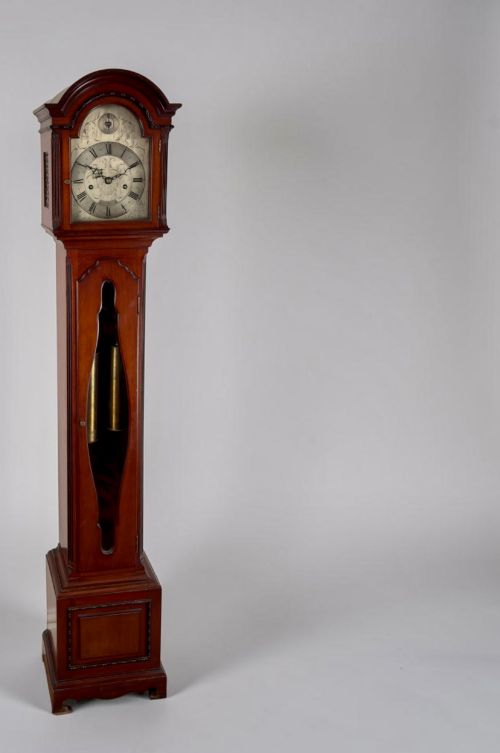

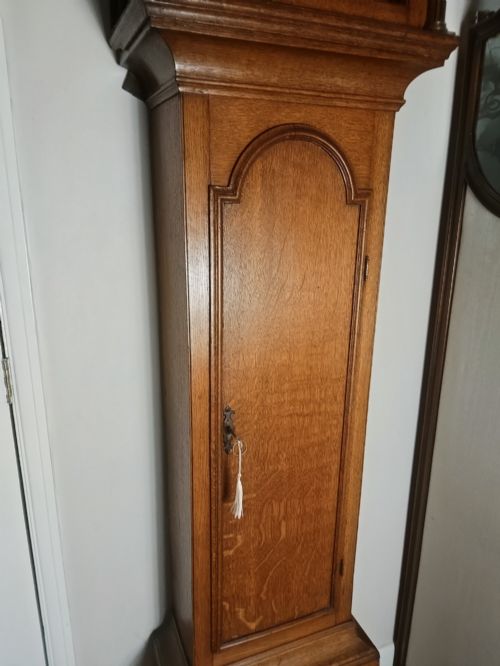
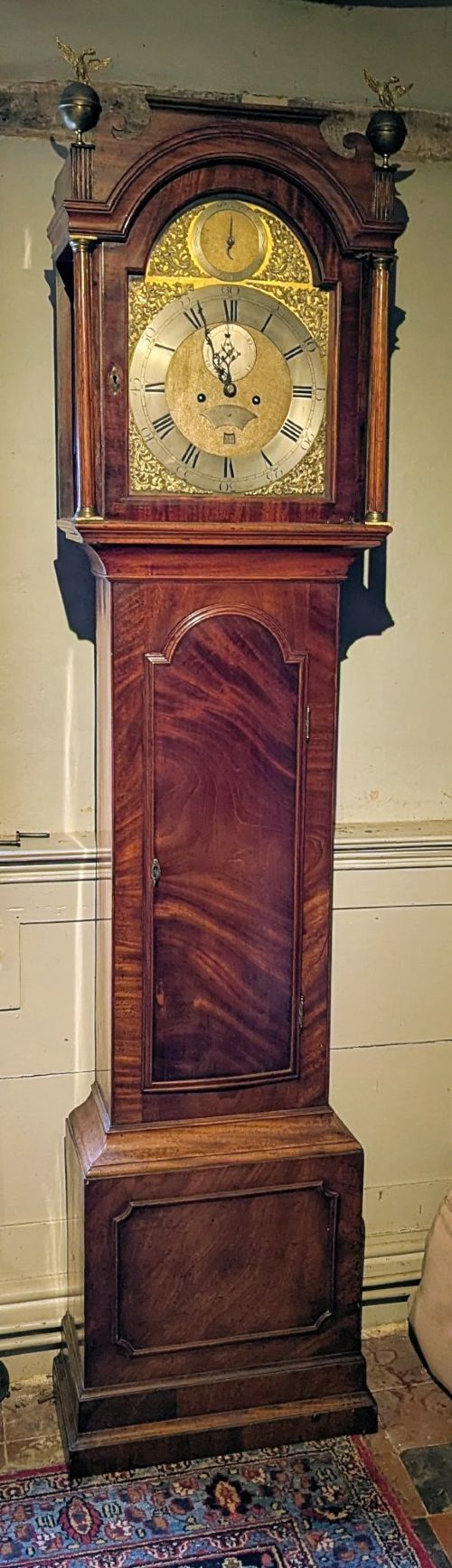
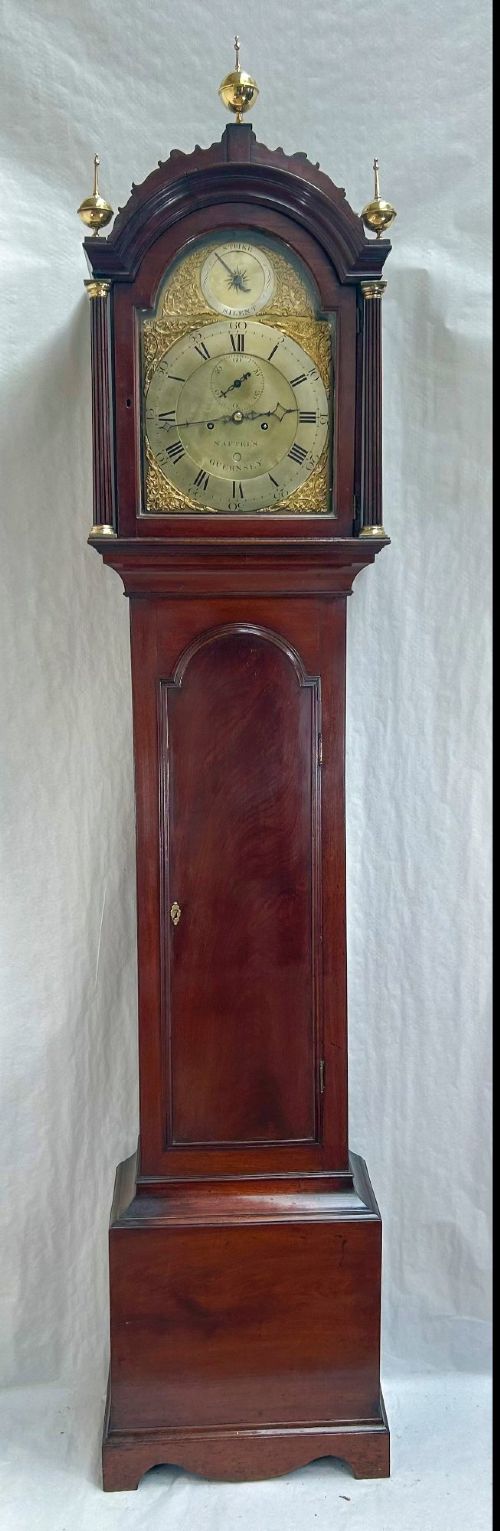
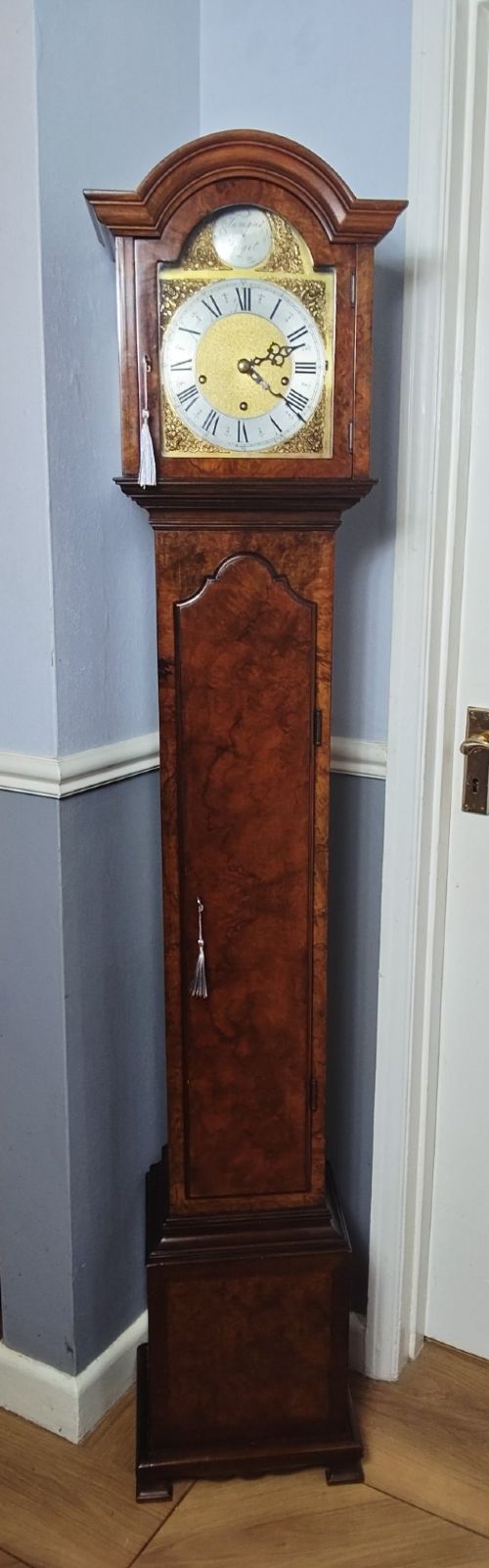
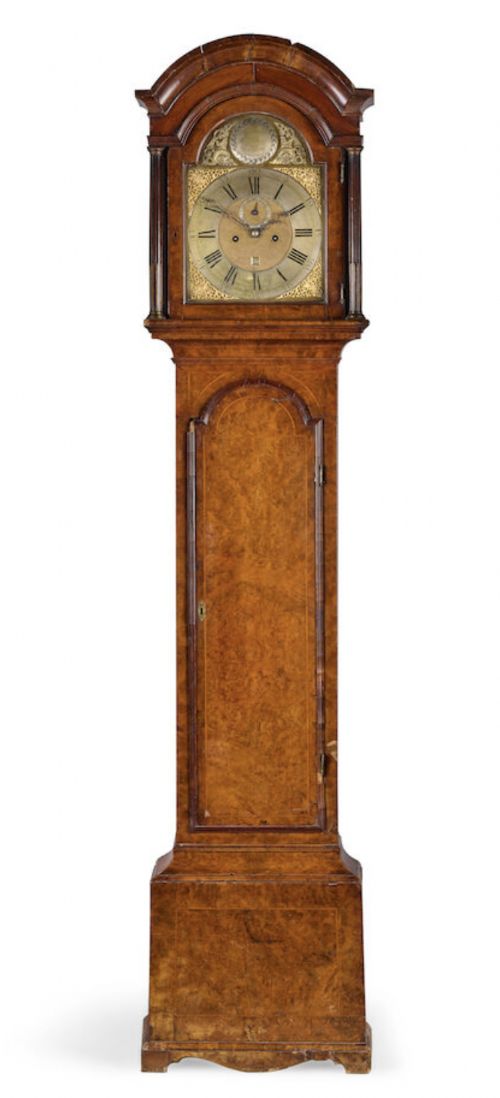
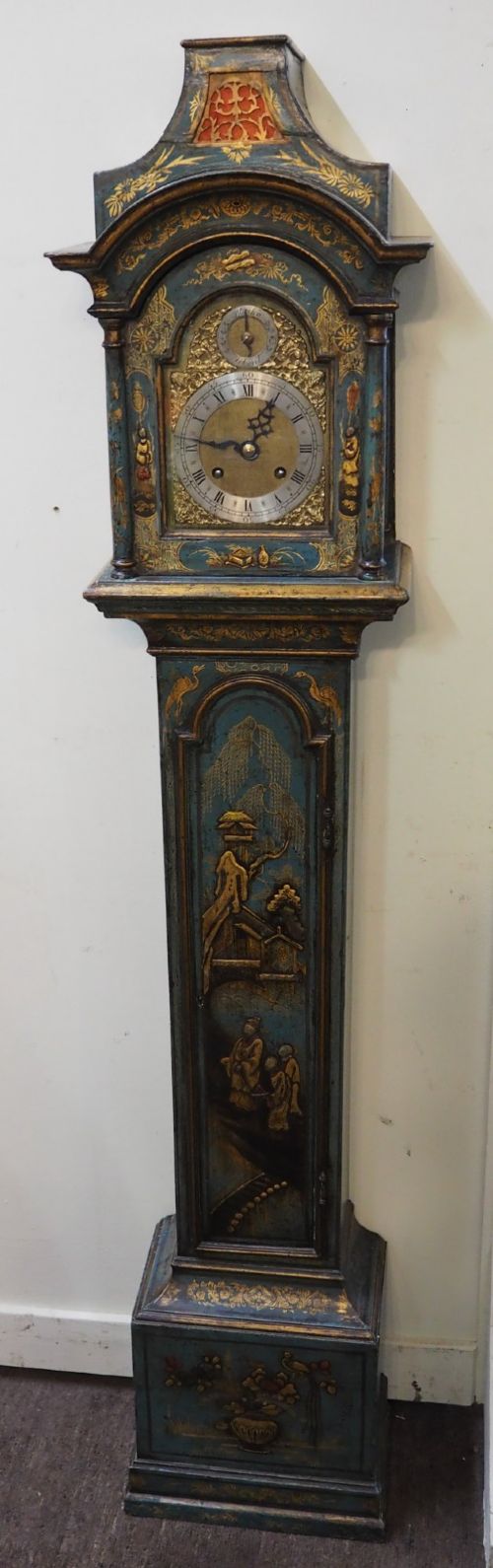


Arched Dial Tall Clock
An arched dial tall clock brings steady movement and presence to a room, built by makers who combined precise brass gearwork with timber cases.
Arched Dial Tall Clock
An arched dial tall clock is a tall floor-standing timepiece enclosing a weight-driven movement, commonly known through the centuries as a longcase or grandfather clock. When you search for an arched dial tall clock, you meet examples spanning the Georgian era, the nineteenth century, and later revivals into the nineteen-thirties.
The form appears in various proportions, ranging from full-sized London pieces in mahogany or walnut down to smaller grandmother clocks from the Edwardian period and the nineteen-twenties. Oak and mahogany serve as the primary timbers, while brass and painted iron form the arched faces that display the hours.
Makers housed these movements in tall wooden trunks designed to protect the pendulum and weights, creating an architectural element for the domestic interior. Regional makers across England and Scotland produced these timepieces, alongside prominent London horologists whose names appear on the dials.
Materials and construction
Cabinetmakers constructed the tall cases using solid timbers like oak, walnut, and mahogany, frequently selecting flame mahogany or burr veneers to add rich grain patterns to the door and base. Glass glazed the hood door to protect the dial while allowing a clear view of the hands and the arched top.
Clockmakers built the internal gear trains from brass and steel, driving the movement with hanging weights suspended by lines or chains. Dials combined brass chapter rings with engraved spandrels in the corners of the arch, or utilised painted iron surfaces decorated with moon rollers and moving automata.
Listings span the Georgian period, the nineteenth century, and twentieth-century revivals, utilising oak, mahogany, walnut, brass, and painted iron.
Distinctions in execution
The refinement of the cabinetwork dictates the standing of the piece, separating standard regional production from the sophisticated output of London workshops. Selected veneers, crisp mouldings, and well-proportioned hoods show the hand of a skilled cabinetmaker rather than basic workshop assembly.
The complexity of the movement establishes further distinction, moving from standard eight-day time-and-strike mechanisms to quarter-chiming variations, musical setups, or rocking ship automata within the arch. The legibility and artistry of the engraved or painted dial reflect the care given to the face of the clock.
Gillett and Johnston of Croydon·James Field of Hempstead·Windmills and Wightman·Priory of Dundee Scotland·Bravingtons·William Allam·James Tregent of London·Thomas Goddard London·Francis Perigal of Bond Street·William Wady of Twickenham·Upjohn of Exeter·Richard Biggs Romsey·James Coster of Henley·Harrods·Lister and Sons·Furnival Oldham·Dwerrihouse and Carter·James Bullock Of London·George Graham·Packer Of Reading·William Smith Keighley
The Arched Dial Tall Clock Glossary
- Arch
- The curved upper section of the dial above the square chapter ring, often housing a moon phase or automata. This space gives the arched dial tall clock its distinct profile.
- Chapter ring
- The metal ring bearing the numerals for the hours and minutes. It sits on the dial face surrounding the hands.
- Spandrel
- The decorative corner ornament placed outside the chapter ring on brass dials. These cast brass pieces changed in design through different stylistic periods.
- Grandmother clock
- A smaller version of the tall clock produced in the twentieth century. It occupies less floor space while retaining the weight-driven movement.
- Moon roller
- A revolving disc behind an arched aperture that tracks the phases of the moon. It adds mechanical complexity to the upper dial.
Arched Dial Tall Clock: Frequently Asked Questions
How do eight day movements work?
An eight-day movement requires winding once a week using a key to pull the internal weights back up inside the case. Gravity pulls the weights down slowly over the course of eight days to power the gear train and pendulum.
This system provides reliable timekeeping without daily winding.
What does strike silent mean?
A strike silent mechanism allows the owner to turn off the hourly chiming function using a small lever on the dial. This was useful during the night when hourly strikes might disturb sleep.
The clock continues to keep accurate time while the striking train remains disengaged.
How do I tell oak from mahogany cases?
Oak displays a distinct open grain with visible medullary rays, often showing a warm golden-brown tone on earlier Georgian pieces. Mahogany presents a tighter, smoother grain that ranges from a deep reddish-brown to highly figured flame patterns.
Cabinets made from mahogany generally appear darker and heavier in visual weight.