

Apprentice Piece Furniture
Apprentice piece furniture comprises small-scale items crafted to demonstrate skill, offering miniature chests, desks and tables in domestic timbers.
Apprentice Piece Furniture
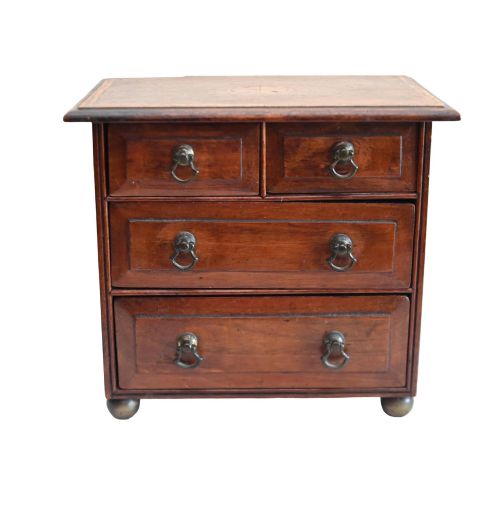
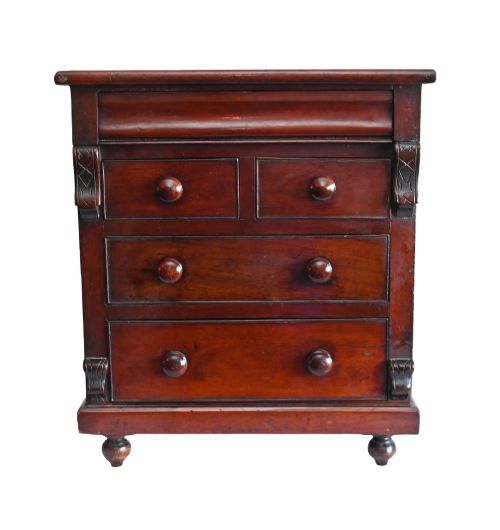
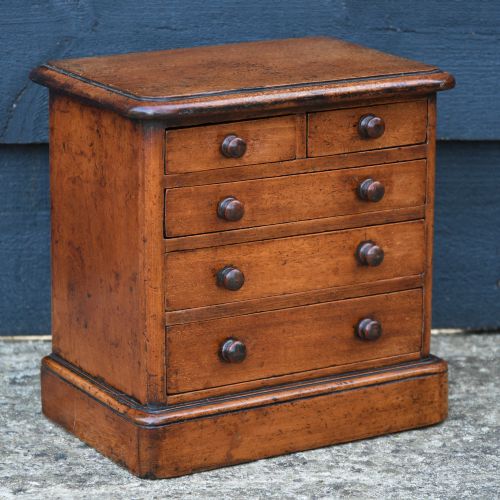
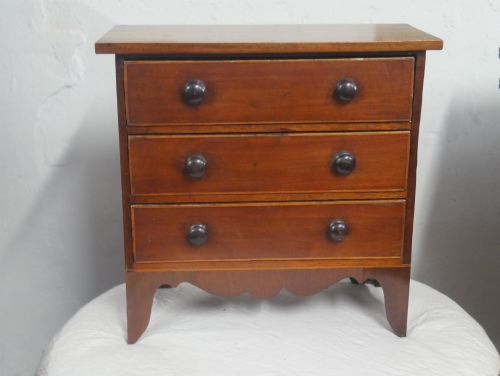
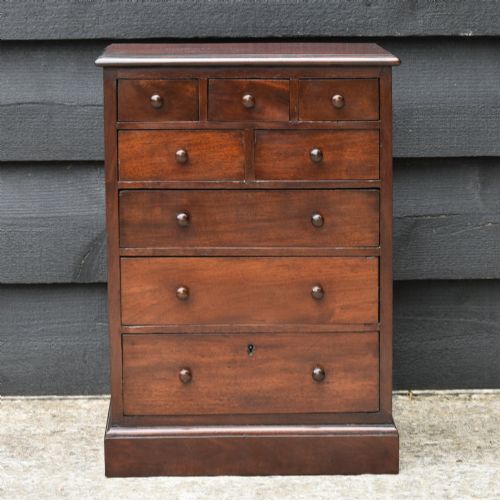
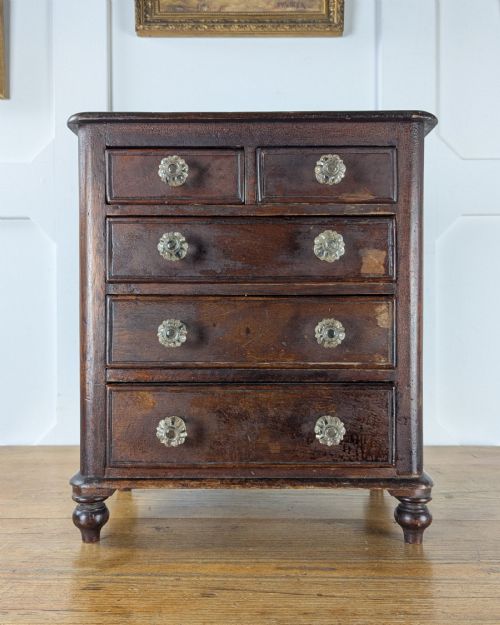
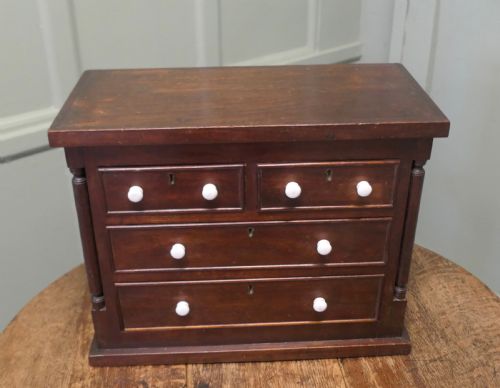
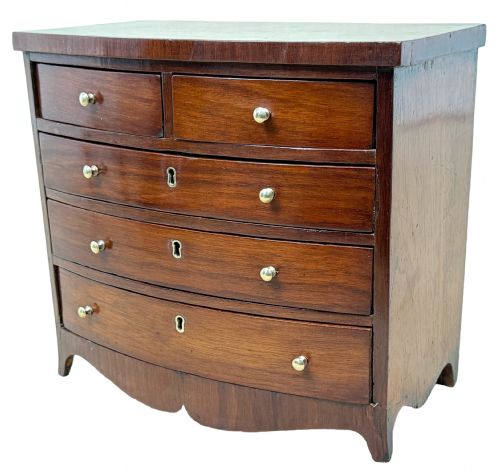
Apprentice piece furniture consists of miniature chests of drawers, cabinets, desks and tables produced across the eighteenth, nineteenth and early twentieth centuries. These diminutive objects reflect full-scale domestic forms, including bowfront chests, kneehole desks, breakfast tables and bureau bookcases.
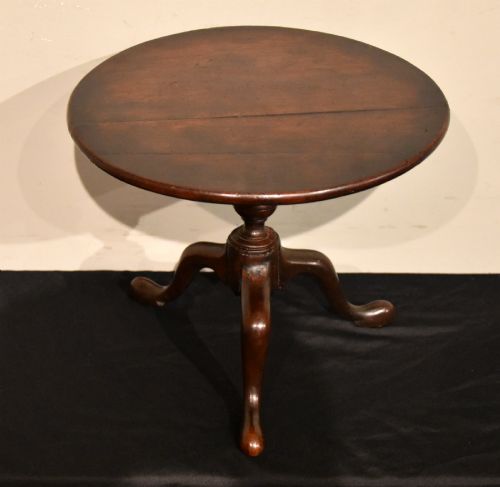
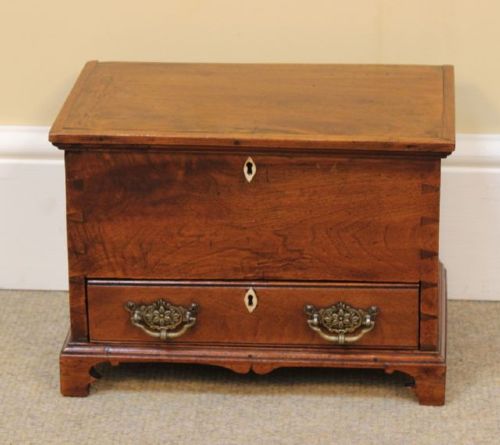
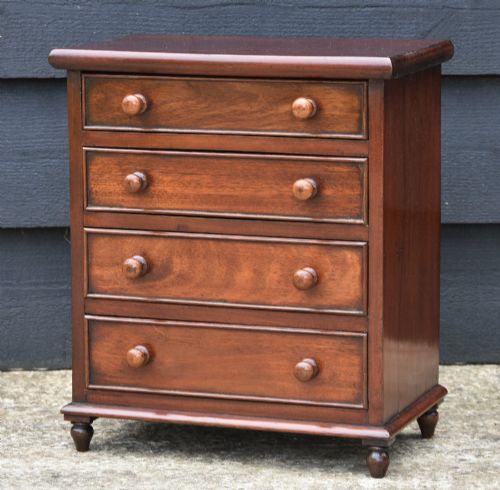
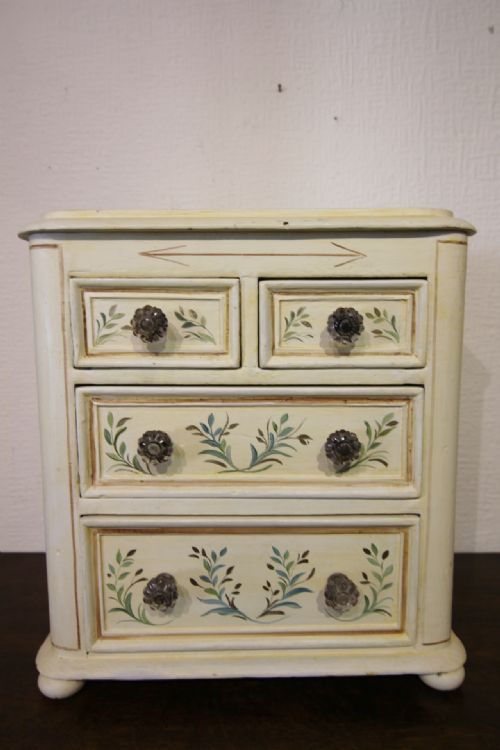
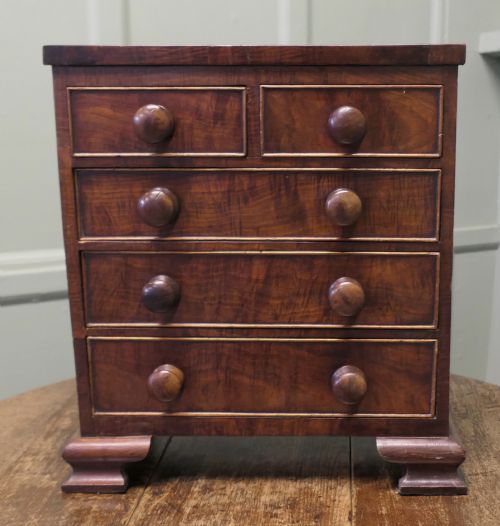
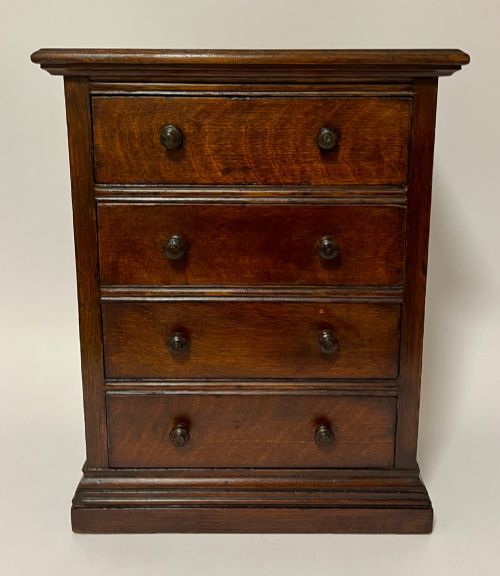
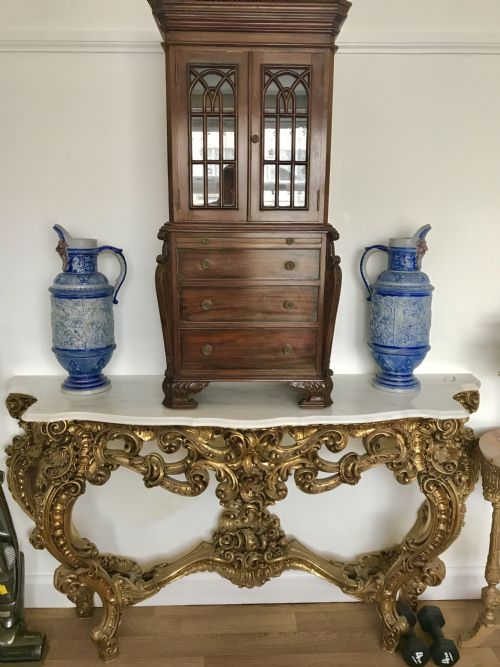
The version most commonly encountered on this page is the miniature chest of drawers in mahogany, walnut or oak, often dating from the Victorian period or the nineteenth century. Alongside chests appear display cabinets, hall chairs, tripod tables and mule chests, spanning Georgian, Regency, Victorian and Edwardian periods.
Materials and construction
Makers utilised dense hardwoods such as mahogany, walnut, rosewood, yew and oak, alongside softer timbers like pine and pitch pine. Fine specimens feature French polishing, burr veneers and inlaid brass details.
Joinery mirrors standard furniture-making techniques of the period, executed on a reduced scale. Drawers often incorporate hand-cut dovetails, turned feet, secret compartments and brass hardware.
Listings feature items from the 18th, 19th and early 20th centuries, spanning Georgian, Regency, Victorian, Edwardian and Arts and Crafts styles.
What separates the fine from the plain
Quality rests upon the fidelity of the scale reduction and the selection of timber figures, such as burr yew, figured walnut or flame mahogany. Finer examples display meticulous attention to proportion, crisp mouldings and delicate joinery.
The Apprentice Piece Furniture Glossary
- Bowfront
- A convex, curved front profile typical of certain nineteenth-century chests of drawers. This shape requires precise woodworking skill to execute on a miniature scale.
- Kneehole desk
- A compact desk featuring a central recessed space for the legs, flanked by pedestals of small drawers. Georgian and later examples often use oak or yew timber.
- French polish
- A shellac finish applied in multiple thin layers using a rubbing pad to achieve a high gloss. This technique highlights the grain of timbers like mahogany and rosewood.
- Mule chest
- A storage chest fitted with one or more drawers at the base beneath the main compartment. Miniature versions replicate this hybrid chest-and-drawer form in oak or mahogany.
Apprentice Piece Furniture: Frequently Asked Questions
What is apprentice piece furniture?
Apprentice piece furniture refers to small-scale decorative and functional items made by trainees to prove their competence in woodworking.
These pieces replicate standard household forms like chests of drawers, tables and desks in miniature proportions.
How were these miniature items used?
Many served as trade samples for travelling salesmen to show clients designs without carrying bulky full-sized items.
Others functioned as decorative tabletop items, jewellery chests or personal keepsakes in domestic settings.
How do I date a miniature chest?
Dating relies on timber selection, secondary woods, hardware styles and construction traits consistent with periods like Georgian or Victorian.
Changes in drawer linings, handles and locking mechanisms help place an item within a specific century.
Are these pieces made by actual apprentices?
Some small-scale items represent genuine training exercises, while others were produced as salesman samples or cabinetmakers' portfolio pieces.
Regardless of exact workshop origin, all follow traditional period joinery methods.
Where should I display miniature furniture?
These items suit tabletops, sideboards, desks or dedicated display cabinets where their detailed construction remains visible.
Keeping them away from direct sunlight protects vulnerable wood veneers and French polished surfaces.