




Carved Timber Throne Chair
A carved timber throne chair commands a room through heavy joinery and deep relief work.
Carved Timber Throne Chair
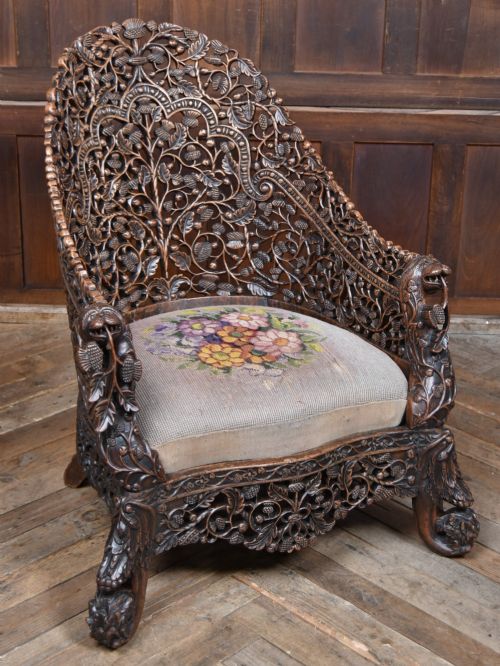
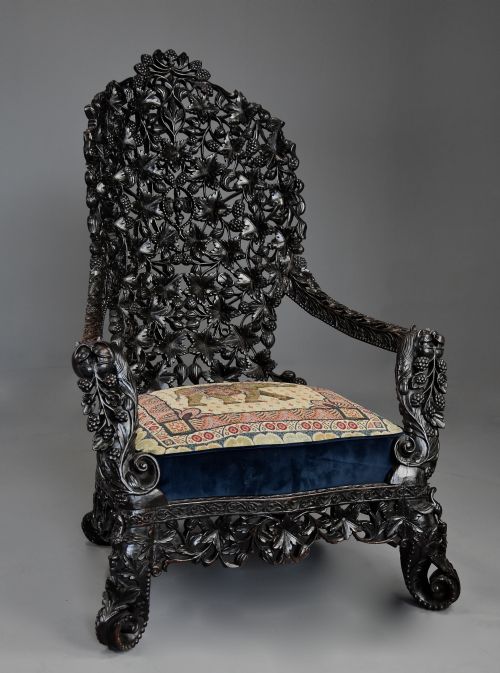
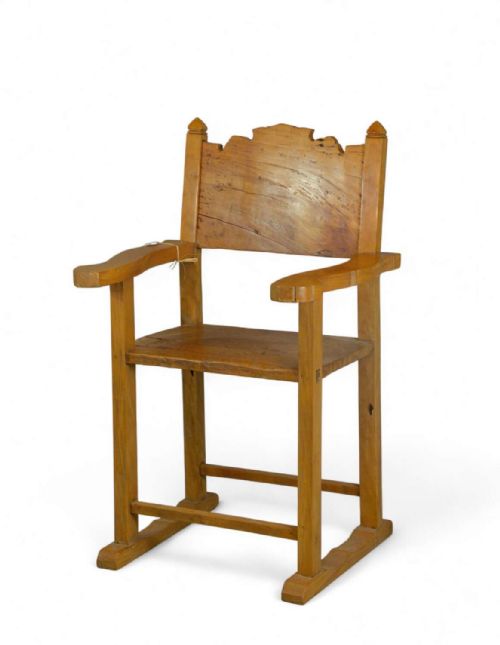
A carved timber throne chair serves as a substantial seat of authority, originating from periods spanning the seventeenth century through to the Victorian era. These pieces appear in forms such as heavy wainscot armchairs, ceremonial seats, and grand hall chairs.
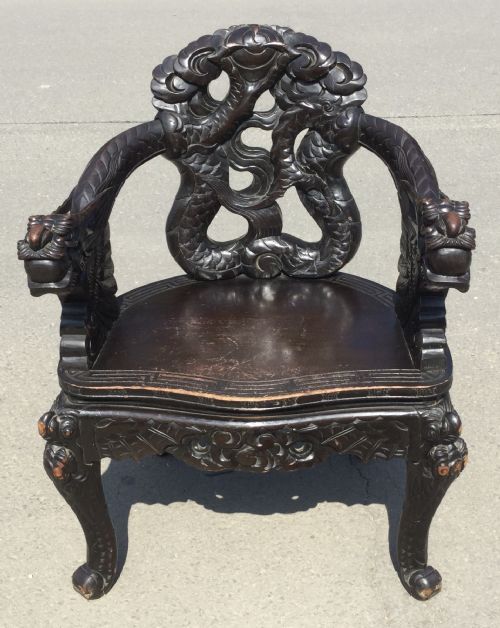
The selection on this page demonstrates international workshops, featuring Anglo-Indian, Chinese Export, and Colonial interpretations alongside English revivals like Jacobean and Victorian Gothic. Oak, beech, teak, elm, blackwood, and rosewood form the primary timbers of these varied seating options.
Construction and Materials
Craftsmen built these chairs using solid native and exotic hardwoods, employing traditional joinery such as mortise and tenon frames. Timber selection dictated the depth and intricacy of the carving, with dense woods holding crisp relief.
Carpenters utilised hand tools to chip away background material, leaving elaborate foliage, figures, or geometric strapwork standing proud. Seat pads often incorporated drop-in timber panels or later additions of tapestry and woven fabric.
A giant size Philippine throne chair proves that nineteenth-century artisans occasionally abandoned all notions of domestic scale.
Assessing Quality
Quality rests upon the depth and sharpness of the hand carving, where superior examples display three-dimensional undercut work rather than shallow surface scratching. Proportion and structural stability also separate grand ceremonial seating from simpler utility items.
The choice of timber influences the overall merit, with dense exotic hardwoods and well-figured English oak holding greater presence. Originality of surface patination and minimal timber replacement elevate an individual piece.
The Carved Timber Throne Chair Glossary
- Wainscot chair
- An early wooden armchair constructed with panelled backboards and solid timber seats. This heavy form preceded the widespread use of upholstered seating.
- Relief carving
- A sculptural technique where figures or patterns project from a flat background timber plane. Deeper carving requires greater skill from the artisan.
- Apprentice piece
- A smaller scale model created by a craftsman to demonstrate mastery of joinery to a guild. These items mirror full-size furniture in every detail.
- Patina
- The surface sheen and colour developed by aged timber through decades of handling and wax polishing. This quality indicates genuine age.
Carved Timber Throne Chair: Frequently Asked Questions
How do I date a wainscot chair?
Dating relies on construction methods, joint pegging, and timber species visible in the panel frame. Earlier examples utilise boarded backs and simple pegged mortises.
Stylistic motifs such as strapwork or turned spindle legs also assist in placing the seat within a specific century.
Were these chairs used daily?
Heavy timber thrones typically served specific ceremonial functions or remained reserved for the head of a household. Their substantial weight discouraged frequent movement around a room.
Smaller hall chairs and elbow seats saw more regular domestic use in grand entryways.
How should I care for carved hardwood?
Maintain the timber by applying traditional beeswax sparingly to nourish the grain and protect the surface. Avoid placing these heavy chairs near direct heat sources.
Keep rooms at a stable humidity to prevent the dense hardwoods and joined panels from splitting.
What defines Chinese Export furniture?
Chinese Export pieces combine traditional Asian iconography and dense timbers with European furniture forms commissioned by foreign traders. Artisans utilised native hardwoods like elm and rosewood.
These items frequently feature intricate dragon motifs or flora carved deeply into the timber.