

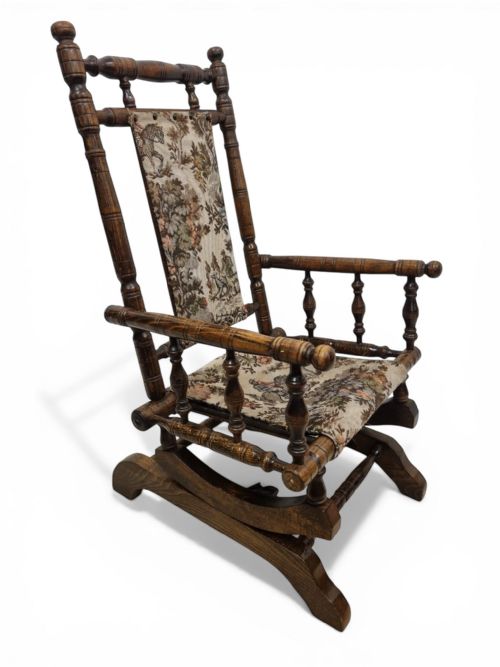


Miniature Wooden Chair
A miniature wooden chair brings the robust forms of full-scale furniture into diminutive proportions, crafted for children or as apprentice demonstration pieces.
Miniature Wooden Chair
A miniature wooden chair encompasses small-scale seating designed for children, toddlers, or doll displays, often taking the form of high-backed Windsors, rockers, and armchairs. Buyers searching for a miniature wooden chair frequently encounter pieces originating from the eighteenth, nineteenth, and early twentieth centuries, reflecting domestic life across various social strata.
The selection ranges from robust English country vernacular stick-backs to formal mahogany hall chairs and apprentice pieces modelled in miniature. Ash, elm, and yew feature prominently among these smaller seats, mirroring the heavy timbers utilised by regional cabinetmakers for full-sized seating.
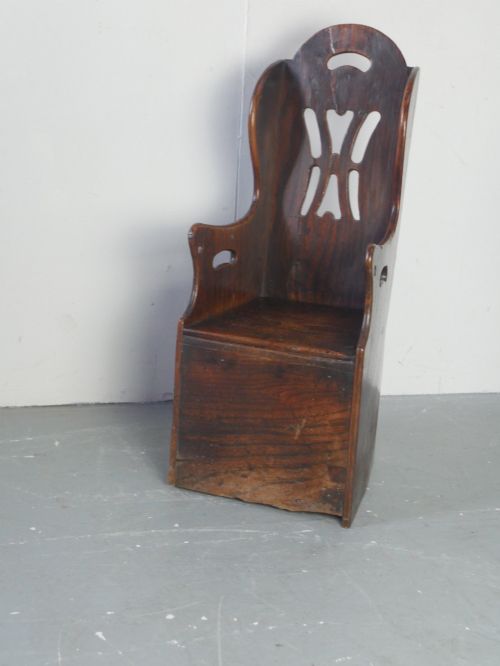
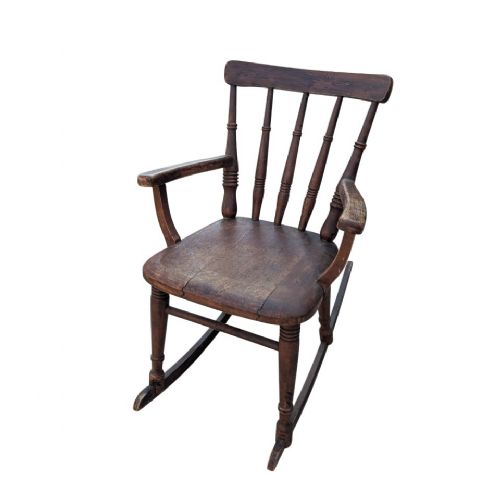
Many survivors take the specific form of child rocking chairs, commode chairs, or miniature Windsor armchairs intended for actual use by children in domestic settings. Others represent apprentice pieces, where a craftsman demonstrated skill by reducing every structural joint to a fraction of its standard scale.
Materials and construction methods
Cabinetmakers and country joiners built these small seats using local hardwoods such as ash, elm, oak, beech, and yew, often combining bentwood components with solid plank seats. Windsor variants rely on steam-bent ash or yew bows fitted into thick elm saddles, securing the spindle backs through traditional wedged tenons.
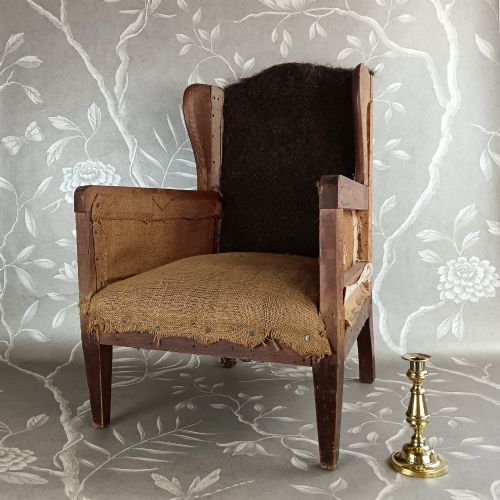
Formal examples utilise mahogany, walnut, or pine, employing dovetail joints, turned legs, and occasionally tapestry upholstery to reflect the prevailing furniture fashions of their respective periods. Pegged joints and hand-turned spindles indicate traditional workshop production rather than mass-machined fabrication.
Current selections span the eighteenth, nineteenth, and early twentieth centuries, featuring elm, oak, ash, pine, mahogany, beech, and yew.
Distinctions in craftsmanship and survival
Quality rests upon the fidelity of the proportions and the integrity of the original joints, as smaller pieces endure heavy treatment by children or careless storage over centuries. Finer examples retain their original surface patination, uncompromised timber thickness, and crisp turnings on the legs and stretchers.
The Miniature Wooden Chair Glossary
- Windsor chair
- A chair built with a solid wooden seat into which the legs and back spindles are directly inserted. This construction method provides exceptional stability for small-scale seating.
- Apprentice piece
- A small-scale item created by a trainee craftsman to demonstrate mastery of joinery techniques to a guild or master. These objects exhibit the exact detailing found on full-size furniture.
- Stick back
- A chair design featuring simple turned or cleft rods forming the back support rather than carved splats. This vernacular style appears frequently in regional country seating.
- Commode chair
- A seat fitted with a concealed cavity beneath the lift or slide panel to hold a chamber pot. In miniature form, these served functional purposes in nurseries.
- Vernacular furniture
- Domestic items built by local tradesmen using regional traditions and readily available native timbers rather than following strict high-style metropolitan designs.
Miniature Wooden Chair: Frequently Asked Questions
Were these miniature chairs made for children?
Many examples served as genuine functional seating for toddlers and young children in domestic nurseries throughout the eighteenth and nineteenth centuries.
Other pieces functioned as display items, doll furniture, or apprentice pieces demonstrating advanced woodworking proficiency.
What woods were commonly used?
Regional makers utilised available British hardwoods including elm, ash, beech, yew, and oak for country vernacular pieces.
Formal urban workshops favoured mahogany and walnut, occasionally incorporating pine carcasses or tapestry upholstery.
How should I care for antique wood?
Keep small wooden seating away from direct heat sources and sudden humidity shifts to prevent timber splitting and glue failure.
Apply occasional microcrystalline wax to nourish the surface without building up sticky residues on antique finishes.