




Turned Leg Nursery Chair
These turned leg nursery chair examples bring traditional country seating into miniature scale, offering sturdy construction and distinct regional character for domestic interiors.
Turned Leg Nursery Chair
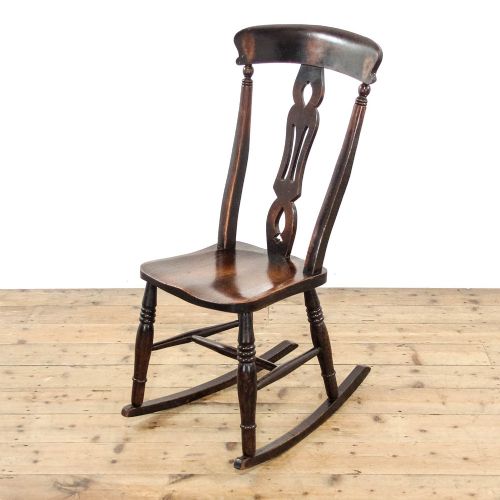
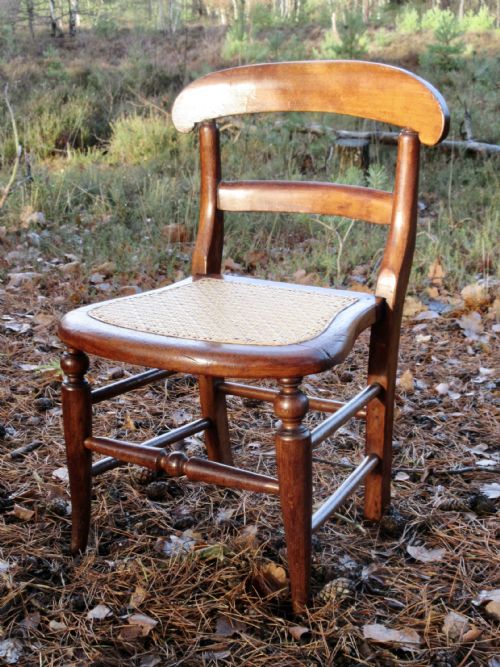
A turned leg nursery chair is a small-scale seating option designed for children, appearing in forms such as low child chairs, rocking chairs, splat back armchairs, and high chairs. These pieces emerge from the nineteenth century and early twentieth century, spanning Victorian and Arts and Crafts styles.
The most common version met on this page is the country Windsor design featuring turned wooden legs and spindle or hoop backs. English country workshops produced these domestic items using robust local timbers suitable for daily use by children.
How they were made
Maker construction relies heavily on native British timbers including elm seats combined with ash, beech, or oak for spindles and turned legs. Workshops utilised traditional Windsor techniques, pegging or wedging turned components into solid wooden seats.
Makers occasionally incorporated cane seating or brass details alongside stained hardwoods and yew wood. Selected pieces utilise solid mahogany or feature high Wycombe regional framing methods to ensure structural stability.
Tiny rocking chairs were once essential household equipment for keeping toddlers happily occupied while adults tended the hearth.
What varies in quality
Quality rests upon timber selection and the precision of the turning on legs and spindles. Chairs built from matched woods with tight joints and well-defined turnings stand apart from simpler utility items.
Proportion and regional character dictate desirability within this category. Pieces retaining their original timber surfaces and balanced Windsor proportions demonstrate superior workshop execution.
The Turned Leg Nursery Chair Glossary
- Windsor chair
- A chair built with a solid wooden seat into which the legs and back spindles are separately bored and wedged. This technique creates a sturdy and enduring frame.
- Hoopback
- A continuous bentwood bow forming the back and arms of a chair. It distributes weight evenly across the upper structure.
- Splat back
- A chair back featuring a central vertical wooden slat flanked by turned spindles. This design provides robust lumbar support.
- High Wycombe
- A Buckinghamshire town renowned as a historic centre for chair production. Local makers specialised in Windsor seating using regional timber stocks.
Turned Leg Nursery Chair: Frequently Asked Questions
What is a turned leg nursery chair?
A turned leg nursery chair is a small-scale historical seat built for children, featuring legs shaped on a woodturning lathe. These pieces follow traditional country furniture patterns adapted for smaller occupants.
They appear in various forms including rockers and high chairs, reflecting domestic life from the nineteenth century onwards.
How were these chairs used?
These miniature seats served daily domestic functions in Victorian nurseries and family rooms. Children used them for sitting at low tables or resting near the hearth.
Rocking versions helped soothe infants, while high chair variants kept young children secure during family meals.
How do I live with one?
Placing a small child chair in a living room or hallway adds historical warmth and texture to a corner. They function well as decorative display stands for dolls or textiles.
Keep wooden chairs away from direct heat sources to prevent timber shrinkage and protect the original finish.
How are different periods told apart?
Nineteenth-century examples often display vernacular country turning and sturdy elm or ash construction. Victorian pieces frequently incorporate darker finishes or mahogany elements.
Early twentieth-century items from the Arts and Crafts period show simpler, honest construction methods aligned with the design reforms of that era.