


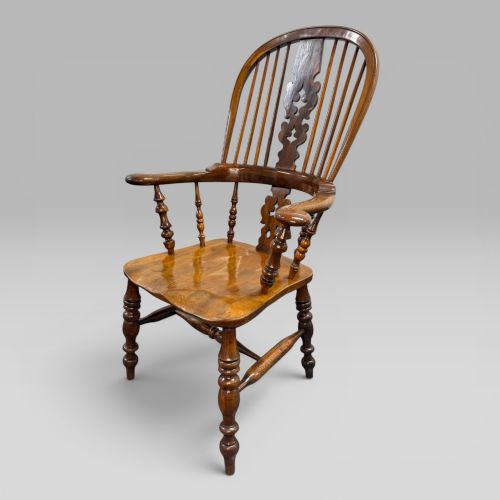
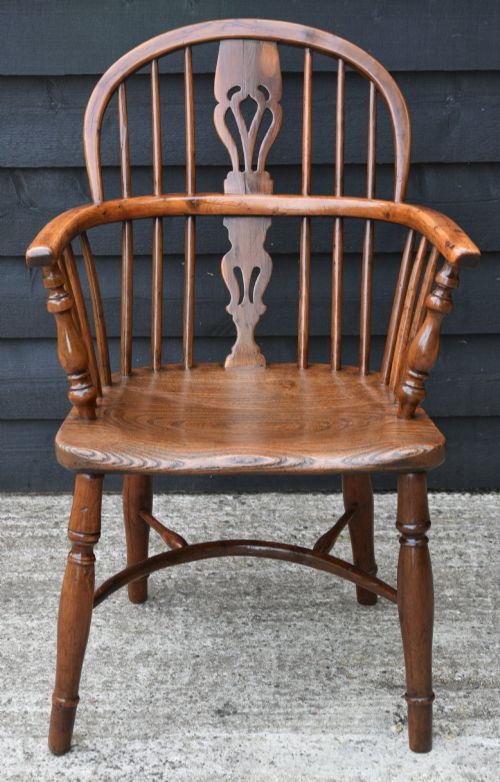
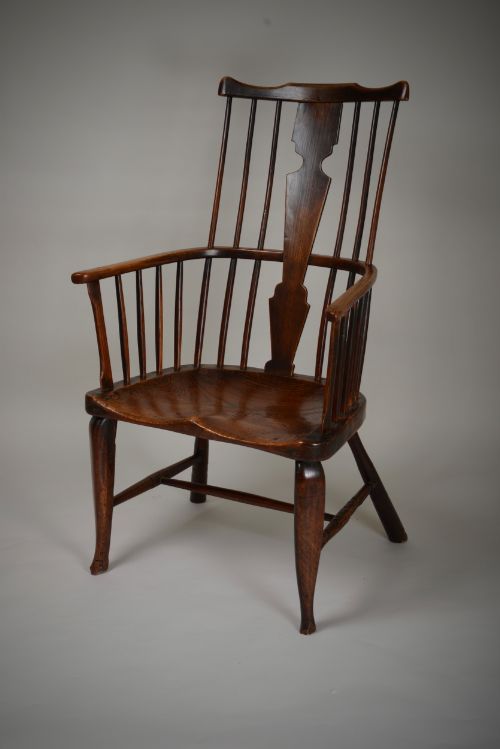
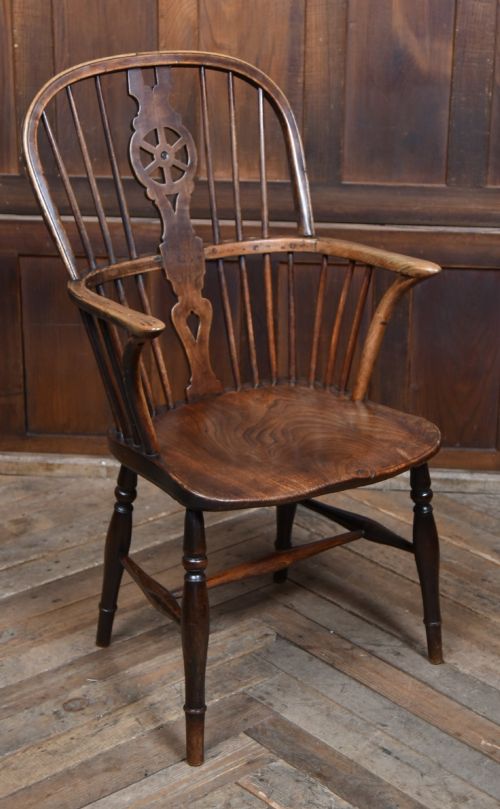
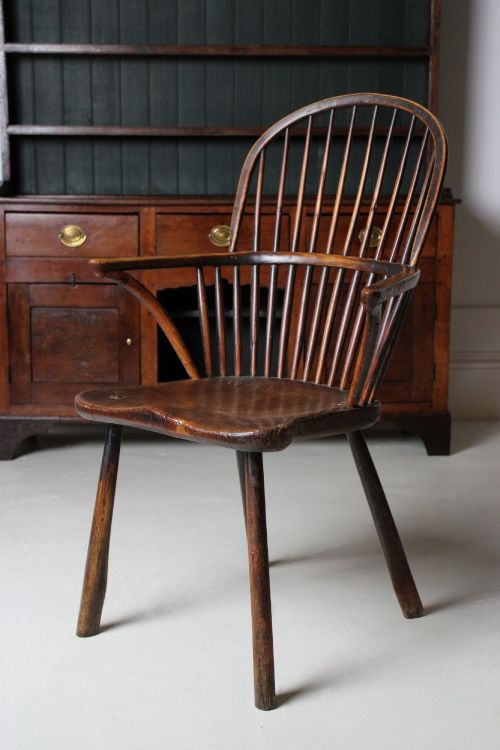
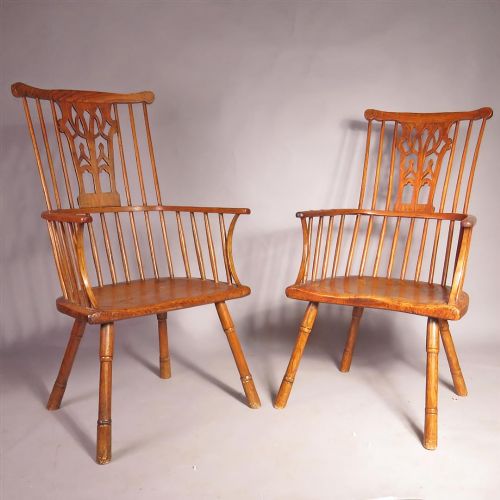
Antique Yew Chair
When you search for an antique yew chair, you seek the rich grain and sturdy vernacular design of English country seating.
Antique Yew Chair
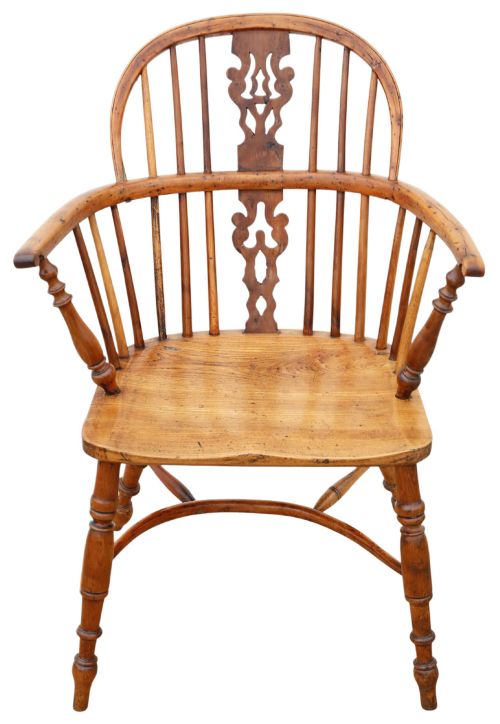
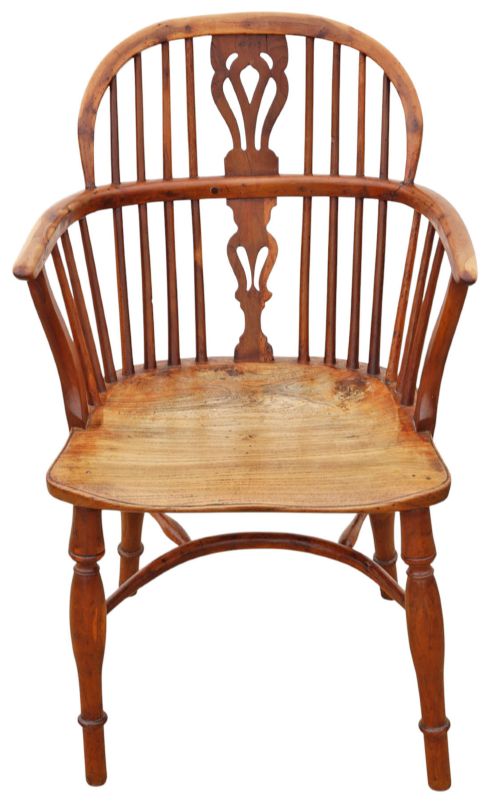
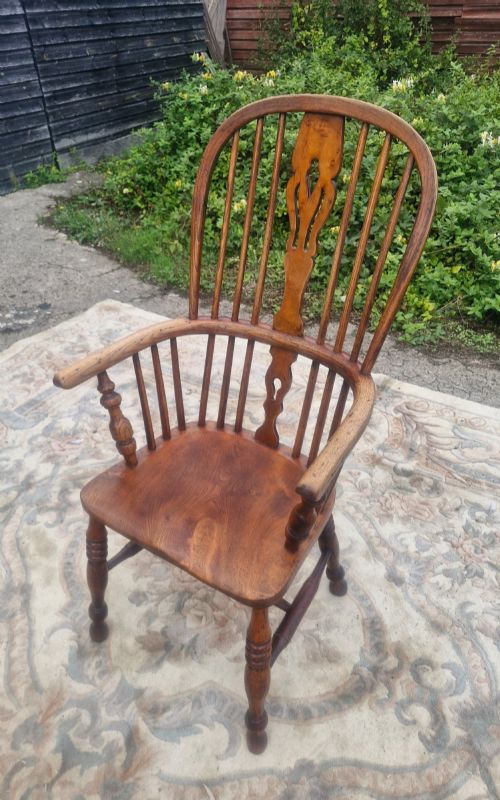
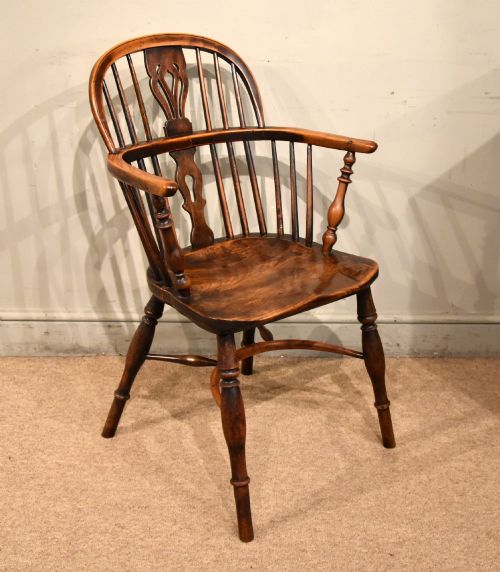
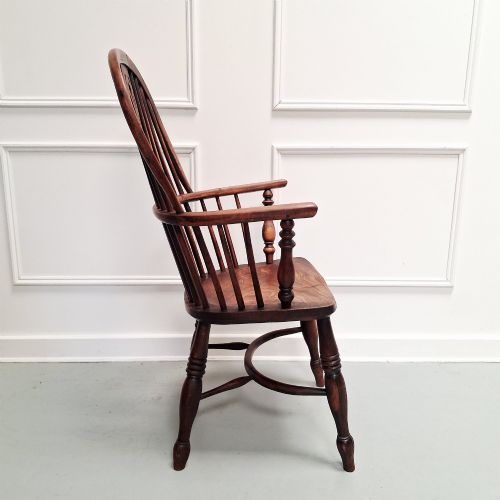
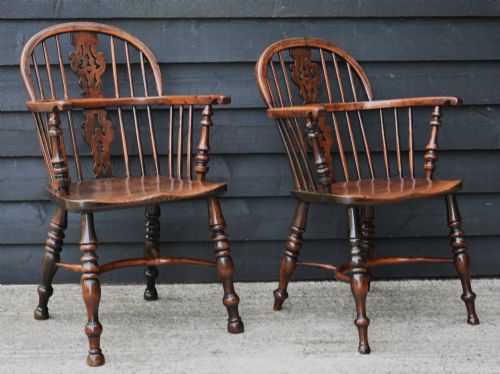
An antique yew chair most frequently takes the form of a Windsor armchair, featuring a distinctive wooden seat into which the legs and back spindles are wedged. These pieces emerge predominantly from the eighteenth and nineteenth centuries, spanning Georgian and Victorian periods of English country craftsmanship.
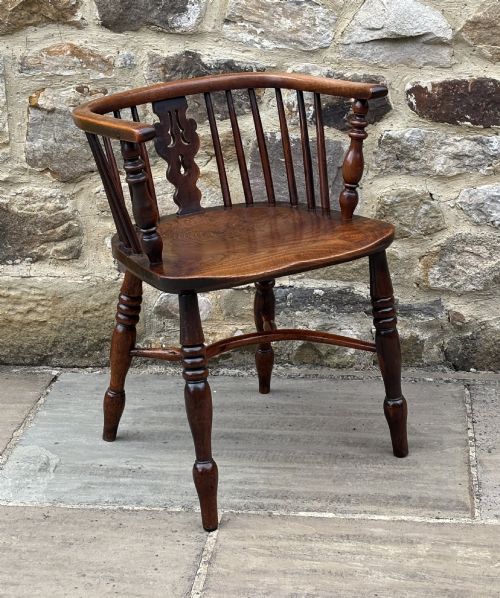
Buyers encounter variations such as high-back, comb-back, hoop-back, and low-back models, often built with generous proportions for domestic or parlour use. Sets and pairs appear alongside individual armchairs and occasional child-sized versions.
Rooted in English country vernacular styles, particularly regional traditions from the Thames Valley and Nottinghamshire, these chairs serve as both functional seating and sculptural wooden objects.
How They Were Made
Maker's workshops combined distinct timbers within a single frame, pairing figured yew wood for the upper bows and arms with elm for the solid, scooped saddle seats. Ash and beech provided the necessary tensile strength for turned legs, spindles, and crinoline stretchers.
Traditional bodging techniques involved green woodworking, where parts were shaped with drawknives and spokeshaves before assembly using wedged tenon joints and steam-bending for the continuous hoop backs.
Recorded periods span from the mid-eighteenth century through the Georgian and Victorian eras up to the early twentieth century.
What Varies in Quality
The visual appeal of an antique yew chair rests heavily on the natural figuring of the timber, where dense, highly flamed grain patterns elevate the presence of the piece. Craftsmanship shows in the subtle sculptural shaping of the seat, the elegance of the spindle turnings, and the harmony of mixed woods.
Structural integrity relies on the original tightness of the wedged joints and the survival of matching sets or crinoline stretchers without excessive replacement timber.
J Spencer·Gabbitass Worksop maker·John Brand of Sleaford·William Wheatland
The Antique Yew Chair Glossary
- Windsor chair
- A wooden chair constructed with a thick sculpted wooden seat into which the undercarriage legs and back pieces are independently inserted.
- Crinoline stretcher
- An arched or curved wooden brace connecting the legs of a chair to provide rigidity, frequently found on mid-eighteenth and nineteenth-century examples.
- Comb back
- A Windsor chair back design featuring a low horizontal crest rail supported by vertical spindles, resembling the teeth of a comb.
- Hoop back
- A continuous curved wooden bow steam-bent to form both the arms and the upper back of an armchair.
- Elm
- A tough, interlocking timber commonly utilised for chair seats due to its resistance to splitting when subject to the stress of wedged leg joints.
- Bodge
- A traditional craft term for rural woodturners working in woodland clearings to produce rough-hewn chair components for assembly.
Antique Yew Chair: Frequently Asked Questions
What is a Windsor chair?
A Windsor chair is a form of seating built around a solid carved wooden seat. The legs and back spindles are fitted directly into bored holes in this central plank.
Such chairs rely on rigidity from their undercarriage stretchers rather than a heavy rectangular frame. They developed deep roots in English rural workshops during the eighteenth century.
How do I identify yew wood?
Yew wood displays a warm amber tone marked by heavy figuring, swirling grain patterns, and small dark knots. It carries a dense weight and a lustrous natural finish.
Makers frequently reserved this prized timber for the prominent curved bows and arm rests of high-status country chairs.
Where were these chairs made?
Makers constructed these regional chairs across various English counties, with distinct stylistic clusters originating in the Thames Valley, Nottinghamshire, and Yorkshire. Rural bodgers turned components near woodland sources before urban workshops assembled them.
Local timber availability often dictated whether elm, ash, or fruitwood accompanied the primary yew construction.
How do I use them at home?
These armchairs function effectively as desk seating, reading chairs, or standalone statement pieces in living spaces. Their sturdy wooden construction suits daily domestic use.
Keep them away from direct heat sources and sudden humidity shifts to protect the historical timber and glue joints.