
Antique Writing Table with Castors
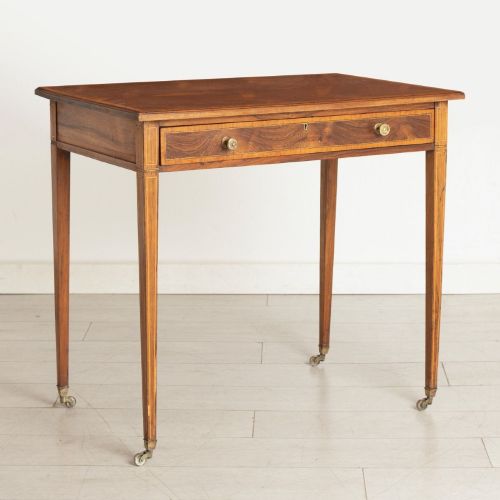
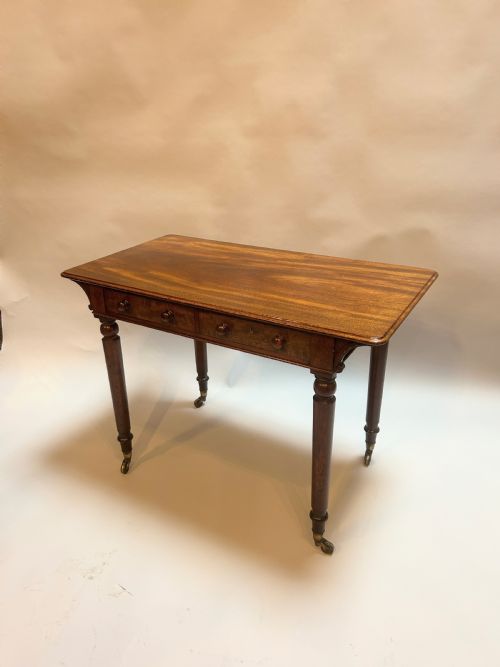
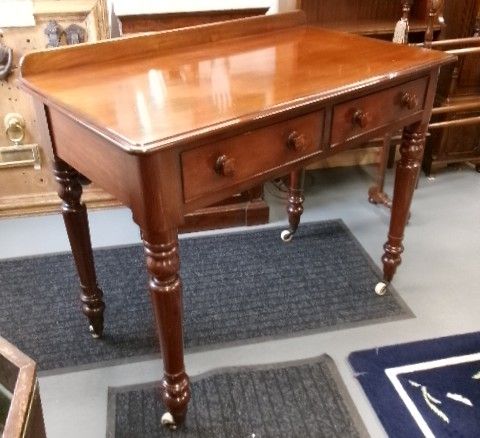
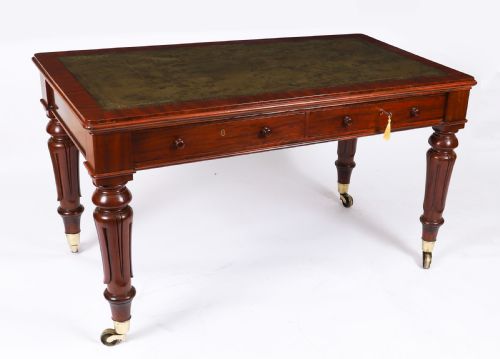
An antique writing table with castors provides a sturdy surface for correspondence that moves smoothly across the floor.
Antique Writing Table with Castors
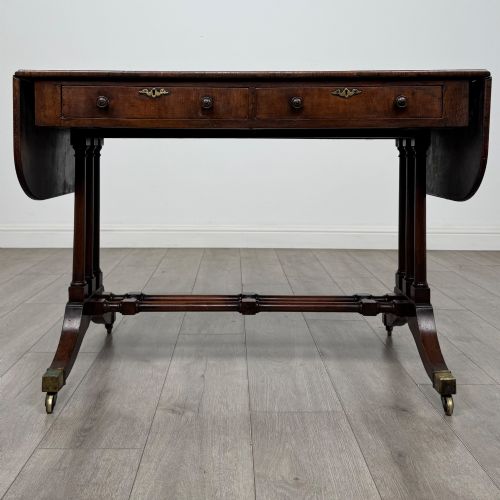
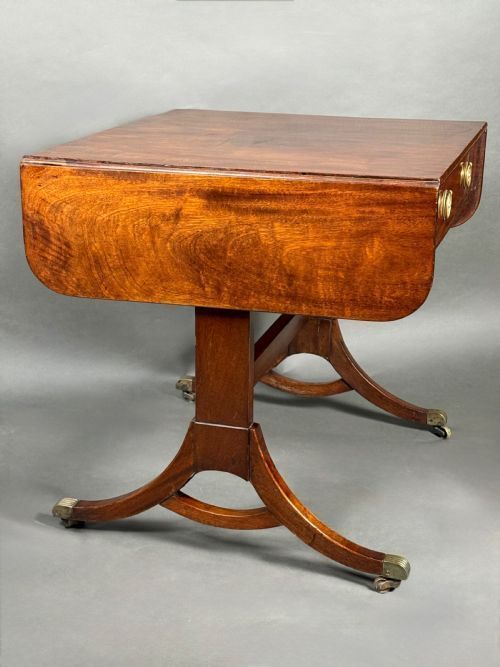
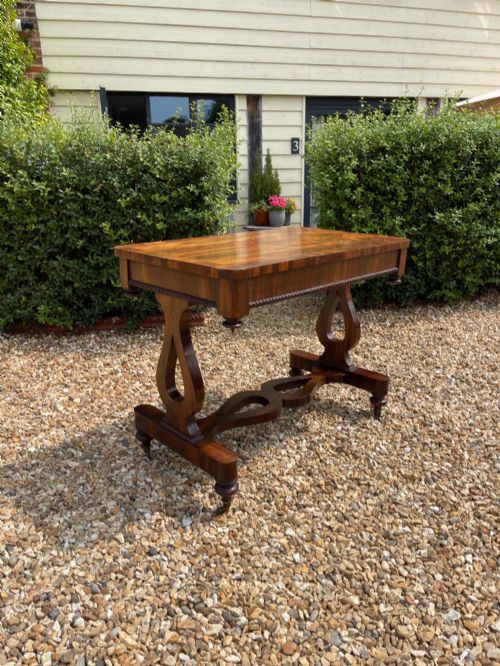
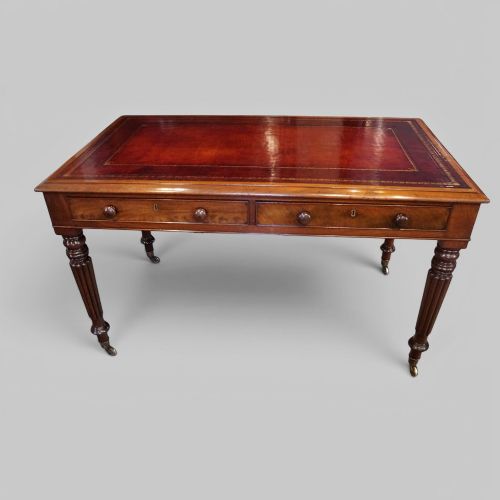
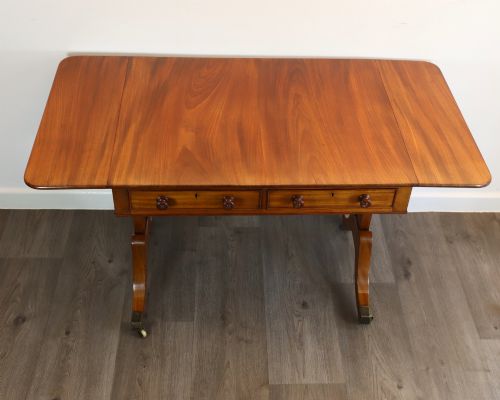
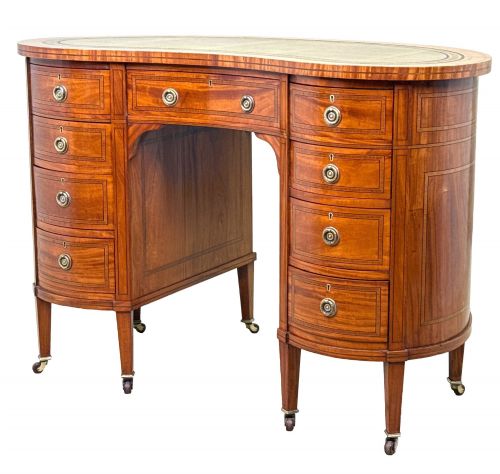
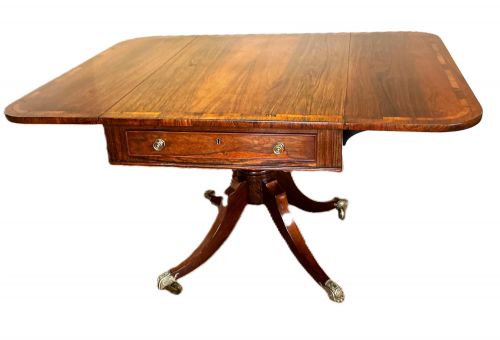
An antique writing table with castors brings functional workspace and mobility into a room, taking forms such as partners desks, drum tables, and sofa tables. These pieces emerge predominantly from the Georgian, Regency, William IV, Victorian, and Edwardian periods.
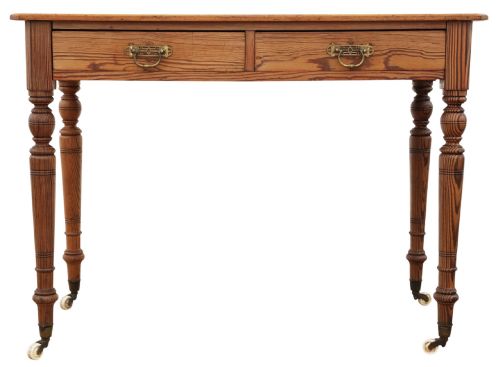
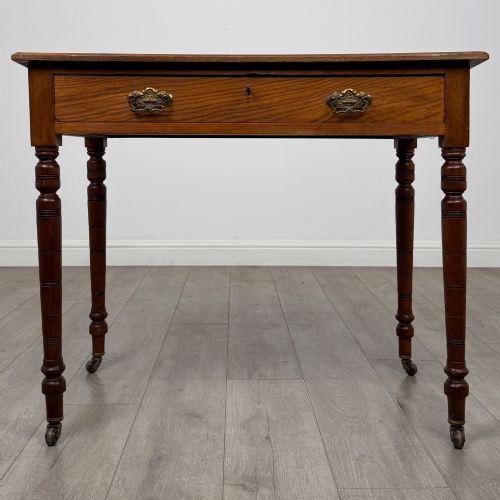
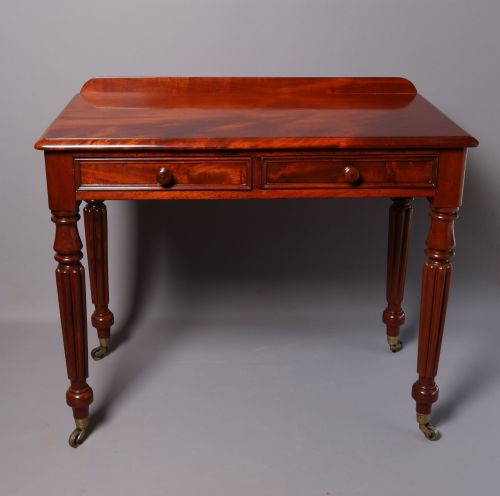
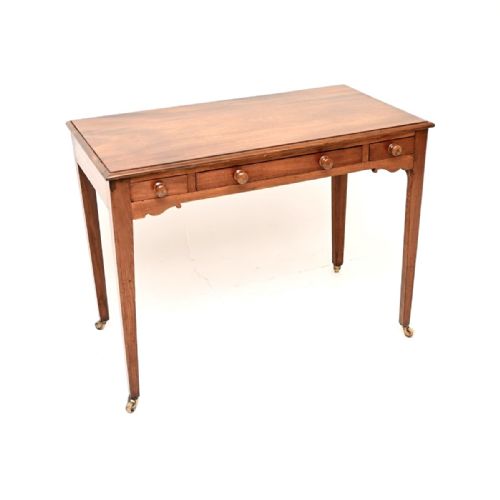
The most common versions on this page are Victorian and Regency mahogany writing tables, often fitted with drawers. Makers also utilised oak, rosewood, satinwood, and walnut across styles spanning from George III to Edwardian designs.
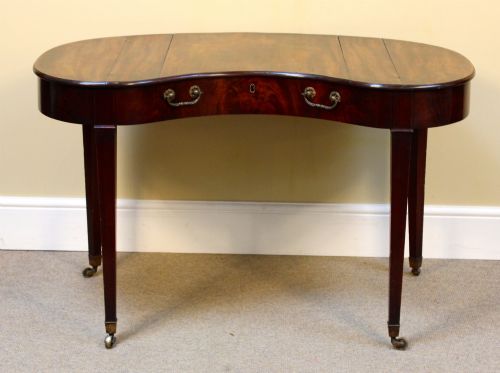
Object types include library tables, chamber tables, and kidney-shaped desks, alongside occasional side tables and washstands adapted for correspondence. Each piece reflects the domestic requirements of its era through fitted leather tops, satinwood banding, and inlay.
Materials and construction
Cabinet makers built these tables primarily using mahogany, rosewood, oak, and satinwood, frequently incorporating contrasting inlay and satinwood banding. Surfaces dedicated to writing often featured inset leather panels.
Brass fittings appear extensively on castors and drawer pulls, while gilt brass details adorn finer Regency examples. Secondary woods and solid timbers provide the structural integrity required for daily use in libraries and studies.
Some tables include hidden inkwells ready for Victorian letter writing.
Markers of distinction
Quality rests upon the selection of timbers, such as figured Cuban mahogany or rich rosewood, paired with precise cabinet making and refined inlay work. Finer examples display thoughtful proportions and balanced drawer arrangements that elevate them above standard utility pieces.
The integration of original brass castors and well-executed secondary details, like satinwood banding or stamped maker marks, separates standard workshop output from exceptional commissions.
Gillows of Lancaster·J A Mein Edinburgh Cabinet Maker·Howard & Sons
The Antique Writing Table with Castors Glossary
- Castor
- A small wheel mounted on a swivel assembly attached to the legs of a table to allow easy movement.
- Sofa table
- A rectangular table designed during the Regency and Victorian periods, traditionally placed in front of a sofa, featuring drop leaves and frequently mounted on castors.
- Partners desk
- A large writing table designed with drawers on opposite sides so two people could work facing each other.
- Drum table
- A circular library table with a deep top containing multiple drawers, usually supported by a central pillar and tripod base.
- Satinwood banding
- A decorative technique where thin strips of contrasting light-coloured wood are inlaid into the primary surface border.
Antique Writing Table with Castors: Frequently Asked Questions
What is an antique writing table with castors?
These pieces are movable desks and work tables featuring wheels on their feet for repositioning in a study or library.
They date from Georgian through Edwardian eras and appear in mahogany, oak, and rosewood.
How were these tables used?
Owners used them for correspondence, reading, and managing household accounts in drawing rooms and libraries.
Many incorporate drawers for stationery and leather-lined tops for a stable writing surface.
How do I identify a Regency writing table?
Regency examples often feature dark timbers like mahogany or rosewood, sometimes with brass inlay and gilt mounts.
Their silhouettes reflect classical influences popular in the early nineteenth century.
Are all these tables made of mahogany?
While mahogany is the most common timber seen, many pieces utilise oak, rosewood, satinwood, and walnut.
Makers selected different woods depending on the prevailing style and the period of manufacture.