




Antique Writing Armchair
An antique writing armchair brings solid timber, leather and tailored support directly to the desk.
Antique Writing Armchair
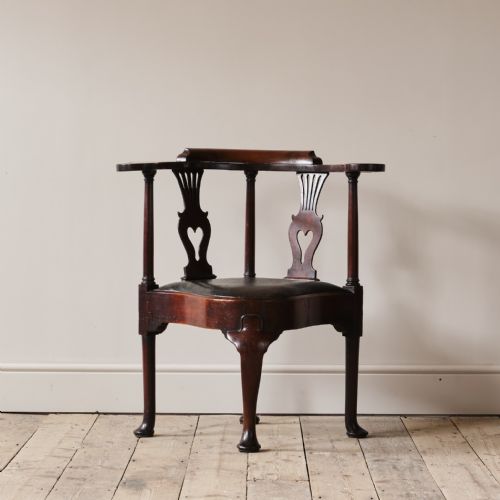
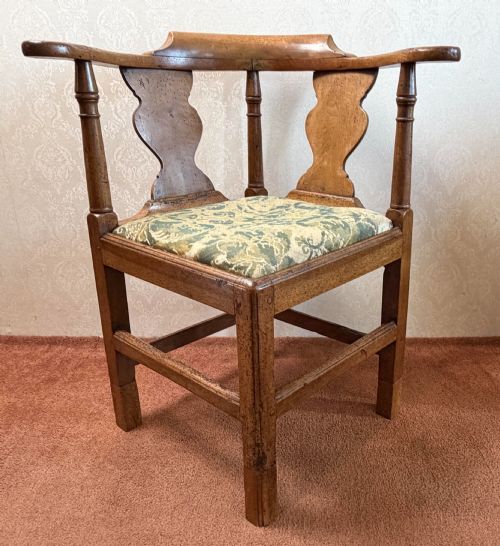
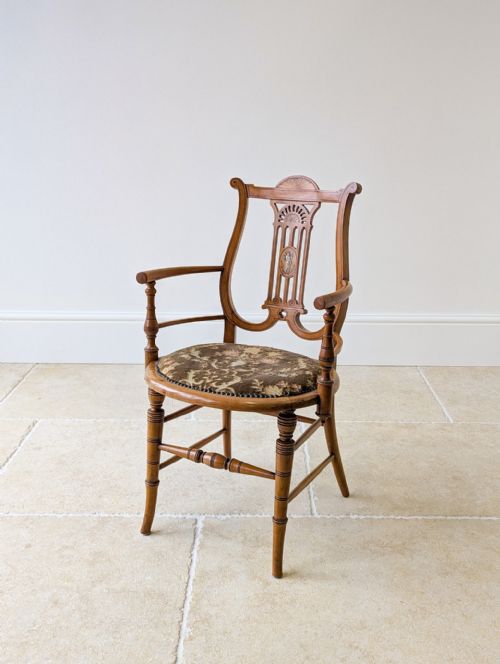
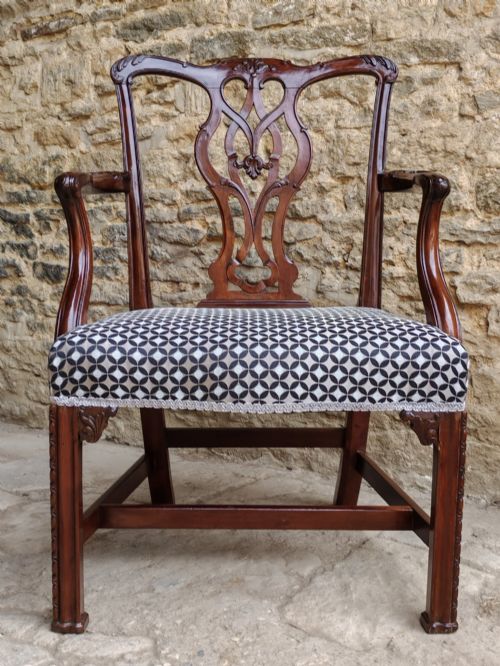
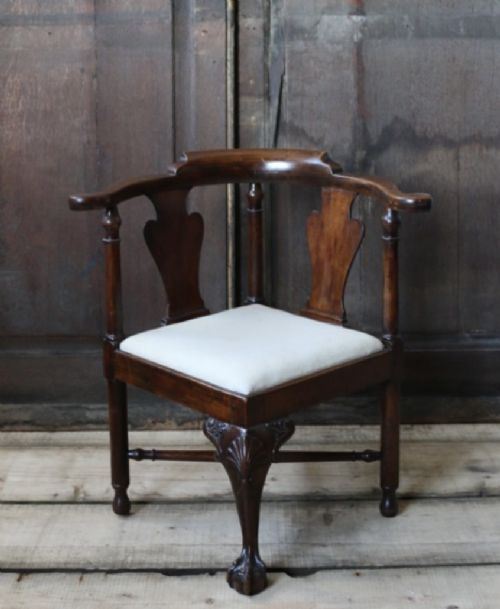
An antique writing armchair combines seating for a desk or library table with the sturdy arms characteristic of a traditional armchair. You encounter corner chairs, desk chairs and library chairs spanning the eighteenth and nineteenth centuries.
The most common forms on this page are mahogany and oak corner chairs alongside turn-of-the-century mahogany desk chairs. Pieces originate from Georgian, Victorian and Edwardian periods, often constructed with upholstered seats or fitted with leather pads.
Buyers choose these chairs for functional workspace seating rooted in historical cabinet-making traditions. They suit studies, libraries and corner desks where traditional proportions and timber patination matter.
Determining quality
Quality rests in the choice of timber, the crispness of carved details and the integrity of the frame construction. Superior examples show thoughtful grain selection in walnut or mahogany and clean joinery at the arm joints.
Early country pieces rely on simpler elm or oak timbers with honest joinery, whereas formal urban chairs display refined turnings and inlay. The presence of original leather and untouched surface patination elevates a piece.
Listings span the eighteenth, nineteenth and early twentieth centuries, featuring styles from George II to Edwardian.
The Antique Writing Armchair Glossary
- Corner chair
- A seating form designed to fit into the corner of a room, featuring a curved top rail supported by columns and a central leg placed diagonally forward. This design provides a wide seat base within a compact footprint.
- Desk chair
- A chair specifically adapted for sitting at a writing table, often featuring a revolving mechanism or a low back that tucks beneath a drawer line. These chairs prioritize lumbar support and stable footing.
- Bergère
- An enclosed upholstered armchair with wooden framing exposed around the sides and back. It provides a comfortable seat often paired with library or writing furnishings.
- Caned
- A seating surface woven from split rattan cane strands in an open mesh pattern. This technique creates a resilient, breathable panel across the seat or back frame.
- Marquetry
- Decorative veneer work arranged in pictorial or geometric patterns using various coloured woods. Craftsmen apply these thin wood slices to the primary carcass of the furniture.
Antique Writing Armchair: Frequently Asked Questions
What makes an antique writing armchair different from a standard armchair?
An antique writing armchair is built with ergonomics suited for sitting at a desk, featuring supportive arm heights and stable frames designed for working.
Many examples on this page take the form of corner chairs or desk chairs specifically intended for library or writing room use.
Which woods were commonly used for these chairs?
Makers relied on durable hardwoods such as mahogany, oak and walnut for structural stability and fine appearance.
Country pieces often incorporate elm or fruitwood, reflecting local timber availability during the eighteenth and nineteenth centuries.
Can I use an antique desk chair for daily computer work?
These chairs function well for general desk tasks, though period seat heights and rigid backs differ from modern office seating.
Checking dimensions helps ensure the chair fits comfortably beneath modern desk surfaces.